
UNICEF Issues Child Alert as Sudan’s Darfur Children Face Rapidly Worsening Humanitarian Catastrophe
Key Takeaways
- Five million children across Sudan’s Darfur region face extreme deprivation.
- UNICEF issued a Child Alert signaling a rapid humanitarian catastrophe unfolding in Darfur.
- Violence, hunger and displacement have intensified over two decades with reduced international attention.
Child Alert in Darfur
UNICEF says Sudan’s children in Darfur are facing a humanitarian catastrophe that is rapidly worsening, and it has issued a “Child Alert” described as a warning used “sparingly” to signal a “critical threshold.”
“UNICEF warned that Sudan's children are living on the edge of a precipice, noting that the country's humanitarian crisis is rapidly worsening and that a failure to intervene immediately on the international stage would only magnify their suffering”
In Geneva, UNICEF spokesperson Eva Hinds said her “ten-day mission to Darfur had revealed a 'catastrophe of unprecedented scale'” and warned that “the country's humanitarian crisis is rapidly worsening.”
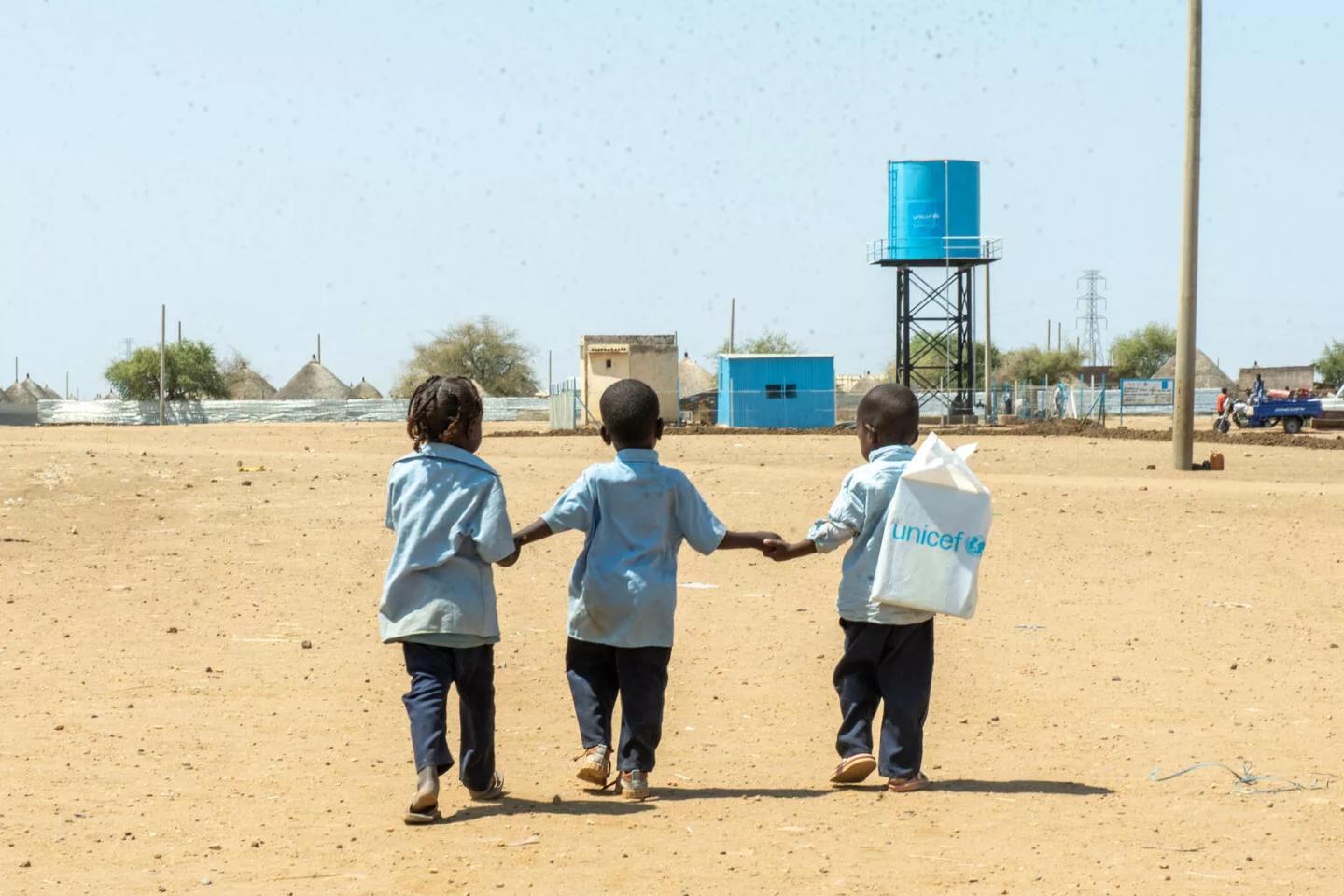
Sheldon Yett, UNICEF’s representative in Sudan, told reporters in Geneva via video link from Port Sudan that “Children are at a breaking point across the region, childhood is again defined by fear, by loss.”
UNICEF’s warning comes as the civil war in Sudan enters its fourth year, with Darfur described as a “vast region in western Sudan” that has been a focal point of violence since April 2023.
UNICEF also said that “Five million children across Sudan’s Darfur region are facing extreme deprivation,” and that the “Child Alert” is “the first time the agency has issued one in 20 years for Darfur.”
The crisis is described as involving forced displacement and the collapse of essential services, with Hinds saying she felt “as if an entire town had been uprooted from its roots and rebuilt out of necessity and fear.”
UNICEF further warned that access to every child in Darfur could require “several days of negotiations and security clearances,” and that “every humanitarian delivery operation carries risks, but remains vitally important.”
Numbers, places, and displacement
UNICEF’s reporting ties the warning to specific locations and quantified impacts, including the town of Tole and the long-besieged city of al-Fashir.
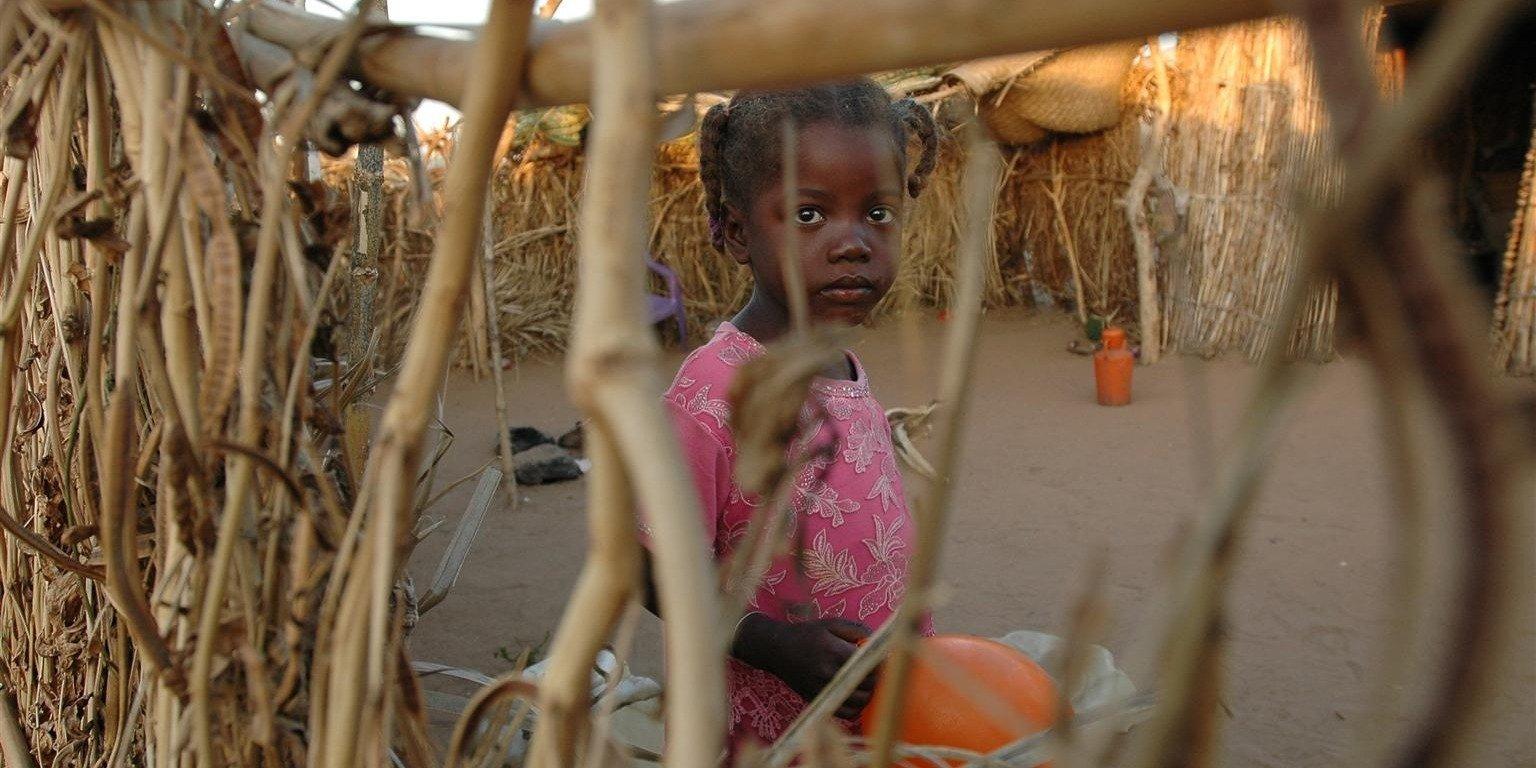
Hinds described Tole as a place where “hundreds of thousands of children have fled indescribable violence,” saying, “I felt as if an entire town had been uprooted from its roots and rebuilt out of necessity and fear.”
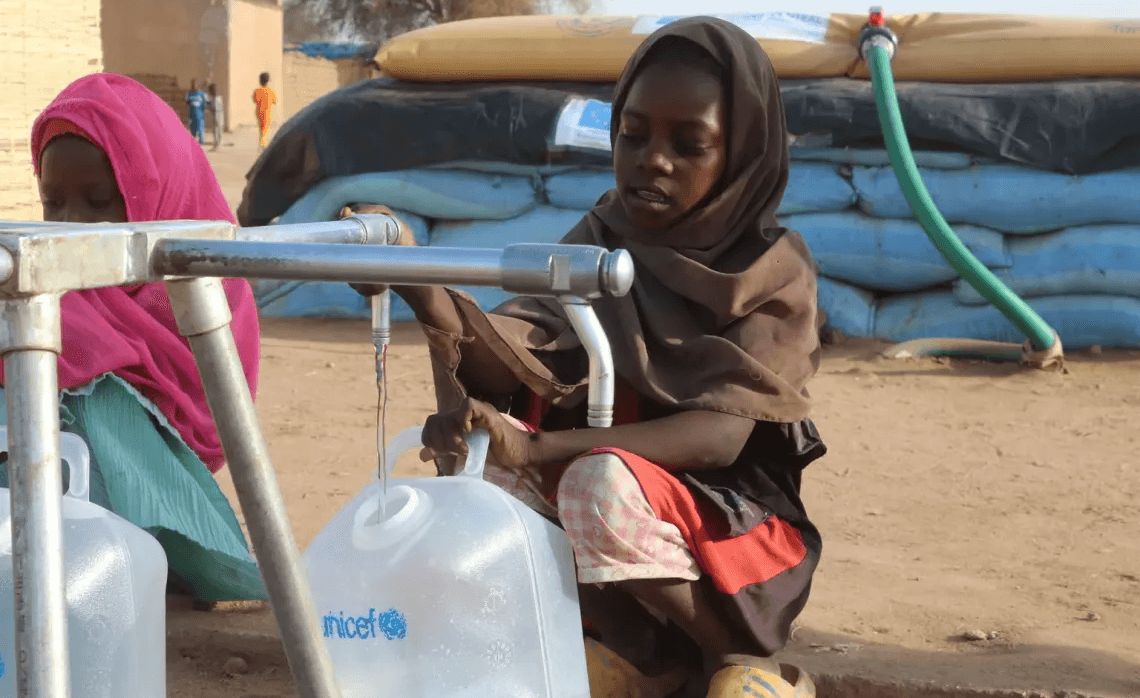
She added that “It's a town rebuilt in despair, with every family there because it had no choice but to flee,” and UNICEF’s account emphasizes that humanitarian access can be slowed by “travel on difficult roads and in conflict areas with shifting front lines.”
UNICEF’s “Child Alert” reporting also focuses on Al-Fashir, where UNICEF said “at least 1,300 children have been killed or maimed since April 2024,” and where it reported “cases of sexual violence, abductions and the recruitment of children by armed groups.”
Another outlet, Radio Tamazuj, said that “Since April 2024, more than 1,500 grave violations against children have been verified in El Fasher alone,” and that this includes “the killing and maiming of over 1,300 children.”
UNICEF’s figures for early 2026 are also repeated across sources, with AnewZ and Arab News both stating “at least 160 children were reportedly killed and 85 injured in the first three months of 2026.”
UNICEF’s broader Sudan-wide needs were described by Radio Tamazuj as “about 33 million people across the country need humanitarian assistance, more than half of them children,” and it estimated “around 5 million children” among “an estimated 15 million people” displaced.
What UNICEF says is driving it
UNICEF frames the crisis as a combination of escalating violence, destroyed services, and constraints that limit humanitarian delivery, with the result that children are left without food, schooling, health care, or safety.
“Speaking during a White House state dinner for the British monarch’s state visit to Washington on Tuesday, President Donald Trump said that t”
In UNICEF’s account of field conditions, Eva Hinds said that “every intervention in this part of Darfur requires days of negotiations, security clearances, and perilous travel along sandy roads amid moving front lines,” describing the work as “a meticulous and precarious job.”
UNICEF’s UN News report says that “the scale of movement, the fragmentation of the conflict, and the collapse of essential services have created a situation in which every child lives on the edge.”
The Vatican News report similarly says the conflict “has reignited large-scale violence, mass displacement, and acute hunger,” and that “Homes have been burned, markets attacked, and schools and health facilities damaged or destroyed.”
UNICEF’s reporting also emphasizes the types of abuses affecting children, including “explosive weapons, drones, sexual violence, abductions, and recruitment by armed groups,” with Vatican News describing these as “many of these abuses.”
In El Fasher and other parts of North Darfur, UNICEF says sieges have cut families off from “food, safe water and healthcare,” forcing them to flee to “already overcrowded areas.”
Radio Tamazuj adds that “Health services have been attacked, looted or forced to close, while routine immunization has been disrupted, increasing the risk of disease outbreaks,” and it says “More than 3 million children are out of school.”
Voices: UNICEF, Russell, and Yett
UNICEF’s warning is delivered through multiple named voices, including Eva Hinds, Sheldon Yett, and UNICEF Executive Director Catherine Russell, each emphasizing both the scale of harm and the need for access and protection.
Eva Hinds told the UN press briefing in Geneva, “But for the children of Darfur, it's the only difference between being abandoned and being rescued,” and she warned that “Children in Sudan have an urgent need for the international community's attention and decisive action.”
Sheldon Yett said, “Children are bearing the heaviest weight of the war in Darfur, children are being killed and maimed, uprooted from their homes and pushed into extreme hunger, disease and trauma,” and he described the “Child Alert” as a way to signal a “critical threshold.”
UNICEF’s executive director Catherine Russell urged action in direct language, saying, “We cannot allow history to repeat itself. The children of Darfur need protection and sustained humanitarian access. The parties to this conflict must end this brutal war.”
The UNICEF report also includes a statement from Catherine Russell in the unicef.ch coverage, repeating that “Children are at a breaking point,” and it frames the Child Alert as an alarm that “raises the alarm about the catastrophic situation of children in Darfur.”
UNICEF’s AL24 News report quotes Hinds describing the situation as “a 'catastrophe of unprecedented scale'” and stresses that “This situation requires urgent international attention and decisive action to save children's lives and prevent the worsening of humanitarian atrocities.”
Radio Tamazuj adds a separate UNICEF framing through Yett’s remarks that “There was a lot of attention back then,” and “Now, the silence is deafening.”
Different coverage, same crisis
While all the outlets describe UNICEF’s “Child Alert” and the Darfur crisis, they differ in emphasis, including how they characterize the scale of violations, the funding shortfall, and the framing of access.
AnewZ and Arab News both report that the “Child Alert” is “the first time the agency has issued one in 20 years for Darfur,” and both quote Sheldon Yett describing children at “a breaking point,” but AnewZ adds that UNICEF’s humanitarian appeal for Sudan this year is “only 16% funded” and that “Across Sudan, at least 160 children were reportedly killed and 85 injured in the first three months of 2026.”
Arab News similarly includes the “16 percent funded” figure and repeats the “160” and “85” numbers, while also specifying that Yett spoke “in Geneva via video link from Port Sudan.”
Radio Tamazuj provides a different set of quantified indicators, saying “more than 5 million children are facing extreme deprivation” across Darfur’s five states and that “In the first 90 days of 2026, at least 245 children were reported killed or injured,” which is not the same as the “160” and “85” totals cited elsewhere.
Dabanga Radio TV Online emphasizes a report titled “Darfur: Twenty Years On, Darfur’s Children Remain at Risk,” saying “Since April 2024, more than 1,500 grave violations against children have been documented in the city alone,” and it adds that “The report cautioned that the figures are likely to underestimate the true scale.”
UN News and AL24 News focus more on the operational challenge, with UN News describing the journey to Tawila as “a journey of several days” and AL24 News stressing that “access to every child in Darfur could require several days of negotiations and security clearances.”
Across these differences, the outlets converge on the same core UNICEF message that children are being killed, maimed, and pushed into hunger and disease, and that UNICEF and partners are still vaccinating and providing aid despite constraints.
Consequences and what comes next
UNICEF’s reporting warns that without immediate international attention and decisive action, the suffering of children will worsen, and it frames the “Child Alert” as a call for sustained humanitarian access and protection.
AL24 News says UNICEF warned that a failure to intervene immediately on the international stage would “only magnify their suffering,” and it concludes that “This situation requires urgent international attention and decisive action to save children's lives and prevent the worsening of humanitarian atrocities.”
Radio Tamazuj similarly says UNICEF officials warned that the situation for children in Darfur had reached “catastrophic levels,” and it adds that “funding remains critically low” with UNICEF’s “2026 humanitarian appeal for Sudan is only 16% funded,” putting “lifesaving programs at risk.”
UNICEF’s operational updates show that aid is ongoing but constrained, with UN News stating that “In just two weeks, UNICEF and its partners vaccinated more than 140,000 children and treated thousands of them for diseases and malnutrition,” and that they “restored access to drinking water for tens of thousands of people, opened temporary classrooms, and provided food aid, protection, and psychosocial support.”
AL24 News also reports that “in just two weeks, UNICEF and its partners had, in just two weeks, vaccinated more than 140,000 children, treated thousands of cases of disease and malnutrition, restored access to drinking water for tens of thousands,” and it says they “opened temporary classrooms” and “provided food as well as psychosocial and educational support.”
UNICEF’s warnings about access and restrictions are explicit, with Radio Tamazuj saying “Despite the challenges, UNICEF and its partners said they are providing treatment for severe malnutrition, safe drinking water, mobile health services, vaccinations and psychosocial support,” while still warning that “funding remains critically low.”
UNICEF’s policy demands include calls on parties to the conflict to respect international law, protect civilians including children, and ensure “safe and unimpeded humanitarian access,” and the unicef.ch text urges donors to provide “flexible, multi-year funding.”
More on Sudan
Twelve Sudanese Survivors File War Crimes Complaint Against RSF in Kenya Over Khartoum Abuses
11 sources compared

RSF Drone Strikes Kill 23 in El-Obeid, Rights Group Says
17 sources compared
RSF Attack Kills At Least 58 in North Kordofan Villages West of Bara
13 sources compared
CEPI Invests $50 Million to Fast-Track Moderna’s Bundibugyo Ebola Vaccine
12 sources compared