
Investigation Finds UAE-Backed Colombian Mercenaries Helped Sudan’s RSF Capture El-Fasher
Key Takeaways
- UAE-backed Colombian mercenaries aided RSF in capturing El-Fasher.
- Conflict Insights Group's phone-tracking linked mercenaries to RSF operations in Sudan.
- Zeuz Global recruited Colombian mercenaries for RSF, per Guardian investigation.
El-Fasher and the RSF
A new investigation by the security analysis organisation the Conflict Insights Group (CIG) says a network of Colombian mercenaries backed by the United Arab Emirates (UAE) provided “critical support” to Sudan’s paramilitary Rapid Support Forces (RSF), enabling it to capture the western city of el-Fasher last year.
“Libya fueled war in Sudan with Colombian mercenaries and equipment, UN report finds Libya fueled war in Sudan with Colombian mercenaries and equipment, UN report finds CAIRO (AP) — An armed group in Libya helped the transfer of former Colombian military personnel to fight with the Rapid Support Forces paramilitary group against the Sudanese military, according to a United Nations report released days after the third anniversary of the start of the war in Sudan”
The BBC reports that the investigation used data obtained from tracking the mobile phones of the Colombian fighters, and that the CIG says “this is the first research where we can prove UAE involvement with certainty.”
The BBC adds that the report “shows mercenaries involved with drones travelling from a UAE base to Sudan before the RSF takeover of el-Fasher,” and that “Mercenaries involved in drone operations even named their wi-fi network their unit name - linked to a company operated out of the UAE.”
The BBC also places the conflict timeline in context, saying the UAE-backed RSF has been fighting Sudan’s regular army for three years, and that el-Fasher’s fall was “one of the most brutal chapters of the conflict.”
In the same BBC account, CIG director Justin Lynch says, “We are making public what governments have long known - that there is a direct link between Abu Dhabi and the RSF.”
The AP report adds a separate but related logistics thread, saying a Libya-based armed group helped transfer former Colombian military personnel to fight with the RSF, and that the UN report was released “days after the third anniversary of the start of the war in Sudan.”
Phone tracking and staging
The BBC describes CIG’s method as a chain of digital traces, saying the organisation “used commercially available technology designed to make advertising more personal to track more than 50 mobile phones in Sudan between April 2025 and January this year.”
It says CIG tracked “more than 50 mobile phones” whose operators were Colombian mercenaries, including at RSF-held areas from which drones were fired.

The report, the BBC says, also relied on “flight-tracking data, satellite imagery, social media videos, news and academic articles” to support its analysis.
The BBC further states that CIG’s data “details a pipeline” showing mercenaries present at various regional staging grounds, “most significantly a UAE military training facility in Ghayathi in Abu Dhabi.”
In one case study, the BBC says it “followed one phone from Colombia to Abu Dhabi's Zayad International Airport and then to the facility,” and that at the facility it found “four other devices configured to Spanish, which is spoken in Colombia.”
The BBC adds that two of those phones “subsequently travelled to Sudan's South Darfur state and one to the de-facto RSF capital of Nyala,” where it logged into wi-fi networks named “ANTIAEREO” and “AirDefense.”
The AP report complements this by describing a UN Panel of Experts finding that Libya’s Subul al-Salam Battalion “facilitated the transfer of recruits, including Colombian mercenaries, weapons and fuel across the border to support the RSF.”
The AP also specifies that the UN report covered “October 2024 to February 2026,” and that the Libya battalion was part of the self-styled Libyan National Army commanded by “Gen. Khalifa Hifter,” centered in Kufra.
UAE denial and ICC findings
The BBC frames the findings against the UAE’s repeated denials, saying “The UAE has long denied supporting the RSF,” and that it has issued statements rejecting what it called “false and unfounded allegations” that it backs the RSF while condemning “in the strongest terms” the atrocities committed in el-Fasher.
“Hundreds of Colombian mercenaries are fighting in the Sudan war alongside the Rapid Support Forces (RSF), the group that fights the regular army and has been accused of war crimes in the so-called Battle of Al-Fashir, The Guardian reports in an exclusive investigation published this Friday, December 19, 2025”
The BBC also reports that analysts agree foreign support for both sides has been key to the continuation and expansion of the civil war, while CIG says it can prove UAE involvement with certainty.
The BBC quotes CIG’s Justin Lynch saying, “this is the first research where we can prove UAE involvement with certainty,” and adds that the report “shows mercenaries involved with drones travelling from a UAE base to Sudan before the RSF takeover of el-Fasher.”
It also connects the phone-tracking evidence to the alleged role of drones in the city’s fall, saying “The scale of atrocities and siege in el-Fasher wouldn't have happened without the drone operations the mercenaries provided,” and that Lynch notes evidence they “also helped support the RSF siege.”
The BBC further states that the fall of el-Fasher was accompanied by mass atrocities assessed as war crimes and crimes against humanity by the prosecutor of the International Criminal Court (ICC) and described by UN investigators as bearing the “hallmarks of genocide.”
In the same BBC account, CIG says, “CIG assesses that the UAE-Colombian mercenary network bears shared responsibility for these outcomes.”
The AP report similarly ties external support to RSF operational gains, saying the UN experts found the battalion supported RSF operations in June 2025 by deploying units on the ground and “escorting them across Libyan territory and facilitating access to fuel and spare vehicle parts.”
The AP also notes that the RSF said in June that it controlled the triangle zone after the Sudanese military said it evacuated the area as part of “its defensive arrangements to repel aggression,” while the Libyan commander denied the military’s accusation that Hifter’s forces aided the RSF’s attack.
Companies, sanctions, and minors
Multiple outlets describe how the alleged mercenary pipeline is tied to named individuals and corporate structures, with sanctions and recruitment claims appearing alongside the phone-tracking narrative.
DW reports that “Hundreds of Colombian mercenaries are fighting in the Sudan war alongside the Rapid Support Forces (RSF),” and says the Guardian’s exclusive investigation published “Friday, December 19, 2025” links recruitment to a London-based British company named Zeuz Global, led by two individuals.

DW identifies those individuals as “the Italo-Colombian Álvaro Andrés Quijano Becerra, based in the United Arab Emirates, and the Hispano-Colombian Mateo Andrés Duque Botero,” and says they appeared on a U.S. Treasury Department list of people sanctioned for involvement in the Sudan war.
DW adds that the Guardian said the two “played a leading role in recruiting minors for the RSF,” and in “technological training for fighters,” particularly in “the use of drones that proved vital for the RSF to seize Al-Fashir.”
Infobae similarly says Zeuz Global is “led by the Italo-Colombian Álvaro Andrés Quijano Becerra, based in the United Arab Emirates, and the Hispano-Colombian Mateo Andrés Duque Botero,” and it reports that they were “recently sanctioned by the U.S. Department of the Treasury.”
Infobae quotes Mike Lewis, an independent investigator and former member of a United Nations expert panel on Sudan, saying, “those weapons (long-range drones) require external help to operate, and we know that the operation of Colombian mercenaries has been a fundamental component of this external assistance.”
Vanguardia adds additional figures and context, saying it is “estimated that Colombian mercenaries are present in at least 16 countries” including “Mexico, Haiti, Iraq, Kuwait, Somalia, Libya, Nigeria, Ukraine, and Sudan,” and it claims “about 300 Colombians are missing in combat in Sudan and another 300 were killed in combat in Ukraine.”
Vanguardia also quotes Colonel John Marulanda, president of the Colombian Association of Retired Officers of the Armed Forces, Acore, saying, “It is a human universe very difficult to control,” and it repeats the “War is business” line attributed to a mercenary identified as “Carlos.”
Humanitarian toll and next steps
The stakes described across the reporting are both humanitarian and legal, with the conflict’s death toll and displacement figures appearing alongside calls for accountability.
“Hundreds of Colombian mercenaries have been recruited to fight in the Sudanese civil war, joining the Rapid Support Forces (RSF), a paramilitary faction accused of war crimes in the Darfur region”
The BBC says the conflict has led to “the world's worst humanitarian crisis with tens of thousands killed and millions forced from their homes,” and it ties the alleged drone support to the scale of atrocities in el-Fasher.

The AP report provides a specific death figure, saying “The war has killed at least 59,000 people, according to the Armed Conflict Location & Event Data Project,” and it adds that ACLED’s toll is “almost certainly an undercut given difficulties in reporting.”
The AP report also notes that the U.S. imposed sanctions on Colombian firms and individuals over alleged links to the deployment of former Colombian officers to fight alongside the RSF in Sudan, and it characterizes the result as creating “the world’s largest humanitarian crisis.”
In the BBC account, the CIG says it “assesses that the UAE-Colombian mercenary network bears shared responsibility,” and it points to ICC and UN findings that describe el-Fasher atrocities as war crimes, crimes against humanity, and “the hallmarks of genocide.”
The West Asian “Investigative Report” outlet adds a political dimension by saying “The Sudanese government has formally lodged complaints with the United Nations Security Council,” citing “systematic campaigns” by foreign interests to undermine Sudanese sovereignty.
It also states that “The UAE has consistently denied involvement,” and it describes the investigation as using “mobile phone tracking and corporate link analysis” to produce what it calls “the most definitive evidence to date of external logistical support for the RSF.”
Looking at the immediate operational picture, the AP report says UN experts found Libya’s battalion supported RSF operations in June 2025 and that it “weakened border security in southern Libya,” while also noting that a spokesperson for RSF did not respond and that the battalion was not reachable for comment.
More on Sudan
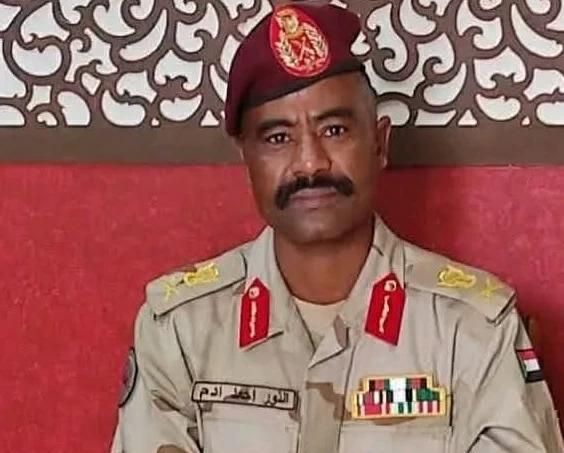
Abdel Fattah al-Burhan Welcomes Noor al-Quba’s Defection From RSF to Sudanese Army
15 sources compared

IGAD Envoy Lawrence Korbandy Says Quintet Will Convene Sudan Meetings Next Month
11 sources compared
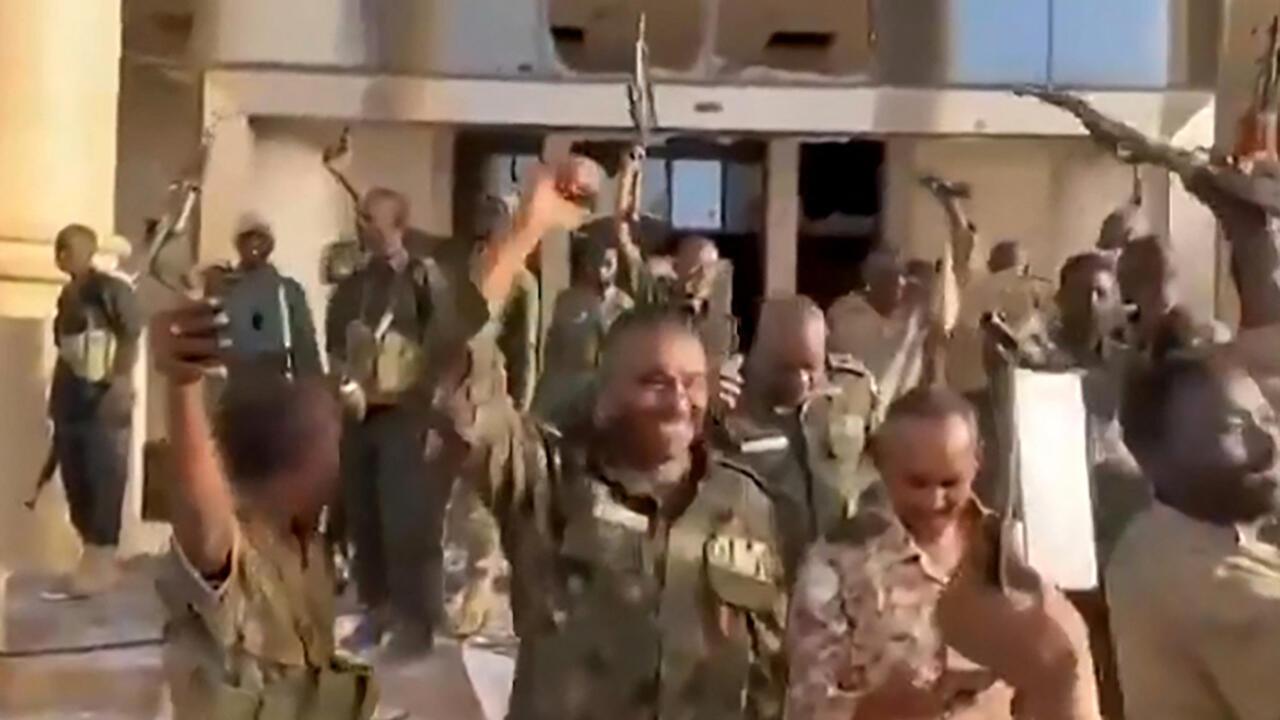
Sudan’s Army Seizes Central Bank And General Intelligence Service In Khartoum
10 sources compared

International Court Rejects Sudan's Genocide Case Against United Arab Emirates
11 sources compared