Full Analysis Summary
El Gezira wheat crisis
Sudan’s El Gezira–Managil irrigated farming scheme is reported to be in deep crisis, with wheat acreage roughly halved and production collapsing after repeated disruptions, local officials and reporters say.
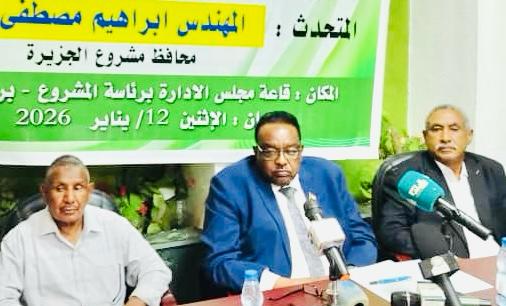
Governor Ibrahim Mustafa is cited as saying that wheat area fell from about 400,000 feddans to roughly 210,000 feddans, a decline captured in independent reporting for Jubraka News/Sudan Media Forum and carried by Radio Dabanga and Dabanga Radio TV Online.
Coverage Differences
Tone/Narrative similarity vs. sourcing
Both Dabanga Radio TV Online (Other) and Radio Dabanga (Other) present this as a severe, factual collapse based on the governor’s figures and field reporting; Jubraka News/Sudan Media Forum is presented as the independent on‑the‑ground reporter whose testimonies and farmer interviews underpin the coverage. The two Dabanga outlets largely align in numbers and causes but attribute the primary sourcing to the Jubraka reporter. This means there is consistency of reporting across the available sources rather than stark contradiction.
Source role clarification
Dabanga Radio TV Online frames the material as a compiled set of key facts and impacts, while Radio Dabanga frames the story as an independent report drawing on local official statements and farmer accounts; both, however, explicitly report that the reporting came from Jubraka News/Sudan Media Forum rather than presenting wholly original field reporting.
Causes of agricultural collapse
Reporters and officials attribute the collapse to multiple, overlapping causes: sharply higher input costs; a collapse in financing and banking support; conflict-related damage and occupation (including the 2023 RSF occupation of Wad Madani); and degraded irrigation infrastructure with canals clogged by silt and weeds.
Sources repeatedly list seed, fertiliser, machinery and fuel shortages as immediate constraints on cultivation and recovery.
Coverage Differences
Emphasis on causes
Both Dabanga Radio TV Online and Radio Dabanga list the same set of causes—soaring input prices, lack of financing, war damage and broken irrigation—but Radio Dabanga’s wording emphasizes the role of war damage and the collapse of pre‑war credit systems, while Dabanga Radio TV Online presents a compact list of key factors and concrete infrastructure complaints; both attribute much of the reporting to local farmer testimonies originally gathered by Jubraka News.
Agricultural economic shocks
Farmers’ testimonies reported by Jubraka and carried in both Dabanga outlets describe concrete economic shocks.
Inputs have become unaffordable, fuel and machinery are scarce, and after several seasons many have left land fallow or switched from wheat to vegetables.
The reporting gives examples of pre-war yields and explicit price changes, with fertiliser reportedly rising from about 20,000 to 120,000 Egyptian pounds per bag and tractor costs roughly tripling, illustrating how returns and incomes have fallen.
Coverage Differences
Detail vs. summary
Dabanga Radio TV Online provides detailed numeric examples (e.g. fertiliser prices and pre‑war yields), while Radio Dabanga reiterates those figures in a narrative that foregrounds farmers’ decisions to abandon wheat. Both draw on the same Jubilee/Jubraka reporting; Dabanga Radio TV Online presents the granular statistics as a set of ‘Key facts’, whereas Radio Dabanga embeds them in a broader description of impacts and lost credit systems.
Irrigation scheme revival plan
Officials outlined a revival plan combining administrative, infrastructural and investment steps.
They will appoint a commissioner to manage scheme assets.
The plan includes forming agricultural associations and establishing a board.
Authorities allocated 9,000 acres for seed production.
Planned works include disinfecting canals and supplying fuel.
Officials will qualify contractors to rehabilitate irrigation, including a planned rehabilitation of the Al-Junaid wellway by an Austrian contractor.
Authorities also said they would open the scheme to national and foreign investors.
There is reported interest from China and Türkiye.
Coverage Differences
Policy detail vs. farmer priorities
Both Dabanga Radio TV Online and Radio Dabanga report Governor Mustafa’s revival plan, listing administrative measures and infrastructure rehabilitation; however, the sources show a gap between official planning and farmers’ immediate needs—farmers in the reporting warn that urgent canal cleaning, seeds, fertiliser, machinery and immediate funding are needed now, a practical priority that the revival plan may not meet immediately.
Agricultural reporting overview
The available coverage is urgent and pragmatic rather than speculative, with the two Dabanga outlets reporting consistent figures and solutions and crediting on-the-ground reporting by Jubraka News and the Sudan Media Forum.
Because all three items in the package draw on the same reporting, there is broad agreement on the facts and the drivers of the situation.
The basic remedy identified is to rehabilitate irrigation, re-establish inputs, and provide finance.
There is a clear reporting gap on independent verification by government or international agencies and on updated cultivation figures beyond the governor's statement.
Coverage Differences
Agreement and gaps
The primary difference is not contradiction but scope: Dabanga Radio TV Online presents a concise set of key facts and granular figures; Radio Dabanga frames the narrative with emphasis on the collapse of credit and wartime disruption; Jubraka News/Sudan Media Forum provides the field reporting and farmer testimonies that underpin both outlets. Notably, none of the provided pieces supplies independent verification (e.g., from agricultural ministries, banks or international agencies) of the governor’s numbers, which leaves some uncertainty about the exact totals and recovery prospects.