Full Analysis Summary
Warrantless home entry ruling
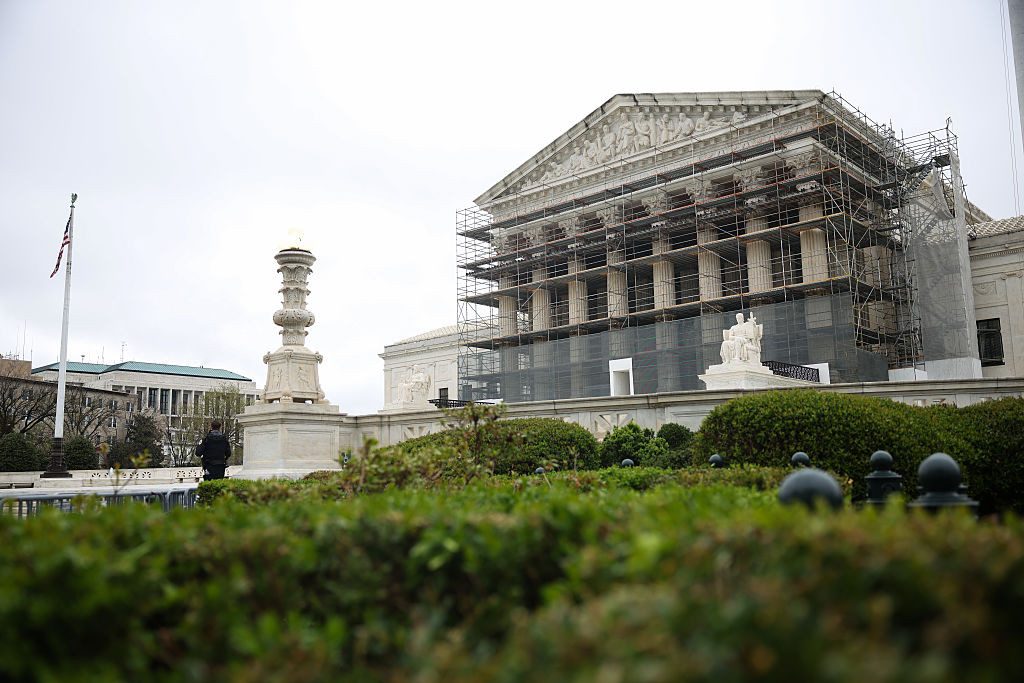
The U.S. Supreme Court unanimously ruled that police may enter a home without a warrant when they have an 'objectively reasonable basis' to believe an occupant is seriously injured or imminently threatened.
The Court's decision backed Montana county officers who entered William Trevor Case's house after reports he might be suicidal.
Justice Elena Kagan wrote the opinion, and the Court rejected the argument that officers needed probable cause, finding the entry met the emergency exception.
The ruling arose from a 2021 incident in which officers responded after an ex-girlfriend reported threats of suicide.
Coverage Differences
Tone/Emphasis
CNN (Western Mainstream) emphasizes the legal standard and Justice Elena Kagan’s opinion, framing the ruling in constitutional-law terms, while KTVH (Other/local) presents the same outcome with local detail about Case, and KION (Other) does not offer content because the pasted text was only a footer. The CNN piece states the legal basis and specific factual observations (holster, notepad) as part of the Court’s reasoning; KTVH focuses on the local incident and outcome; KION explicitly reports that the submitted text could not be summarized because it was a footer.
Court on emergency entry
Officers went to Case's home in September 2021 after an ex-girlfriend reported he had threatened suicide, and through windows they observed what the court described as an empty handgun holster and a notepad they took to be a suicide note.
The justices concluded those visual observations and the reported threat justified entry under the emergency exception.
Local coverage notes that officers found no one inside and received no response when they called out before making entry.
Coverage Differences
Detail/Omission
CNN (Western Mainstream) provides detailed factual elements the Court cited (empty handgun holster and a notepad taken to be a suicide note) as part of the emergency justification, while KTVH (Other/local) highlights the timeline and local facts (September 2021, no sign of Case inside, no response when called). KION (Other) did not provide article content and therefore omits these case facts entirely.
Emergency warrant-exception ruling
Legally, the Court framed the decision around the emergency exception to the warrant requirement.
Under this exception, officers need not have probable cause if they possess an "objectively reasonable basis" to believe someone is seriously injured or imminently threatened, a standard the unanimous justices applied to the facts here.
CNN reports that Justice Kagan explicitly rejected requiring probable cause in these circumstances.
KTVH summarizes the outcome as the justices finding the officers acted reasonably.
Coverage Differences
Narrative/Legal Framing
CNN (Western Mainstream) frames the ruling in doctrinal terms and quotes the Court’s legal phrasing ("objectively reasonable basis") and Justice Kagan’s rejection of a probable-cause requirement. KTVH (Other/local) frames the decision more plainly as the justices ruling against Trevor Case and finding the officers’ actions reasonable. KION (Other) again contains no substantive coverage to contribute to the legal framing.
News coverage comparison
CNN includes doctrinal context and even notes an unrelated line about a Jim Crow-era civil rights law and the Trump Justice Department appearing elsewhere in its article.
KTVH centers the story locally on Trevor Case, the September 2021 response, and the shooting and wounding mentioned in its report.
KION's provided text did not include article content and effectively offers no coverage to compare.
These differences reflect source type: a national outlet (CNN) stresses legal reasoning and broader context, a local outlet (KTVH) stresses factual chronology and local impact, and KION supplied no usable content.
Coverage Differences
Unique/Off-topic content and Omission
CNN (Western Mainstream) included an unrelated reference to a separate civil-rights-law item in the same article, which is absent from KTVH’s local-focused coverage; KION (Other) contains no substantive article text to compare, explicitly stating the pasted text was a footer.
Reporting on court decision
The available reporting shows a unanimous Supreme Court decision applying the emergency exception to allow warrantless entry.
The decision permits warrantless entry when officers have an objectively reasonable basis to fear imminent harm.
That ruling is grounded in the specific facts of the September 2021 response to Trevor Case.
CNN supplies the doctrinal wording and fact detail cited by the Court.
KTVH reinforces the on-the-ground timeline and outcome.
KION's supplied snippet contains no article material, creating a clear omission in cross-source coverage.
Coverage Differences
Contradiction vs Omission
There is no direct contradiction between CNN and KTVH on the core ruling—the difference is emphasis and breadth—while KION’s content omission prevents verification of any local or national nuance it might have provided.