
Supreme Court to Decide Meaning of Election Day for Late Ballots
Key Takeaways
- Supreme Court will decide what 'Election Day' means for late ballots.
- Mississippi allows counting ballots postmarked by Election Day if received within five days.
- Ruling could reshape national deadlines for mail ballots ahead of midterms.
Legal Battle Over Late Ballots
The Supreme Court is set to hear arguments on March 23, 2026, in the pivotal case Watson v. Republican National Committee.
“district court upheld Mississippi's law”
This case will determine whether states can count mail-in ballots that are received after Election Day as long as they are postmarked by Election Day.

The legal conflict stems from Mississippi's five-day grace period for absentee ballots, which was struck down by the conservative-leaning 5th Circuit Court of Appeals.
The Trump administration and Republican National Committee argue that federal Election Day statutes envision a single day for casting ballots.
They contend that allowing ballots to be counted after Election Day violates federal law.
Mississippi Attorney General Lynn Fitch, a Republican, defends the state's policy choice, noting that federal law authorizes states to make such decisions regarding election administration.
Voter Access Arguments
Supporters of ballot grace periods emphasize voter access and practical realities, particularly for military personnel and Americans living overseas.
Twenty-nine states allow late-arriving ballots from military and overseas voters to be counted, while 14 states provide grace periods for all mail-in ballots postmarked by Election Day.

Alaska, with its vast distances and unique geography, counts ballots if postmarked by Election Day and received within 10 days, or 15 days for overseas voters.
Groups representing veterans and retirees argue that people are being stripped of their voting rights through no fault of their own due to postal delays.
Democratic elections attorney Marc Elias contends that the GOP effort disproportionately affects Democratic voters who are more likely to vote by mail.
Elias suggests Republicans are 'trying to kick out of the electorate voters who they would not rather have participate.'
Election Integrity Concerns
Opponents of late ballot counting focus on election integrity and legal interpretation.
“JUNEAU, Alaska — The tiny Alaska Native village of Beaver is about 40 minutes — by plane — from the nearest city”
The Republican National Committee and conservative groups argue that strict deadlines are necessary to prevent fraud.
They state that 'the longer the period over which the election is conducted, the greater the opportunity for and risk of fraud.'
Justice Brett Kavanaugh's 2020 concurrence in a Wisconsin case suggests sympathy for this view.
Kavanaugh noted that states want to 'avoid the chaos and suspicions of impropriety that can ensue if thousands of absentee ballots flow in after Election Day and potentially flip the results of an election.'
The Trump administration has long opposed mail-in voting, with President Donald Trump baselessly claiming it cost him the 2020 election.
Practical Implications
The case carries significant practical implications for election administration nationwide.
If the Supreme Court upholds the 5th Circuit ruling, it would affect about 30 states that accept some ballots mailed by Election Day but received after that day.

Washington state, which has the longest grace period of any state at 21 days after Election Day, saw 127,000 ballots received after Election Day in 2024.
Election officials warn that eliminating grace periods could create chaos and confusion.
This could affect ballot verification activities, provisional ballot processing, and military ballot counting.
Stuart Holmes, director of elections for the Washington Secretary of State's office, noted that voters should expect about 127,000 ballots to be rejected if Mississippi loses the case.
Court Approaches & Politics
The Supreme Court faces several potential approaches to resolving this contentious issue.
“These voters might be deployed in a faraway combat zone or in a different state, or studying, working, preaching, or serving as a diplomat abroad”
The justices might treat military ballots as a separate category given that Congress has addressed them in separate legislation.

Lisa Dixon of the Center for Election Confidence describes this outcome as 'quite plausible.'
Another possibility is that the court could say that reasonable people can disagree with state policy choices but that federal law authorizes states to make such determinations.
The case has garnered significant political attention, with Rep. Joseph D. Morelle, D-N.Y., stating that Trump would do 'anything to undermine free and fair elections.'
Political scientist Daniel Thompson doubts the case will have much influence on actual election results, noting that the overall rejection rate for late-arriving ballots in 2020 was less than 1%.
More on USA
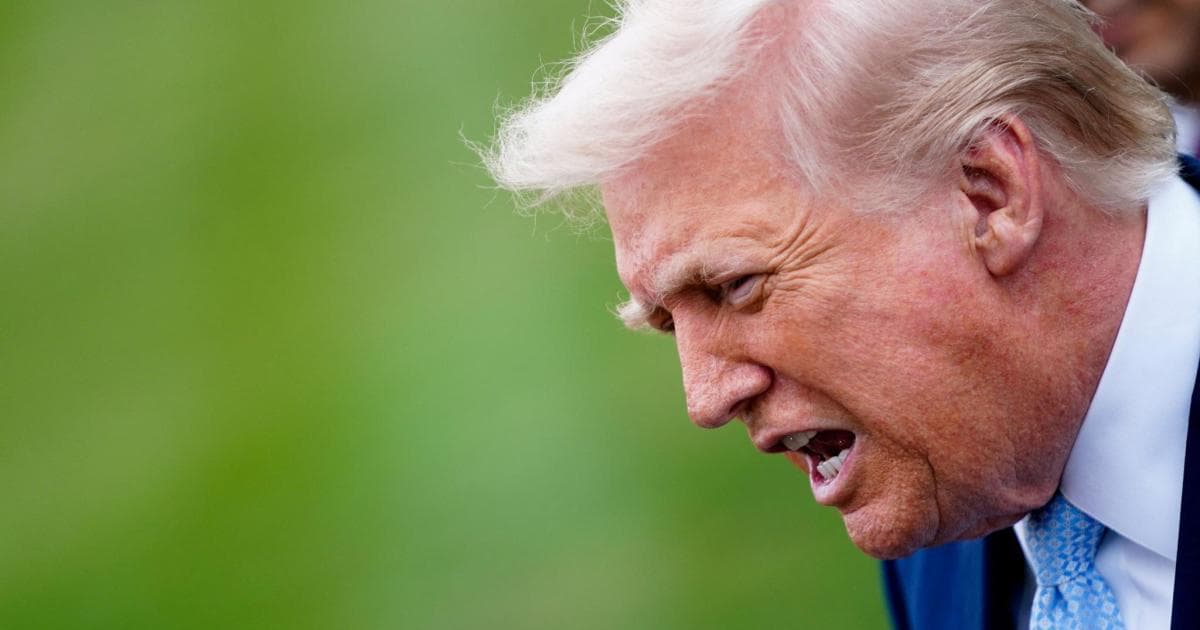
Trump Deploys ICE to Airports to Aid TSA During DHS Shutdown
38 sources compared

ICE Deploys Agents to Airports Nationwide Under Tom Homan Amid DHS Shutdown
98 sources compared

Floor collapses at Tamworth wedding venue, injuring six
21 sources compared

Riverside County Sheriff Chad Bianco Seizes 500,000 Ballots as He Runs for California Governor
10 sources compared