
Surprise US talks with Iran’s fractured leadership offer uncertain path out of conflict
Key Takeaways
- Egyptian Foreign Ministry tweeted conversations underway 24 hours before the energy-infrastructure attack deadline.
- Steve Witkoff and Abbas Araghchi led backchannel discussions on Iran conflict.
- Talks reflect uncertain path out of conflict amid fractured leadership.
Backchannel talks and mediators
The backchannel talks between Donald Trump’s special envoy, Steve Witkoff, and the Iranian foreign minister, Abbas Araghchi, were not a secret in the sense that the Egyptian Foreign Ministry had tweeted that conversations were under way on Sunday, 24 hours before Donald Trump’s late Monday deadline to start blowing up Iran’s energy infrastructure.
“The backchannel talks between Donald Trump’s special envoy, Steve Witkoff, and the Iranian foreign minister, Abbas Araghchi, were not a secret in the sense that the Egyptian Foreign Ministry had tweeted that conversations were under way on Sunday, 24 hours before Donald Trump’s late Monday deadline to start blowing up Iran’s energy infrastructure”
But such is the chaos surrounding the process that the discussions – thought to be well short of negotiations – may have lasted longer than Sunday, with more than one mediator, as is often the case, jostling for the title of peacemaker in chief.
Iran denial vs Trump claims
Trump insists it was the Iranians who requested to talk, and their minds had been concentrated by Trump’s threat of destroying a $10bn power plant.
Tehran initially denied any talks had happened either directly or indirectly, saying: "There is no negotiation whatsoever between Tehran and Washington. The statements of the president of the United States are within the framework of an attempt to lower energy prices and buy time for the implementation of his military plans."
Iranian leadership chaos and players
Iran’s lines of political authority have been in a state of chaos due to damage wreaked by the Israeli assassination campaign.
“The backchannel talks between Donald Trump’s special envoy, Steve Witkoff, and the Iranian foreign minister, Abbas Araghchi, were not a secret in the sense that the Egyptian Foreign Ministry had tweeted that conversations were under way on Sunday, 24 hours before Donald Trump’s late Monday deadline to start blowing up Iran’s energy infrastructure”
Among the survivors, Pezeshkian has his strengths as a unifying figure of integrity, but is out of his depth in nuclear talks, and not fully trusted by the military.
Ali Larijani, the former secretary of the supreme national security council and Iran’s political glue in the past 12 months, had just been buried.
The new supreme leader was possibly in a coma, and definitely invisible.
That largely left in terms of politics Mohammad-Bagher Ghalibaf, the speaker of the parliament, and a staunch supporter of the Islamic Revolutionary Guards Corps.
Trump's 15-point terms
One of its key elements, he said was that the strait of Hormuz may be jointly controlled by “me and the Ayatollah. Whoever the Ayatollah is”.
Other elements included no nuclear bombs, no nuclear weapons “not even close”, no nuclear dust, by which he meant the stockpile of highly enriched uranium, “low key on the missiles”, peace in the Middle East, by which he meant talks between Iran and its furious Gulf neighbours, and finally “no enrichment”.
Most of these proposals had already been agreed in the talks held in Geneva or on their sidelines.
More on Iran

President Trump Says Iran Deal Within Reach Amid Talks With Senior Iranian Official
10 sources compared

Trump Approves Iran Operation After Netanyahu Presses for Joint Strike on Khamenei
12 sources compared

President Donald Trump orders ICE officers deployed to airports amid DHS shutdown.
227 sources compared
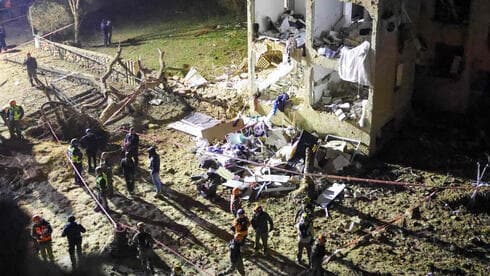
Iranian Missiles Strike Israel; Officials Report 180 Injured Amid Conflicting Casualty Figures.
12 sources compared