Europe14 June, 20262 min read
Swiss Voters Reject Far-Right Plan To Cap Population At 10 Million
Voters rejected the proposal to cap Switzerland's population at 10 million by about 55%. The plan was championed by the Swiss People's Party and opposed by the government.

Swiss cap rejected
Switzerland rejected a far-right proposal to cap its population at 10 million in a referendum dubbed “the Swiss Brexit,” with 54.79% of voters against the plan and 45.21% in favour. The vote, held with turnout of 58.86%, would have required the Swiss government to limit the population, currently 9.1 million, to 10 million by 2050 and to withdraw from the country’s free movement agreement with the EU if the 10 million threshold was exceeded before that date.
Beat Jans welcomed the result, saying it was "a sign of stability, openness and reliability" as Switzerland’s justice minister. Urs Bieri, from the polling firm GFS Bern, said the initiative failed because people were unconvinced and worried about side-effects, including the impact on Switzerland’s relationship with the EU and the labour market.

EU ties and labour
The proposal risked putting Switzerland’s free movement agreement with the European Union in jeopardy, and the BBC said it was opposed by the government, Swiss businesses, and all the other major parties.
The BBC reported that the Swiss People’s Party’s argument about protecting public services and the environment did not persuade enough voters, while some voters feared losing much-needed workers in tourism, hospitals, and care homes.
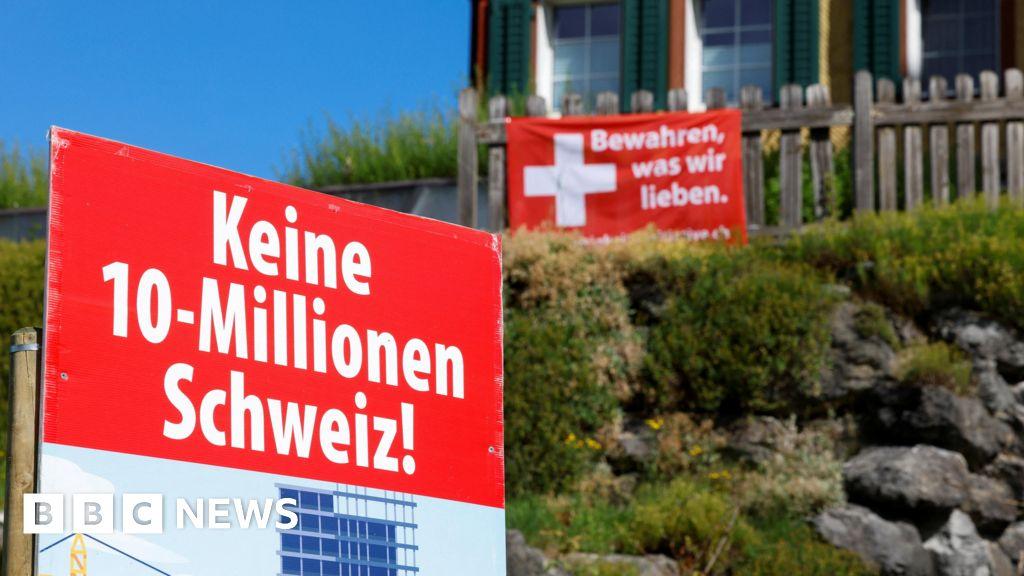
Rudolf Minsch, chief economist at Economiesuisse, said that if the motion passed, Switzerland "could face challenges in our relations with the European Union".
The BBC also quoted the European Commission president Ursula von der Leyen welcoming the result, saying: "The Swiss people have spoken. The EU and Switzerland share deep ties and a strong partnership".
Voices split on migration
In canton Bern, the BBC reported that almost 84% of those voting rejected a population cap, while key tourism areas and cantons including Graubunden and Valais also said no. Nils Fiechter, 29, who represents the Swiss People’s Party in canton Bern’s parliament, complained that "Unchecked immigration is leading to Switzerland no longer being Switzerland," and he pointed to housing shortage, gridlocked traffic, overburdened schools and strained social services.
Helin Genis, a 31-year-old Social Democrat elected to Bern city council, dismissed the arguments as scapegoating and told BBC News: "It is not migrants who determine rent levels." The Guardian added that Switzerland’s population had risen by 23% since the free movement agreement came into effect in 2002 and that about 27% of Swiss residents are not citizens, framing the referendum as a test of how Switzerland manages ties with Europe.