Swiss Voters Reject Proposal To Replace Men-Only Military Conscription With Compulsory Civic Duty For All

Swiss Voters Reject Proposal To Replace Men-Only Military Conscription With Compulsory Civic Duty For All

30 November, 20256 sources compared
Europe

Key Points from 6 News Sources

  1. 1

    Swiss voters decisively rejected replacing men-only conscription with compulsory civic duty for all

  2. 2

    Swiss voters rejected a climate-focused inheritance tax on the super-rich
  3. 3

    Swiss voters overwhelmingly rejected both initiatives in the nationwide referendum

Full Analysis Summary

Swiss referendum outcomes

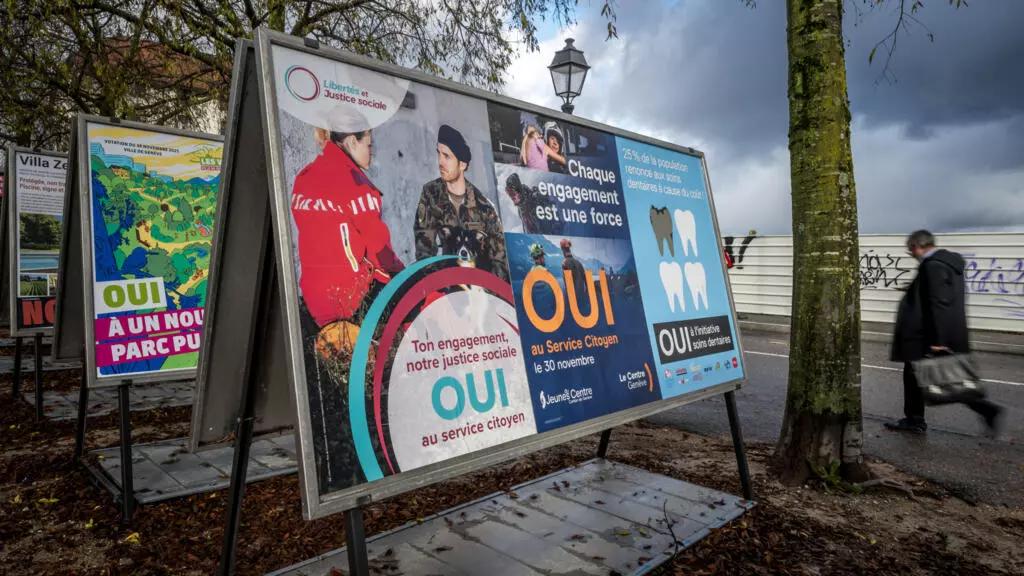
Swiss voters rejected two high-profile ballot initiatives in a national referendum.

They left the men-only conscription system in place and turned down a proposed climate-oriented inheritance tax.

Observers reported that the Civic Duty proposal, which would have replaced male-only conscription with compulsory service for all citizens, failed decisively.

The Socialist youth ‘initiative for a future’ inheritance plan was also rejected.

Campaigners and officials on both sides characterised the result as a clear rebuke to the measures, and the government and parliament had urged rejection on cost and economic-risk grounds.

Coverage Differences

Tone and emphasis

Big Country News (Other) frames the outcome as an overwhelming and decisive rejection with precise vote shares, The Sun Malaysia (Other) focuses on the preservation of the men-only system and the defeat of the inheritance tax, while DIE WELT (Western Mainstream) highlights the Federal Council’s cost-based urging to voters. These sources report the same result but emphasise different aspects: magnitude, institutional preservation, and official economic arguments.

Narrative focus

Some outlets foreground campaign language (equality and social cohesion) while others foreground institutional and fiscal warnings from government and parliament; all report the rejection but emphasise different causes and consequences.

Civic Duty Proposal

The Civic Duty proposal sought to make national service mandatory for all citizens, both men and women, with supporters arguing it would advance 'true equality' and strengthen social cohesion by giving women access to networks and experiences tied to service.

The initiative's backers included a committee led by Noemie Roten, who framed the proposal as a long-term social change that should remain part of public debate.

Coverage Differences

Supporters’ framing vs reported description

Euractiv (Western Alternative) reports the supporters’ argument in detail and names Noemie Roten as the committee lead stressing social cohesion and equality, whereas The Sun Malaysia (Other) repeats the equality/social cohesion framing but also presents opponents’ counterclaim that the proposal would worsen unpaid-work imbalances for women. This shows supporters’ equality narrative is consistently reported, while some sources immediately pair it with opponents’ gender-burden concerns.

Detail depth

Euractiv provides explicit naming of campaign leadership (Noemie Roten) and articulates the network/experience argument in detail, while other outlets summarise the equality claim more broadly without naming organisers.

Opposition: civic duty and inheritance

Opponents, including the Federal Council, the Swiss Trade Union Federation and parliament, argued the civic-duty plan would impose heavy direct and indirect costs, risk exceeding defence needs, and worsen unpaid work burdens for women.

Campaign warnings also stressed broader economic risks from the inheritance-tax proposal, including potential capital flight and harm to family businesses.

Coverage Differences

Policy critique emphasis

DIE WELT (Western Mainstream) and Big Country News (Other) foreground cost and economic-risk arguments, with DIE WELT quoting the Federal Council’s warning about ‘high direct and indirect costs’ and Big Country News highlighting fears of capital flight and harm to family businesses. Euractiv (Western Alternative) similarly reports opponents’ claims but places them alongside the specific gender and defence-capacity objections.

Gender burden vs fiscal cost

The Sun Malaysia (Other) and Euractiv highlight the argument that the proposal could ‘worsen existing imbalances’ because women ‘already shoulder most unpaid work’, while DIE WELT and Big Country News stress institutional fiscal strain and economic downsides; sources therefore differ in whether they emphasize gendered social impacts or financial/economic impacts in reporting opponents’ case.

Swiss ballot outcomes

The ballot included the Socialist Party youth's initiative for a future, which proposed a 50% inheritance tax on fortunes over CHF 50 million to raise roughly CHF 6 billion a year for climate and ecological transition spending.

That measure, like the civic-duty proposal, was rejected by large margins.

Coverage emphasised reported vote shares, turnout and the scale of the defeats as a decisive rebuke to both initiatives.

Coverage Differences

Policy detail vs result statistics

Euractiv (Western Alternative) and The Sun Malaysia (Other) present the inheritance-tax proposal’s aims and figures (50% on fortunes over CHF 50m to raise about CHF 6bn) while Big Country News (Other) concentrates on the rejection margins and turnout (‘about 84%’ and ‘over 78%’, turnout 43%). This creates a difference between coverage focussing on the policy design and coverage emphasising electoral numbers.

Economic consequence emphasis

Big Country News notes government and parliamentary warnings about high costs and economic risks for both proposals, whereas Euractiv includes critics’ warnings that the inheritance levy could prompt wealthy residents to leave — a more explicit migration/capital-flight concern.

Press reaction to vote

Reporting reactions varied: civic-duty campaigners said the debate would continue despite the defeat, while government and parliamentary officials described the results as a vindication of concerns about cost and defence capacity.

Some outlets highlighted the proposal's social-justice ambitions, while others emphasised institutional warnings and specific vote percentages, reflecting different editorial choices and source emphases across the coverage.
Coverage Differences

Forward-looking framing vs validation of official warnings

Euractiv (Western Alternative) records Noemie Roten saying the idea will continue to be debated and compares it to earlier social changes, while DIE WELT (Western Mainstream) and Big Country News (Other) cite officials’ and institutions’ warnings and treat the outcome as validation of cost/economic concerns.

Severity and language choice

Some outlets use strong language like ‘overwhelmingly rejected’ (Big Country News) or ‘decisive rebuke’, while others present the institutional rationale and policy details without the same emotionally charged phrasing, indicating variation in tone across source types.

All 6 Sources Compared

Big Country News

Swiss reject compulsory civic duty, climate tax for super-rich

Read Original

DIE WELT

Referendum in Switzerland — compulsory civic service and an inheritance tax for the wealthy were rejected.

Read Original

Euractiv

Swiss voters reject climate tax for super-rich and compulsory civic duty

Read Original

SWI swissinfo.ch

Swiss voters massively reject inheritance tax, civic duty proposals

Read Original

The Sun Malaysia

Swiss voters reject civic duty and climate tax proposals

Read Original

The Times of India

Swiss vote on compulsory civic duty, climate tax for super-rich

Read Original