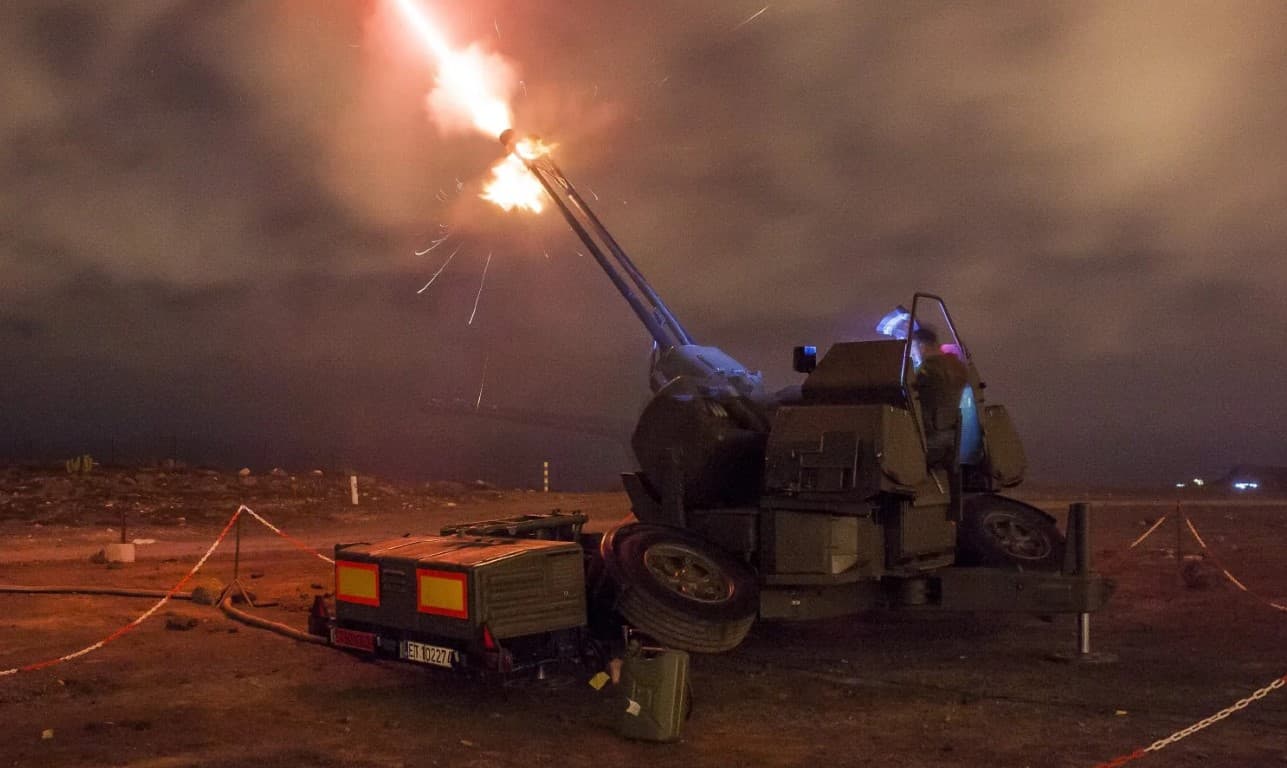
Switzerland Halts Arms Exports to United States Over Iran War, Citing Neutrality
Key Takeaways
- Switzerland suspends arms export licenses to the United States over the Iran war, citing neutrality.
- Policy applies to countries involved in the Iran conflict; existing licenses will be regularly reviewed.
- The Federal Council invoked neutrality as the basis for halting exports.
Swiss Arms Export Ban
Switzerland has moved to suspend new approvals for arms exports to the United States amid the ongoing US-Israeli war on Iran, citing its long-standing policy of neutrality and legal restrictions under domestic export controls.
“Switzerland has said it will not issue licences for companies to export weapons to the United States due to the ongoing war on Iran, citing the country’s longstanding principle of neutrality”
In a formal statement on Friday, the Swiss government declared that 'exports of war materiel to the US cannot currently be authorised,' pointing to Washington's involvement in an 'international armed conflict' in the Middle East.

The decision formalises a position already in practice, as Swiss authorities noted that since the beginning of the war on February 28, 'no new licences have been issued for exports of war materiel to the US.'
The measure applies specifically to new orders for arms and ammunition, effectively pausing fresh approvals while the conflict continues, though existing licences determined to be of no relevance to the war at present can continue to be used.
Oversight Mechanism
The Swiss government has established a mechanism for ongoing oversight of the situation, with an interministerial group of experts that will 'regularly review developments in exports of the goods in question to the US and assess whether any action is required under neutrality law.'
This review extends beyond traditional arms exports to include goods covered by the Goods Control Act, as well as certain dual-use items and non-controlled goods affected by sanctions on Iran.

Swiss officials explained that the US is the second-biggest market for Swiss arms after Germany, buying military goods worth 94.2 million francs (approximately $120 million) in 2025, with the suspension affecting at least part of SIG Sauer, a major small arms maker whose guns are heavily used by the U.S. military.
Historical Context
Switzerland's decision represents a significant economic and diplomatic stance that builds upon the country's historical commitment to neutrality, particularly evident during previous conflicts.
“Switzerland will not authorize the export of military equipment to countries involved in the international armed conflict with Iran, the Federal Council (the Swiss government) announced on Friday”
The government noted that 'no definitive licences for exports of war materiel to Israel have been granted for several years,' and the same applies to Iran.
This policy is not unprecedented, as Switzerland has a documented history of similar restrictions, including those imposed during the 2003 US-led invasion of Iraq when the country 'imposed bans on flights over Swiss airspace and weapons exports to countries involved in the war' before later lifting them.
The current decision also follows earlier restrictions linked to the conflict, including limits on US military flights through Swiss airspace.
Airspace Restrictions
The Swiss government has also implemented airspace restrictions as part of its neutrality enforcement regarding the Iran conflict.
Last weekend, Swiss authorities 'rejected two U.S. flyover requests on Iran-related war flights but permitted three others, also citing Switzerland's neutrality law.'

This dual approach demonstrates Switzerland's nuanced application of neutrality principles, allowing some military operations while restricting others based on their direct connection to the conflict.
The government emphasized that it has studied the requirements of the neutrality principle, and that current licenses and exports of other materials will be reviewed by a team of experts to ensure compliance with neutrality law.
This careful balancing act reflects Switzerland's commitment to maintaining its neutral status while navigating complex international conflicts.
European Response
The Swiss decision to halt arms exports to the United States appears to be part of a broader pattern of European nations reassessing their involvement in the US-Israeli conflict with Iran.
“In its statement, Bern noted that neither Israel nor Iran received definitive licences to import Switzerland's weaponry "for a number of years”
While Switzerland's neutrality policy is uniquely stringent, other European countries have also demonstrated reluctance to directly participate in the hostilities.

German Chancellor Friedrich Merz has explicitly ruled out participation in the conflict, emphasizing that NATO remains a defensive alliance rather than a tool for military intervention.
Similarly, UK Prime Minister Keir Starmer has insisted that the country will not be drawn into a wider war in West Asia, as European leaders collectively ruled out sending warships to the Strait of Hormuz.
This growing divergence between the US and its European allies suggests a potential shift in transatlantic relations regarding Middle East conflicts.
More on Iran
Iran Launches Ballistic Missiles at US-UK Diego Garcia Base in Indian Ocean
49 sources compared
Trump Defends Iran War by Citing Pearl Harbor
12 sources compared

Israel's Defense Minister Warns Israel and United States Will Intensify Attacks on Iran
125 sources compared

Iran Threatens Worldwide Attacks on Tourist Sites
11 sources compared