SwRI Models Suggest Ancient Asteroid Impacts Created Long-Lasting Hydrothermal Systems for Life
Key Takeaways
- Around four billion years ago, asteroid bombardment reshaped Earth’s surface.
- Bombardment heated and melted the early crust, delaying continent formation.
- SwRI computer models link impacts to long-lasting hydrothermal systems.
Asteroids and early habitability
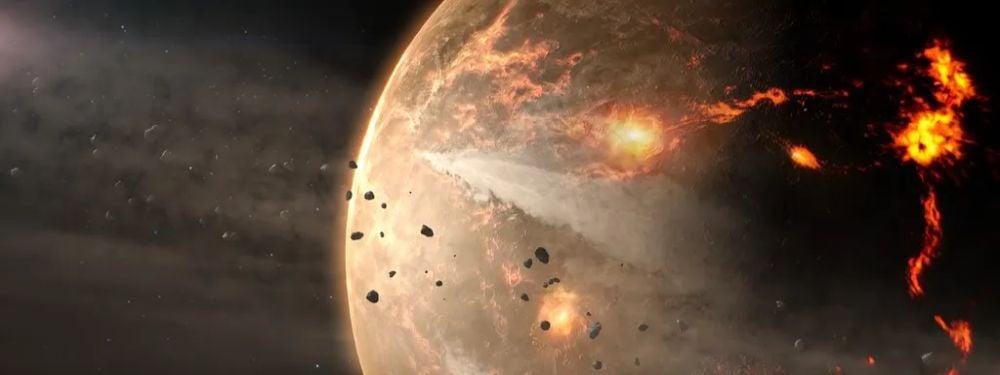
New computer models from scientists at Southwest Research Institute (SwRI) suggest ancient asteroid impacts may have helped spark life on Earth by creating long-lasting underground hydrothermal systems.
“Earth is the only planet we know of with buoyant, silica-rich continents”
The study’s simulations indicate that repeated high-speed collisions fractured Earth’s crust, creating porous underground pathways that allowed hot water to circulate through the upper layers of the crust.
SwRI first author Amanda Alexander said, "This modeling is both novel and crucial for understanding the earliest environments life may have emerged from," in describing the work in an AGU Advances article.
Alexander also argued that while impacts are often treated as catastrophic, "impact bombardment was also likely critical for creating environments for prebiotic chemistry."
The models estimate that the upper 5-mile (8-kilometer) shell of Earth’s crust likely was highly permeable 4.3 billion years ago and that a significant portion may have remained permeable until 3.5 billion years ago.
Continents kept from forming
A separate line of research, published in Science as "Impact heating and the hidden Hadean," argues that an extended barrage of asteroid impacts made Earth’s early crust too hot for thick continental material to form.
Universe Today reports that the work’s lead author, Tim Johnson of Curtin University in Perth, Australia, modeled impactor heat flux and found it "dwarfed the heat originating in the planetary interior."
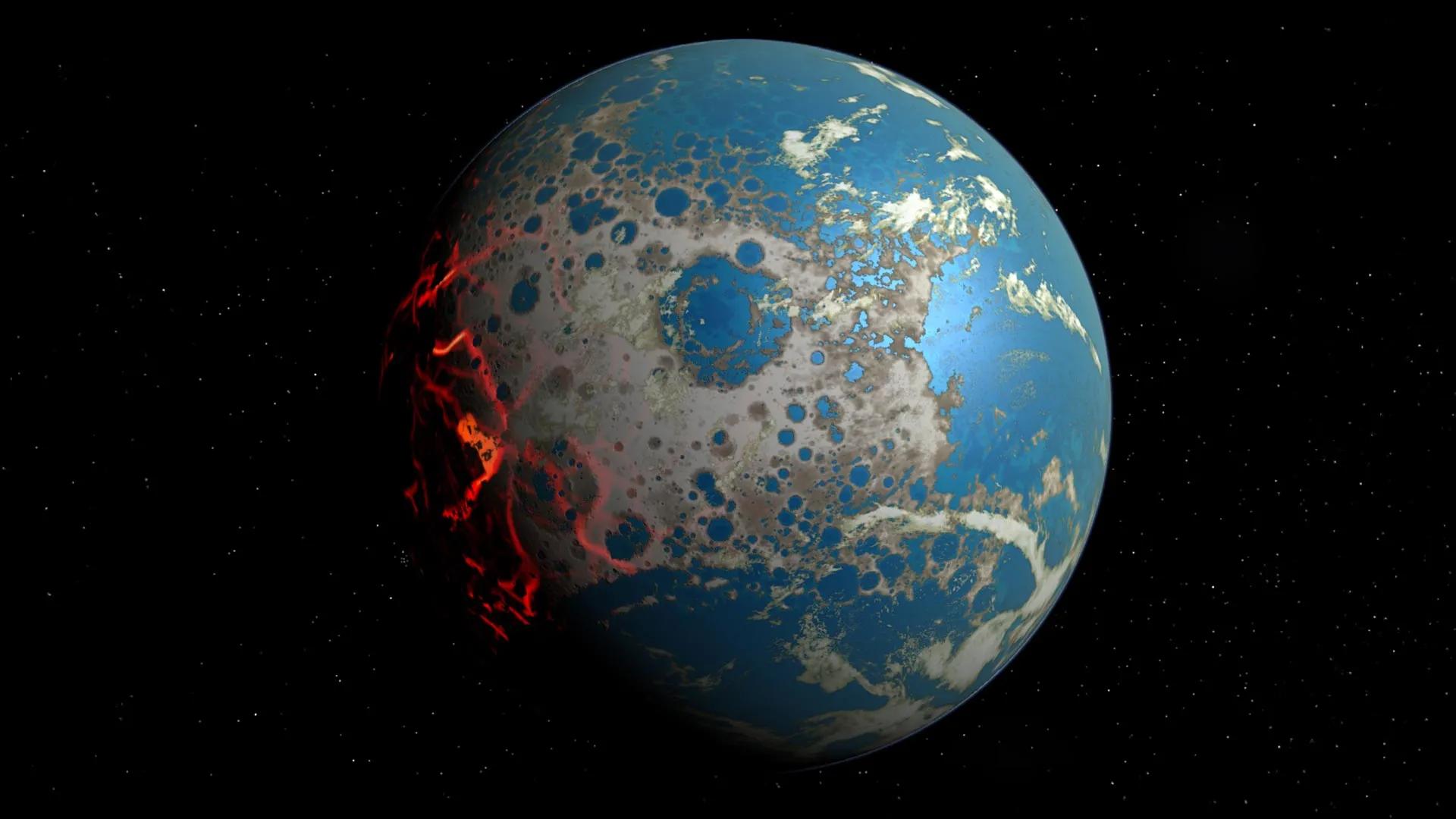
The same research says Earth’s Hadean crust would have been extensively molten at depths below a few kilometers, with gravitational segregation driving average crustal compositions to become increasingly silica rich.
The model places the Hadean eon from when Earth formed about 4.6 billion years ago until about 500 million years later, and it links the impact-generated heating diminishing by 3.9 billion years ago to the time when Earth’s crust thickened.
Ars Technica adds that the oldest known continental-type rocks crystallized around 4.03 billion years ago, right at the end of the Hadean eon, and quotes Johnson saying, "The continents started appearing around about four billion years ago—that’s the oldest continental rock we know about."
What the evidence implies
Across the studies, the timing of asteroid-driven heating is presented as a key constraint on when Earth could cool enough for stable structures, with Universe Today stating that the impact-generated heating would have diminished by 3.9 billion years ago.
“Earth four billion years ago was very different from the world today”
The Times of India frames the same Science study as showing that impacts heated up the mantle so much that the crust couldn’t be cooled down sufficiently, preventing the formation of continental lithosphere.
Ars Technica emphasizes that geological evidence for early continent formation is scarce, noting that the oldest known continental-type rocks crystallized around 4.03 billion years ago and that beyond about 4.4 billion years there is "hardly anything else."
Johnson is quoted by Ars Technica on the data problem, saying, "There are huge debates about what was going on in the early Earth, because the data is so scarce," as researchers rely on modeling.
In the SwRI work, Alexander’s estimates of permeability lasting from 4.3 billion years ago to 3.5 billion years ago are presented as a pathway from impact-driven crustal change to environments where life could emerge.
More on Technology and Science

New Jersey Officials Attribute 19 Heat Wave Deaths, Power Outages Hit Nearly 1 Million
17 sources compared

Trump Delivers July Fourth Speech After Severe Weather Evacuates National Mall for America’s 250th
10 sources compared
Australian Space Agency Investigates Six Metallic Spheres Found on Forrest Beach, Queensland
16 sources compared

Midjourney Asks Federal Court To Compel Disney, Universal, Warner Bros. To Disclose AI Training
10 sources compared