Syria Routes Oil After War Blocks Strait Access, Says Mazen Alloush
Key Takeaways
- Threatened Hormuz closure prompts search for oil routes via Syria.
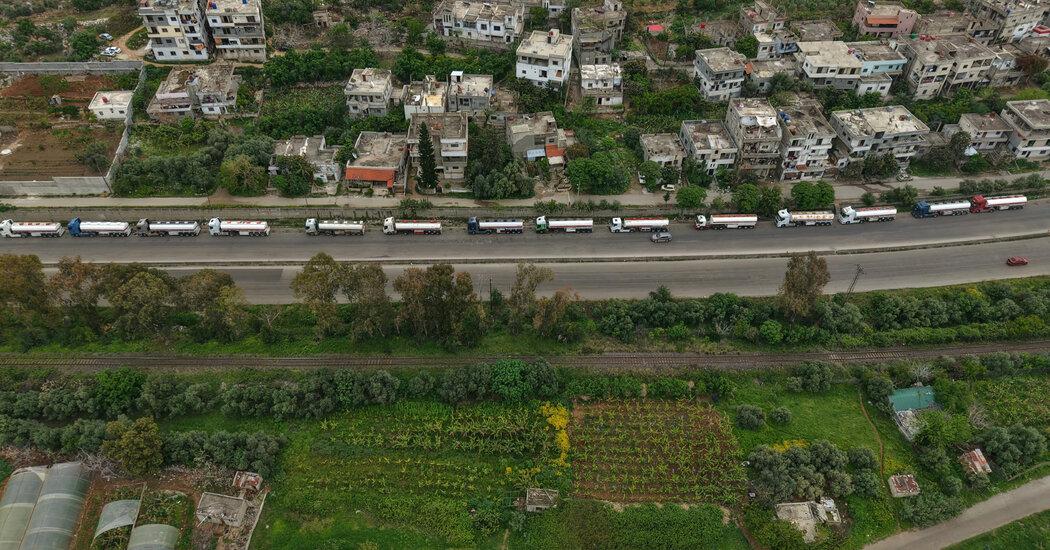
- Iraqi oil trucks travel along highways near Syria's Baniyas port and refinery.
- Syria's geography creates new economic opportunities amid the Middle East conflict.
Hormuz Blockage Spurs Syria
The New York Times reports that when war in the Middle East cut off access to one of the world’s most important shipping routes, Syria saw an opportunity to route oil and other goods through its Mediterranean ports and borders with Turkey, Iraq, Jordan and Lebanon.
“Israel-Iran War: What If the Strait of Hormuz Were Blocked”
The Times says Iraq and Gulf states including the United Arab Emirates have already begun to transport oil and other goods overland to ship from Syria, and it quotes Mazen Alloush saying, “After the closure of the Hormuz Strait, pretty much all the neighboring countries in the region knocked on our door to get access to our Syrian ports.”

The Times adds that Syria must overcome obstacles including “widespread power and water shortages,” and it links the challenge to infrastructure devastated in a nearly 14-year civil war that ended in 2024.
In the same context of Hormuz-related disruption, ladepeche.fr frames the Strait of Hormuz as a lever of action that could destabilize the global oil market, noting that “20% of the world's oil passes” through it.
ladepeche.fr also describes the strait’s geography as connecting the Persian Gulf to the Gulf of Oman and says it stretches 212 kilometers and is only about forty kilometers wide at its narrowest point.
Threats and Military Means
ladepeche.fr says that since the start of the war between Israel and Iran, Iranian officials have threatened to close the Strait of Hormuz in the Persian Gulf, and it describes the threat being amplified on Monday, June 23.
The article quotes that Iran warns the United States with “heavy consequences” and with a possible “extension of the war” to the Middle East, and it ties the threat to the strait’s strategic position between Iran, the United Arab Emirates, and the Sultanate of Oman.
ladepeche.fr also quotes Adel Bakawan, a research fellow at the French Institute of International Relations (IFRI), explaining that Iran has “several military means capable of disrupting traffic: direct targeting of ships, or laying naval mines in the navigation channels.”
The New York Times, meanwhile, focuses less on the threat itself and more on the immediate commercial response, saying neighboring countries knocked on Syria’s door to access Syrian ports after the Hormuz Strait closure.
The Times quotes Mazen Alloush again to describe the regional posture as contingency planning, saying, “They are making Plan B’s in case the crisis goes on longer.”
Aftermath, Infrastructure, and Risk
The New York Times reports that to take advantage of the new opportunities created by blocked shipping routes, Syria must overcome obstacles including “widespread power and water shortages.”
“War in theMiddle East The latest war in the Middle East has created new economic opportunities for Syria thanks to its geography”
It adds that Syrian infrastructure was devastated in a nearly 14-year civil war that ended in 2024, when rebelsousted the longtime dictator Bashar al-Assad.
In ladepeche.fr’s account of the broader energy stakes, it says the strait’s disruption would lead to destabilization of the world economy because 20% of world oil passes through it.
The same article links the Hormuz-related tensions to market movement, stating that between the start of Israeli strikes on June 12 and the evening of June 20, Brent crude rose by 11%, and it says “The barrel was at $77 this Monday, June 23, at noon.”
Finally, ladepeche.fr describes how the pressure could ripple into prices at the pump, stating, “this rise will inevitably ripple through gasoline prices at the pump.”
More on Syria

Bomb Kills 10 at Al-Mushairiya Cafe in Central Damascus, Wounds 22
11 sources compared

Asaad Al Shibani Receives Hero’s Welcome In Tripoli As Supporters Chant For Ahmad Al Shara
11 sources compared

Syria Signals Diplomacy After Asaad Al-Shaibani Lebanon Trip, Rejects Military Intervention Against Hezbollah
29 sources compared

Terrorist Bombing Kills 10, Injures 21 at Cafe Near Palace of Justice in Damascus
34 sources compared