Syria22 March, 20263 min read
Syrian authorities ban alcohol sales in Damascus, sparking protests
This article is an automated aggregation of coverage from news outlets. Our editorials offer in-depth analysis curated by the NewsCord team.
Bans alcohol sales in Damascus restaurants and bars; limited sales allowed in select Christian neighborhoods. Hundreds protested, across religious groups, citing threats to secular freedoms and rising conservatism.

Protests erupt over alcohol ban
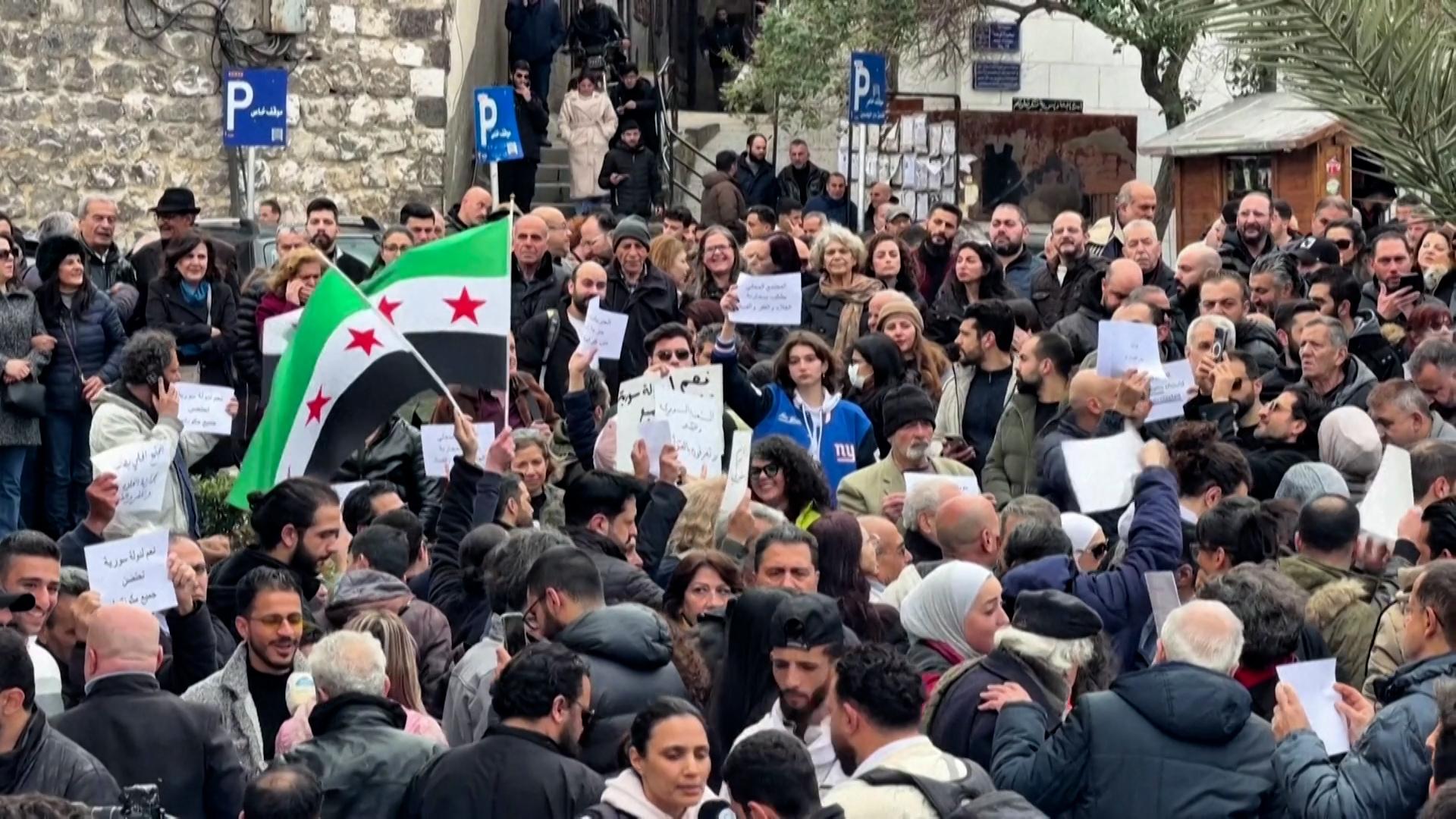
Hundreds of Syrians took to the streets of Damascus on Sunday to protest new government restrictions on alcohol sales. The Syrian capital's governor issued a decree banning the sale of alcoholic beverages in restaurants and bars across the city. Authorities claimed the measure was made "at the request of the local community."
“Crowds of protesters took to the streets of Syria's capital Damascus on Sunday to decry efforts to limit the sale and consumption of alcohol. The capital's governor last week banned the sale of alcoholic beverages in restaurants and bars across the city. They have been given three months to comply with the order. Authorities said the decision was made ‘at the request of the local community.’”
Protesters surrounded by heavily armed security forces gathered for demonstrations that passed without incident. Citizens from diverse religious backgrounds united against what they see as an erosion of personal freedoms.

The unrest comes amid heightened sectarian tensions in Syria. Pro-government Sunni fighters have killed hundreds of Alawites and Druze over the past year through sectarian attacks.
Restrictions and exemptions
The controversial decree includes specific restrictions and exemptions that have fueled public outrage. While alcohol sales are banned in restaurants and citywide, authorities granted limited exemptions to shops in three predominantly Christian neighborhoods: Bab Touma, al-Qassaa, and Bab Sharqi. However, these establishments face severe limitations including prohibitions on serving alcohol on-site.
They must sell only in sealed take-away bottles. Vendors must maintain distance of at least 75 meters (246 feet) from mosques and schools. They must also keep 20 meters (65 feet) from police stations and government offices.

Critics argue that singling out Christian neighborhoods unfairly frames them as responsible for "violations of public morals." The city is described as "full of secular Muslims" where Islamic law does not strictly govern all residents.
Protest perspectives
Protesters framed the demonstrations as broader struggles for personal freedom and secular identity rather than merely defending alcohol consumption. Demonstrators expressed that "This is not about whether we want to drink alcohol, this is about personal freedom," according to Isa Qqazah, a 45-year-old sculptor who attended the rally. Television writer Rami Koussa, 37, emphasized that "this type of decision will not stand," reflecting the determination of citizens to resist what they perceive as authoritarian social controls.
“'This is not about whether we want to drink alcohol, this is about personal freedom,' Isa Qazah, a 45-year-old sculptor, told the AP news agency at the protest. 'We have come here to defend an idea.' Television writer Rami Koussa, 37, told AFP that 'this type of decision will not stand.'”
Civil society groups organized silent protests in the Bab Tuma district. Banners read "Personal freedom is a red line," highlighting the broader implications of the restrictions. These implications affect Syria's diverse population and the country's traditionally secular character.
Broader social restrictions
The alcohol restrictions represent part of a broader pattern of social conservatism emerging under Syria's new Islamist authorities. President Ahmed al-Sharaa, a former Islamist rebel who now leads the country's interim government, has so far tread lightly when imposing social restrictions. His administration faces mounting pressure from religious hard-liners to enforce more conservative Islamic values.
Beyond the alcohol ban, authorities have recently decreed "modest" swimwear requirements on public beaches nationwide. They have also banned makeup for female public sector workers in Latakia province.
These measures come despite al-Sharaa's pledges to unite the country, respect pluralism, and protect minorities. Syria continues to experience deadly sectarian violence that threatens the nation's fragile social fabric.
Government response
In response to mounting criticism, Damascus authorities issued a statement late Saturday attempting to clarify and soften the impact of the alcohol restrictions. The government apologized "to the city's Christian population for any misunderstanding or misinterpretation of the decision". They clarified that hotels will be spared from the booze restrictions.
“Amid sharp criticism, Damascus authorities issued a statement late Saturday apologizing to the city's Christian population ‘for any misunderstanding or misinterpretation of the decision.’ They also clarified that hotels will be spared the booze restrictions. ‘This decision does not interfere with citizens' personal freedoms,’ the statement read.”
The statement claimed that "this decision does not interfere with citizens' personal freedoms,". Protesters and critics remain skeptical of this assertion given the specific exemptions granted only to Christian neighborhoods. These exemptions exist within the broader context of increasing social conservatism.

The mixed messaging reflects the Syrian interim government's delicate balancing act. They must balance appeasing religious hard-liners while maintaining the country's traditionally secular character. They must also navigate ongoing sectarian tensions.