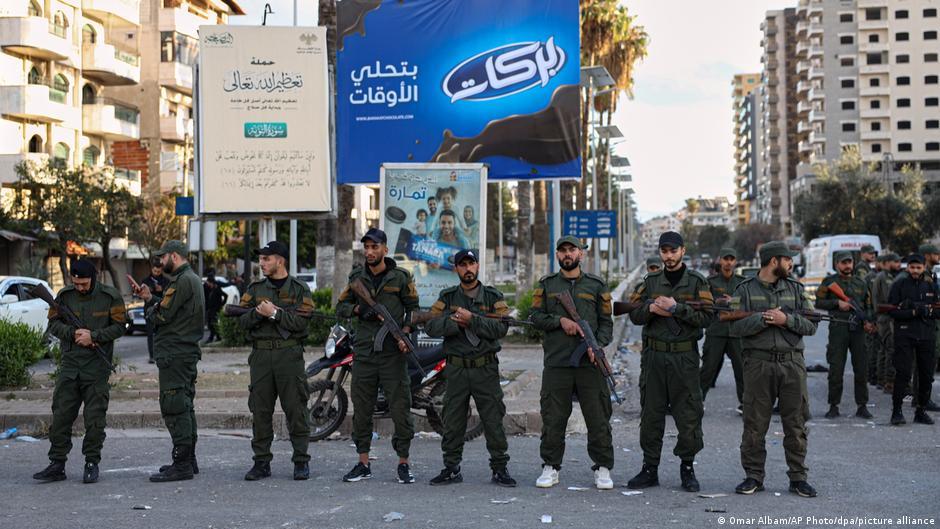
Syria31 December, 20252 min read
Syrian Authorities Impose Overnight Curfew in Latakia After Unknown Gunmen Attack Alawite Neighborhoods
Overnight curfew imposed in Latakia from 5:00 p.m. to 6:00 a.m. Security forces arrested 21 people allegedly linked to the former Assad regime.

10 outlets told this the same way.
Outlets did split on France Suspends Police Stun Grenades at High School Protests After 15-Year-Old Loses Hand →
Latakia curfew and unrest
Syrian authorities imposed an overnight curfew in the coastal city of Latakia after unidentified gunmen attacked predominantly Alawite neighbourhoods. The attacks damaged cars and vandalised shops. State media reported arrests of people linked to the former regime.
“Syrian authorities imposed an overnight curfew in the coastal city of Latakia after unidentified assailants attacked predominantly Alawite neighbourhoods, damaging cars and vandalising shops.”
The curfew was reported as running from 5pm to 6am local time, a 13-hour window. Officials said security forces detained 21 people described as former regime remnants, accused of criminal acts, sectarian incitement and attacks on internal security forces. Security reinforcements have been deployed to the coastal region as tensions rose.

Arrests and troop deployments
State media and multiple outlets reported that arrests targeted 21 people described as "former regime remnants" allegedly linked to Bashar al-Assad’s rule. Authorities accused them of criminal acts, sectarian incitement and of targeting internal security forces.
Reports also describe the deployment of government troops to Latakia and nearby Tartous as officials sought to stabilise the coastal region. One outlet framed these actions in the context of a post-Assad political transition, naming President Ahmed al-Sharaa as the leader attempting to restore order after Assad’s overthrow in December 2024.

Conflicting casualty reports
Reports differ on the immediate triggers and casualty figures. DW links the measures to nighttime protests two days earlier that left four people dead and escalated into sectarian violence. Al-Jazeera Net says gunmen attacked security personnel protecting demonstrations, leaving four dead and about 108 wounded in Latakia, and cites an explosion at the Imam Ali mosque in Homs that killed eight and wounded more than 18.
“The measures follow nighttime protests two days earlier that left four people dead and escalated into sectarian violence.”
Daijiworld connects the violence to Alawite protests over a bombing in Homs that it says killed at least three people, including a security officer. These differences illustrate conflicting or incomplete casualty reporting across outlets.
Variation in reporting detail
Reporting differs in the level of operational detail and in how it describes curfew exemptions. Al-Jazeera Net explicitly lists curfew exemptions—emergencies, medical staff, ambulances and firefighting teams—and mentions reinforcements to enforce the curfew. Al Jazeera and DW note the curfew hours and security deployments but place less emphasis on exemptions.
Several outlets centre the story on immediate security measures, while others provide broader background or omit operational minutiae. Some sources in this set do not carry substantive reporting on the incident and instead include unrelated content or prompts to request the article. For example, thenationalnews’s snippet is a mixed compilation and news.antiwar’s text appears to be a site footer, illustrating differences in coverage scope and availability.
Syria coastal unrest overview
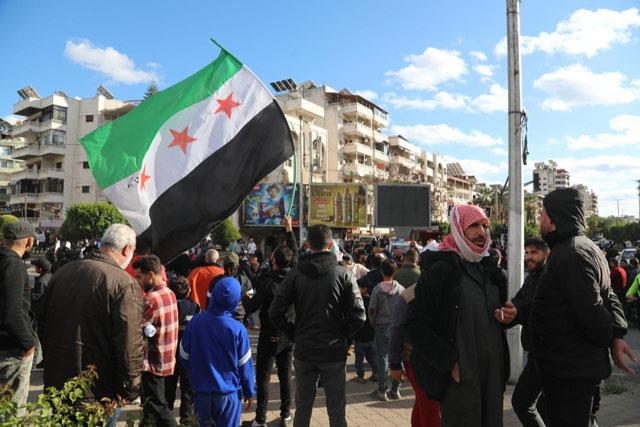
Reporting paints a picture of rising sectarian tension and fragile stability in Syria’s mixed coastal region. Outlets describe Alawite neighbourhoods targeted by unidentified gunmen and mass protests and violence spreading across Latakia, Tartus, Hama, and Homs. They also report a strong security response, including arrests and troop deployments.
“Syrian authorities imposed an overnight curfew in the coastal city of Latakia after unidentified assailants attacked predominantly Alawite neighbourhoods, damaging cars and vandalising shops.”
However, casualty figures, precise triggers and political framing differ between sources, leaving ambiguities. Some accounts highlight deadly protests and a mosque explosion, while others emphasize arrests and a post‑Assad transition. Readers should note these divergences and the limits of the available excerpts when assessing the situation.