Syrian Courts Begin Trial of Pro-Assad Fighters Accused of Massacring Hundreds of Alawites in March

Syrian Courts Begin Trial of Pro-Assad Fighters Accused of Massacring Hundreds of Alawites in March

18 November, 202515 sources compared
Syria

Key Points from 15 News Sources

  1. 1

    Public trial sessions began at Aleppo's Palace of Justice

  2. 2

    Fourteen defendants appeared, seven Assad loyalists and seven new government security members
  3. 3

    Pro-government fighters killed hundreds of Alawite civilians in coastal provinces during March clashes

Full Analysis Summary

Aleppo March clashes trial

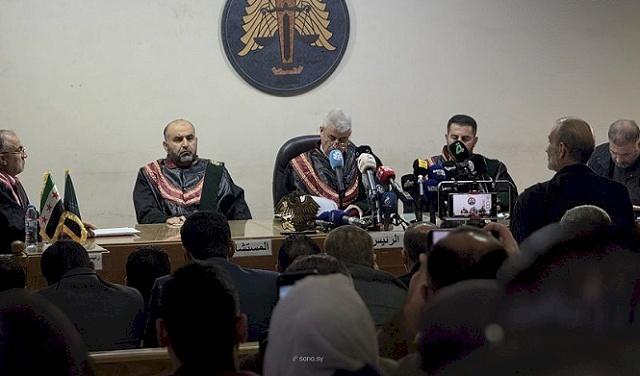
Syrian courts opened public trial sessions in Aleppo this week for 14 defendants accused over the deadly March clashes on the country's Alawite-majority coast.

Charges range from murder and looting to inciting sectarian strife and assaulting security forces.

State media and courtroom footage shown by Al‑Ikhbariya reported the group was split roughly evenly between alleged pro‑Assad fighters and members of the new government's security forces.

Judges read charges including inciting sectarian strife, theft, and assaulting internal security forces and the Syrian Arab Army.

The hearing was adjourned with later sessions set for December.

Coverage Differences

Tone and emphasis

State-aligned outlets and reports emphasise the formal proceedings and public nature of the hearings, focusing on charges and courtroom procedure, while independent and regional outlets add context about the political stakes and previous investigation steps. For example, TRT World reports the session via SANA and TV coverage and lists the charges and state media framing, whereas New Lines Magazine supplies courtroom detail such as the judge calling defendants by name and family reactions, and Al‑Jazeera Net highlights the Justice Ministry’s statement about further indictments and public sessions.

Disputed March casualty figures

The human toll and the scale of the March violence are disputed across reports: several investigative and rights sources document very high civilian casualties while Syrian official inquiries provide lower, framed explanations.

A Reuters probe cited in AL-Monitor put Alawite deaths at nearly 1,500 during peak days; a separate government fact-finding panel gave a similar figure of about 1,426, while the Syrian Network for Human Rights recorded 1,662 deaths across a broader period.

United Nations and UN Human Rights Office reporting described killings, torture and targeted attacks on Alawite communities; independent monitors and some outlets also describe summary executions and mass burnings.

Coverage Differences

Contradiction / numeric discrepancies

Casualty figures and attribution vary: AL-Monitor (quoting Reuters) notes "nearly 1,500 Alawites were killed," the government fact‑finding panel is cited as putting fatalities at "1,426," while The Syrian Observer relays the Syrian Network for Human Rights’ higher count of "1,662 deaths." Separately, WHAS11 and TRT World highlight that a government inquiry found "more than 1,400 people — mostly civilians — were killed" and that the UN Human Rights Office "blamed ... at least about 1,400 deaths, mostly civilians," illustrating overlapping but non‑identical tallies and different emphases on responsibility.

Attribution of responsibility

Sources differ on who is blamed: government statements and some official panels framed the deaths as following attacks by former Assad officers or rebellions, while UN, rights groups and independent media document systematic attacks by government‑aligned factions and allied militias targeting Alawite civilians. For example, WHAS11 reports a U.N. commission "contradicted" the government's account by detailing "violence targeting civilians by government-aligned factions" as "widespread and systematic."

Syrian accountability debate

Syrian officials and the investigative committee present the legal proceedings as a sign of a new era of public accountability.

Rights advocates and relatives raise concerns about the independence of the process, coerced confessions and the absence of prosecutions of higher-level figures.

Government spokespeople and the investigation committee assert judicial independence and public hearings, with Yasser Farhan saying the judiciary "is now independent" and the Justice Ministry promising more public sessions.

By contrast, AL-Monitor and Syria Direct report skeptics - activists who call the process a 'sham' or who say confessions were extracted under torture - and observers warn the country lacks the legal framework for full transitional justice.

Coverage Differences

Tone / narrative (state vs. rights groups)

Official and state‑linked reporting foregrounds independence, transparency and public trials: Al‑Jazeera Net quotes the investigation committee spokesman saying the judiciary "is now independent" and the Justice Ministry promising open sessions. Independent outlets and rights monitors emphasise criticism and skepticism: AL‑Monitor cites activists calling the process a "sham," and Syria Direct reports family members alleging confessions were extracted under torture. These divergent emphases reflect different views on whether the trials represent genuine accountability or a politically timed showpiece.

Scope of accountability vs. transitional justice

Some local commentators and advocates welcome public prosecutions as unprecedented steps away from impunity (The Syrian Observer quotes Fadel Abdul Ghani calling them a "serious step"), but simultaneously warn they fall short of full transitional justice absent judicial reform and prosecution of senior Assad‑era figures; Syria Direct and The Syrian Observer stress the need for broader institutional reform to guarantee impartiality.

Context of Syrian trials

Observers place the trials in a broader geopolitical and temporal frame, noting officials and analysts link the prosecutions to President Ahmed al-Sharaa’s effort to reduce Syria’s diplomatic isolation, press for US sanctions relief, and demonstrate a break with the secrecy of the Assad era; critics view the timing as politically calculated.

The National Commission of Inquiry referred hundreds of suspects to the judiciary, with the Syrian Observer reporting 563 suspects referred on July 22 (298 accused of attacks on civilians and 265 accused of assaults on security personnel).

Multiple outlets note the Justice Ministry plans hundreds more public cases, and the proceedings are portrayed as both a potential step toward reconciliation and a key test that could influence international aid, reconstruction, and sanctions policy.

Coverage Differences

Narrative and intent

Al Jazeera and WHAS11 frame the trials as instrumental to the new government’s diplomatic strategy: Al Jazeera says the trial "is being used to signal judicial reform under President Ahmed al-Sharaa ... as he seeks to reduce Syria’s diplomatic isolation and press the U.S. to lift sanctions," while WHAS11 echoes pressure to lift sanctions. By contrast, outlets such as Syria Direct and The Syrian Observer emphasise domestic accountability issues, noting the trials’ timing "shortly before the one-year anniversary" and listing the commission’s referrals (563 suspects), suggesting the proceedings are both politically consequential and a test of genuine judicial reform.

Policy stakes vs. legal detail

Some outlets stress implications for sanctions and diplomacy (Al Jazeera, WHAS11), while others focus on technical judicial details — numbers of suspects referred, public hearings, and calls for legal reform (Syrian Observer, Al-Jazeera Net). The difference shows how 'source_type' shapes whether the story is framed as political leverage or as an internal rule‑of‑law matter.

All 15 Sources Compared

Al Jazeera

Syria launches first trial over coastal violence that killed thousands

Read Original

Al-Jazeera Net

Public trials begin for defendants accused of violations in incidents on the Syrian coast.

Read Original

AL-Monitor

Syria opens first trial over coastal violence after Assad's fall

Read Original

Enab Baladi

Trials begin for suspects in Syrian coastal-region violations - Enab Baladi

Read Original

Euronews

Syria begins first public trial over deadly clashes in minority's coastal heartland

Read Original

New Lines Magazine

Syria Begins Its Coastal Massacre Trial

Read Original

Syria Direct

‘Unprecedented’: Syria launches first trial over deadly coastal violence

Read Original

The Straits Times

First Syria trial of suspects in coastal massacres begins

Read Original

The Syrian Observer

First Public Trial Session for Coastal Violations Concludes in Aleppo

Read Original

The Times of India

Syria opens first public trial over deadly coastal violence

Read Original

TRT World

Syria holds first public trials in Aleppo for suspects linked to coastal unrest

Read Original

United News of Bangladesh

Syria opens first public trial over deadly coastal violence

Read Original

Vatican News

Syria begins first public trial over deadly coastal violence

Read Original

WHAS11

Syria opens first public trial over deadly coastal violence

Read Original

وكالة صدى نيوز

Syria: Start of Public Trials for Those Accused of Violations During Coastal Events

Read Original