Full Analysis Summary
Al-Hol camp withdrawal and escapes
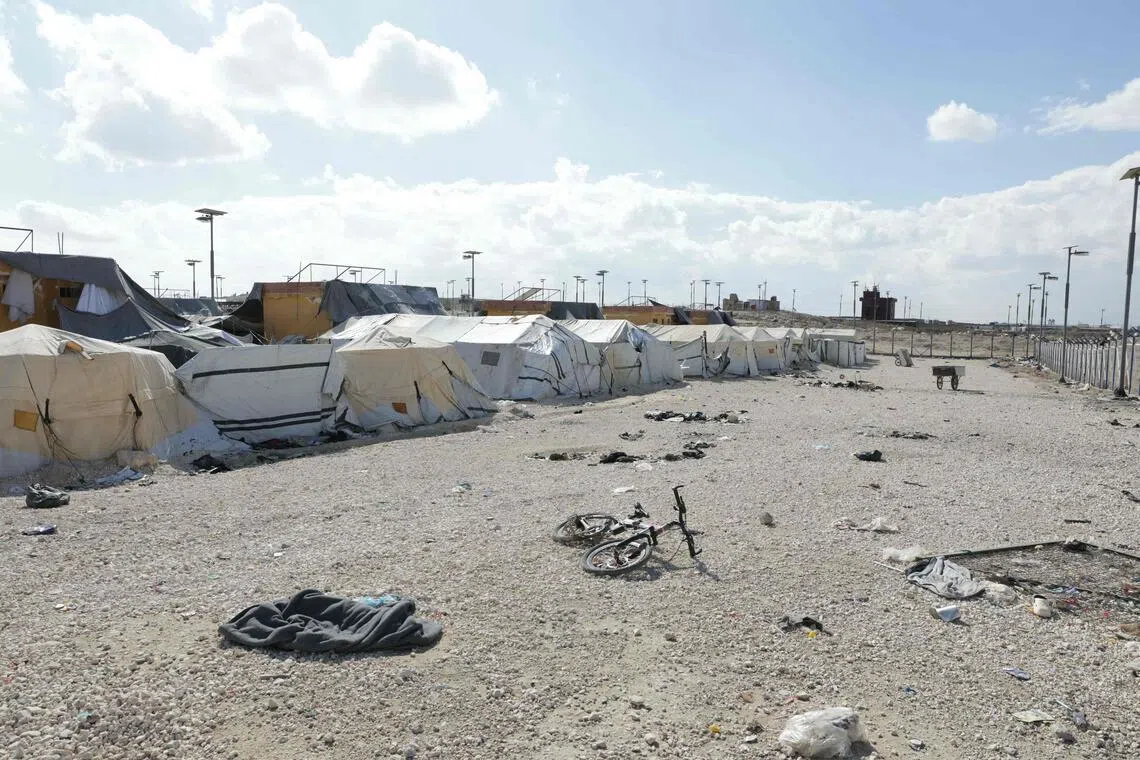
On Jan. 20 the Kurdish-led Syrian Democratic Forces (SDF) abruptly withdrew from the al-Hol displacement camp and Syrian security forces took control hours later, a move that officials describe as leading to chaotic breaches and a mass flight of residents.
Al Jazeera reports the withdrawal followed "clashes between the Syrian military and the Kurdish-led Syrian Democratic Forces (SDF) over the SDF’s integration into state institutions" and says the SDF "abruptly withdrew from the al-Hol displacement camp on January 20 and Syrian security forces took control hours later."
The Straits Times records that "Syria said on Feb 25 that thousands of relatives of suspected Islamic State fighters escaped from the Al-Hol camp in January after Kurdish-led Syrian Democratic Forces (SDF) withdrew."
Firstpost likewise says "a large-scale breakout was reported at Syria’s al-Hol camp... after Kurdish-led Syrian Democratic Forces (SDF) withdrew from the site."
Coverage Differences
Narrative Framing
Al Jazeera (West Asian) presents the withdrawal in the context of recent clashes over SDF integration into state institutions, framing the pullout as part of local political-military friction. The Straits Times (Asian) frames the event around the Syrian government’s claim that "thousands" escaped and reports the timing of Syrian control on Feb 25. Firstpost (Asian) emphasizes immediate operational outcomes—calling it a "large-scale breakout"—and cites state TV and other external estimates. Each source often reports claims by officials (e.g., "Syria said" or "Syrian state TV quoted") rather than asserting independent verification.
Perimeter breach reports
Authorities report extensive perimeter breaches and conflicting counts of escapees and relocated residents.
Al Jazeera cites officials reporting 'more than 138 breaches in the perimeter and an unknown number of residents escaped'.
The Straits Times quotes Interior Ministry spokesman Noureddine al-Baba saying Syrian forces found a 'chaotic situation' with 'more than 138 breaches in the camp’s 17 km perimeter wall'.
Firstpost notes Syrian state TV quoted the Interior Ministry reporting 'more than 100 breaches'.
Firstpost also compiles wider external estimates, including an EU memo warning 'thousands — possibly a majority' may have fled.
Firstpost cites The Wall Street Journal giving '15,000–20,000 people' unaccounted for.
The U.N. estimates the camp houses 'more than 30,000 people'.
These figures and descriptions contradict each other on breach counts and on how many people have fled or remain, with sources reporting 'more than 138' breaches, 'more than 100' breaches, an unknown number escaped, 'thousands — possibly a majority' fled, and 15,000–20,000 people unaccounted for against a U.N. population estimate of over 30,000.
Coverage Differences
Numbers/Scale
All three sources agree perimeter breaches occurred, but they report or quote different figures and external estimates. Al Jazeera and The Straits Times quote "more than 138 breaches," Firstpost quotes state TV saying "more than 100 breaches," and Firstpost also cites external estimates ranging from an EU memo’s "thousands" to the Wall Street Journal’s "15,000–20,000" unaccounted for — showing substantial variance and uncertainty across sources.
Conflicting withdrawal accounts
Sources convey conflicting accounts of responsibility for the withdrawal and of what happened inside the camp.
Al Jazeera reports the SDF says its withdrawal was prompted by a military attack on the camp and accuses Damascus-affiliated factions of participating in the release of ISIL-linked families.
The Straits Times likewise records that the SDF said its withdrawal was triggered by a military attack on the camp and surrounding areas by forces aligned with Damascus.
Firstpost quotes Syrian state TV and Interior Ministry spokesman Nureddin Baba saying the SDF left without coordinating with Damascus or the U.S.-led coalition.
Firstpost also records the SDF denying the ministry’s account and saying pro-Damascus factions entered the camp and removed relatives of ISIS members.
These accounts therefore conflict specifically over whether the withdrawal was caused by a military attack and over which forces entered the camp and removed relatives of ISIL/ISIS members.
Coverage Differences
Attribution of blame
Sources report contrasting claims: Al Jazeera and The Straits Times emphasize the SDF’s statement that an attack by Damascus-aligned forces prompted the withdrawal, while Firstpost highlights both the Syrian Interior Ministry’s accusation that the SDF left without coordination (quoted on state TV) and the SDF’s counter-claim that pro-Damascus factions entered and removed relatives. The reporting distinguishes between what officials claim (quoted) and what other actors report or deny.
Security and humanitarian risks
Observers and aid agencies warn of serious security and humanitarian risks, citing the possibility that some escapees are linked to ISIL and the vulnerability of women and children who were in the camp.
Al Jazeera notes that 'authorities and aid agencies warn of dual concerns: potential security risks if escapees are linked to ISIL, and the vulnerability of women and children taken by unknown men.'
Firstpost says the incident 'has stoked fears about the fate of thousands of ISIS detainees and family members amid recent Syrian government gains in the northeast.'
The Straits Times' reporting of 'collective escapes' and a 'chaotic situation' underscores the immediate operational disruption cited by officials.
Coverage Differences
Tone/Severity
Al Jazeera (West Asian) emphasizes humanitarian vulnerability and the risk that escapees may be ISIL-linked, using direct language about "vulnerability of women and children" and "potential security risks." Firstpost (Asian) frames the event as intensifying regional fears about detainees' fate amid government gains. The Straits Times (Asian) focuses on the official depiction of on-the-ground disorder ("chaotic situation," "collective escapes"), giving a more operational tone. Each source cites officials or agencies rather than independently verifying the specific fates of escapees.
Camp population uncertainty
Key facts remain unclear and sources document divergent counts and movements of residents.
Al Jazeera records Syrian authorities saying "6,500 people from 44 other nationalities were at the camp; they have moved many people to the Akhtarin camp in Aleppo province."
Al Jazeera also cites independent reporting that notes a discrepancy: only about 1,100 families have been confirmed at Akhtarin versus roughly 6,600 families at al-Hol before the withdrawal, leaving some 5,000 people unaccounted for.
Firstpost compiles external intelligence and agency estimates (EU memo, Wall Street Journal, U.N.) highlighting the range of possible unaccounted-for people.
The Straits Times focuses on the Syrian interior ministry's account of "collective escapes".
Together, the sources show both claimed government action to relocate some residents and significant uncertainty over the whereabouts and numbers of many others.
Coverage Differences
Missing Information
Al Jazeera (West Asian) highlights a specific discrepancy between the numbers said to be moved to Akhtarin and independent confirmations, explicitly stating "some 5,000 people unaccounted for." Firstpost (Asian) aggregates outside estimates (EU memo, Wall Street Journal, U.N.) showing a broad range and continued uncertainty, while The Straits Times (Asian) relays the Syrian interior ministry’s claim of a "chaotic situation" and large-scale escapes without the same independent numerical cross-check. This shows gaps and inconsistencies in confirmed counts across sources.