Full Analysis Summary
Latakia wildfire response
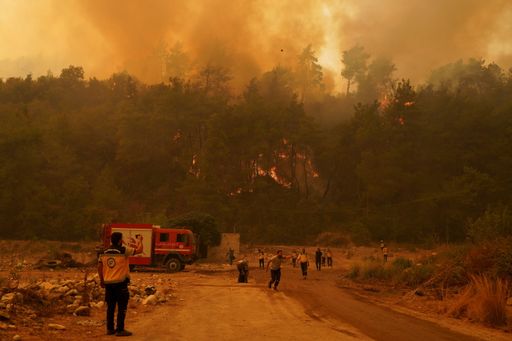
Emergency and Disaster Management Ministry civil defence teams and Agriculture Ministry crews have been deployed to combat a new wildfire in Latakia, western Syria.
Responders say strong winds, difficult terrain and unexploded ordnance from years of war are hampering suppression efforts.
Commanders report teams are working at full capacity to extinguish flames, cool hotspots and prevent the blaze from spreading while exercising extreme caution because of hazardous remnants.
The region has endured repeated fires this summer amid high temperatures, dry conditions and dense woodlands.
A July series of wildfires burned for 12 days and destroyed more than 16,000 hectares, including about 2,200 hectares of farmland, and affected dozens of villages and around 1,200 families.
Coverage Differences
Tone and wording similarity
Both TRT World (West Asian) and Anadolu Agency (West Asian) provide nearly identical factual accounts: deployment of civil defence and agriculture ministry crews, hindrance by difficult terrain, strong winds and unexploded ordnance, teams operating at full capacity to extinguish flames and cool hotspots, and the July fires' scale and impacts. Neither source introduces a differing narrative or additional perspectives beyond those operational details and historical context.
Firefighting operational challenges
Authorities describe operational challenges: steep, rugged terrain and persistent strong winds are complicating ground efforts and increasing the risk of flare-ups.
Unexploded ordnance forces crews to advance with extreme caution and limits where they can safely operate.
Officials emphasize maximizing firefighting capacity to cool hotspots and halt the spread.
They stress the continued danger posed by environmental conditions and wartime remnants that make some areas inaccessible.
Coverage Differences
Emphasis on operational hazards
Both TRT World and Anadolu Agency emphasize the same operational hazards (difficult terrain, strong winds, unexploded ordnance), with Anadolu Agency specifically quoting Commander Mahmoud Al-Shariqi, indicating that the Anadolu piece includes an attributed source statement while TRT World presents the commander-level assessment as reporting from commanders more generally.
Latakia wildfire context and impacts
The articles place the new Latakia fire in the context of a severe July wildfire event.
That July wildfire burned for nearly two weeks, devastated woodlands and farmland, and disrupted many rural communities.
Reporting quantifies the July damage as more than 16,000 hectares lost, including some 2,200 hectares of farmland, and notes impacts to roughly 45 villages and about 1,200 families.
The recurrence underscores the seasonal risk from high temperatures, dry conditions, and dense forests in western Syria, factors the outlets cite as driving repeated fires this summer.
Coverage Differences
Contextual agreement
TRT World and Anadolu Agency both supply the same historical figures and causation—July fires lasted 12 days, destroyed over 16,000 hectares (including 2,200 hectares of farmland), and affected 45 villages and about 1,200 families—so there is no significant contradiction; both attribute the pattern to high temperatures, dry conditions and dense woodlands.
West Asian fire reporting
Reporting across these West Asian outlets is consistent on facts and scope.
However, the coverage is limited in perspective: neither article provides independent data from international agencies, includes human-impact interviews beyond aggregate family or village counts, nor supplies detailed timelines of the new fire’s progression or precise containment status.
The similarity suggests shared sourcing or reliance on official statements; Anadolu Agency attributes a comment to Commander Mahmoud Al-Shariqi, while TRT World uses more general language referring to commanders, a minor difference in attribution but not substance.
Coverage Differences
Omission and sourcing detail
Both outlets omit third-party verification and granular human-impact narratives; Anadolu Agency uniquely names a commander (Mahmoud Al-Shariqi), whereas TRT World reports commanders' remarks without the named attribution. This is a small sourcing difference rather than a narrative contradiction.