Full Analysis Summary
Counterterrorism Operations in Syria
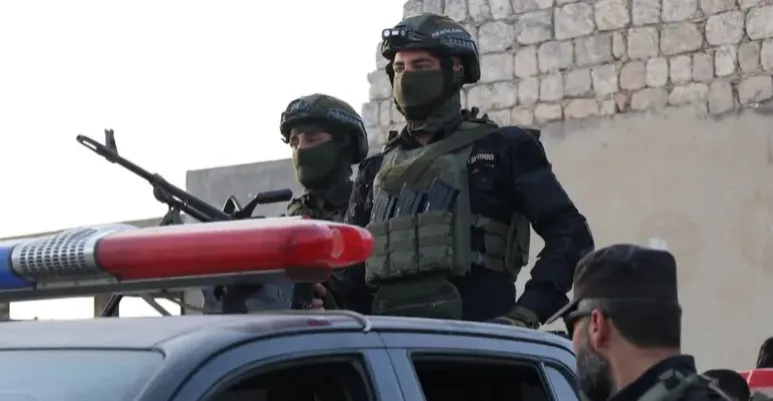
Syrian authorities say they executed a large-scale, intelligence-led crackdown across multiple provinces to dismantle ISIS/Daesh networks, arrest wanted suspects, and seize materials tied to terrorist activity.
The scope of the operation included areas such as Homs and Idlib.
A separate, coalition-backed action at al-Hol Camp resulted in the capture of a senior ISIS figure.
Shafaq News reports that security forces conducted a large-scale operation across multiple provinces, including Homs and Idlib.
The Syrian Democratic Forces, in coordination with the US-led Global Coalition, captured senior ISIS leader Baha al-Maseeri at al-Hol Camp.
Khaleej Times emphasizes that the nationwide actions were based on precise intelligence and weeks of surveillance.
Agencies seized evidence and are pushing ongoing investigations.
Both accounts frame the operation as part of continuing efforts to counter ISIS cells that persist despite the group’s territorial defeat.
Coverage Differences
missed information
Shafaq News (West Asian) reports an additional development—the SDF, working with the US-led Global Coalition, captured senior ISIS leader Baha al-Maseeri at al-Hol Camp—information that Khaleej Times (West Asian) does not mention.
specificity/locations
Shafaq News (West Asian) specifies locations—“including Homs and Idlib”—while Khaleej Times (West Asian) describes operations across “multiple provinces” without naming them.
tone/narrative
Khaleej Times (West Asian) stresses methodical intelligence work and ongoing analysis of seized materials, whereas Shafaq News (West Asian) adds broader strategic context about ISIS operating via dispersed sleeper cells despite losing territory.
Counterterrorism Raids and Arrests
According to the Interior Ministry account reported by Shafaq News, the raids dismantled several ISIS-linked cells and led to arrests of wanted individuals alongside the seizure of materials confirming terrorist involvement.
Khaleej Times similarly describes dismantled Daesh-affiliated cells and numerous arrests, but adds process details—coordination with the General Intelligence Agency, reliance on precise intelligence, weeks of surveillance, and ongoing analysis of seized evidence—framing the crackdown as part of broader national security efforts.
Coverage Differences
institutional emphasis
Shafaq News (West Asian) attributes the sweeping action to Syrian security forces as relayed by the Interior Ministry, while Khaleej Times (West Asian) highlights coordination with the General Intelligence Agency and a methodical, surveillance-driven approach.
evidence/forensics focus
Khaleej Times (West Asian) underscores ongoing analysis of seized materials within national counterterrorism efforts, whereas Shafaq News (West Asian) emphasizes the seizure as material confirming suspects’ involvement without detailing the investigative process.
Counterterrorism Efforts Against ISIS
Shafaq News situates the operation within the evolving ISIS threat landscape.
Despite losing territorial control, ISIS persists through dispersed sleeper cells, particularly near Syria’s borders with Iraq and Lebanon.
The capture of a senior ISIS leader at al-Hol Camp by the SDF, in coordination with the US-led Global Coalition, underscores the multi-actor nature of counterterrorism efforts in the northeast.
Khaleej Times complements this by presenting the crackdown as part of broader national efforts to enhance security, supported by intelligence work and agency coordination.
Coverage Differences
strategic context
Shafaq News (West Asian) provides a regional threat context—ISIS sleeper cells near the borders with Iraq and Lebanon—while Khaleej Times (West Asian) focuses on national security enhancement without referencing border dynamics.
actor scope
Shafaq News (West Asian) includes non-state and international actors—the SDF and the US-led Global Coalition—via its report on the al-Hol arrest, which Khaleej Times (West Asian) does not mention.
Reports on Cell Dismantling
Both outlets describe the dismantling of ISIS/Daesh cells and arrests across multiple provinces.
Shafaq News names Homs and Idlib and highlights lingering sleeper cells and a high-profile arrest at al-Hol.
Khaleej Times details the intelligence-and-agency-led process and ongoing investigations.
Neither source provides casualty figures, exact numbers of cells or detainees, or judicial outcomes.
Aside from Shafaq’s mention of Homs and Idlib, the specific provincial map of the raids remains undisclosed.
Coverage Differences
detail granularity
Shafaq News (West Asian) specifies provinces and mentions a senior ISIS arrest; Khaleej Times (West Asian) keeps geography general but expands on investigative processes.
omissions/unknowns
Both sources omit key metrics—no publicly reported numbers of cells dismantled, detainees, or casualties—and do not discuss legal follow-up beyond ongoing investigations noted by Khaleej Times.