Full Analysis Summary
Aleppo handover and fallout
Syrian government forces seized the last SDF foothold in Aleppo.
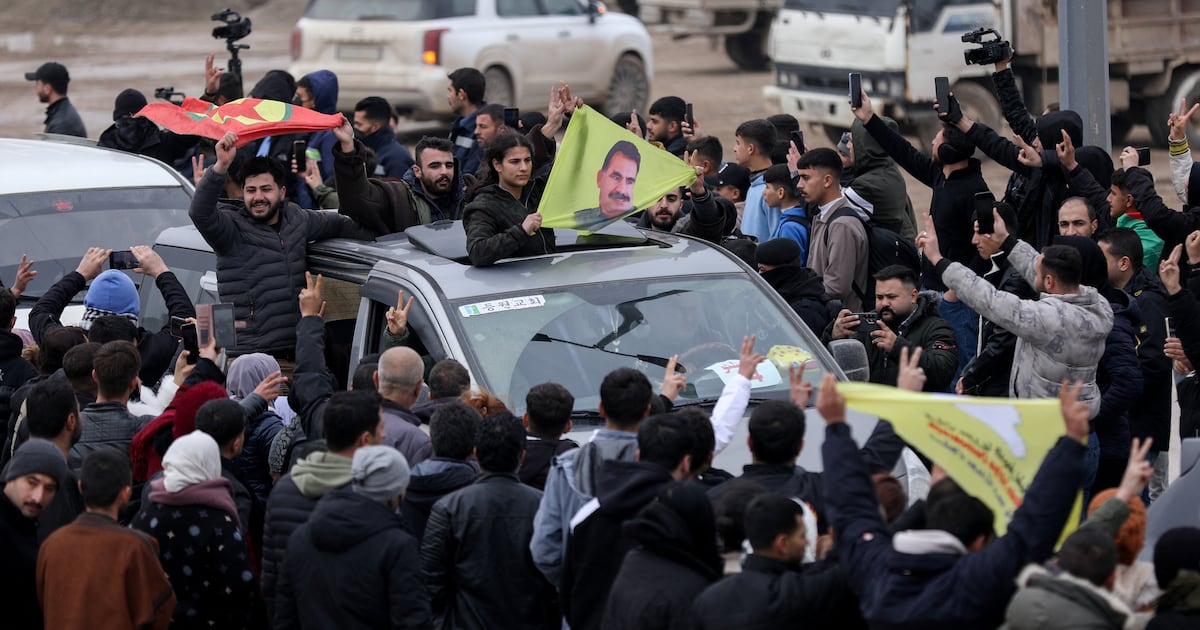
The final SDF-affiliated personnel reportedly left the city on buses for SDF-held areas in eastern Syria after a US Central Command (CENTCOM) instruction to SDF leader Mazloum Abdi to hand over the areas and not resist the government takeover.
Reports said the move came ahead of a US-supervised Paris meeting on January 6 between Israel and Syria, where the two countries agreed to avoid hostilities and explore cooperation.
The development has intensified fears within the SDF that the group has been sidelined by wider US geopolitical priorities and could face extinction without external backing.
Coverage Differences
Narrative emphasis / source overlap
Both provided pieces come from the same Western Alternative outlet but emphasize slightly different elements: the first snippet (thenationalnews) foregrounds the immediate mechanics of SDF withdrawal and the CENTCOM instruction linked to the Paris meeting, while the second snippet (The National) presents broader warnings about further CENTCOM calls and wider strategic concerns such as possible next targets like Deir Ezzor and the SDF’s longer-term viability. Because both are the same source_type (Western Alternative) and from the same outlet family, there is limited cross-type perspective; other types (e.g., West Asian, Western Mainstream) are not present in the material provided, so contrasts across source_type cannot be made beyond noting the outlet's framing.
SDF, Aleppo and U.S. policy
The seizure of Aleppo territory is set against the SDF's origins and its control of strategic assets.
The SDF was founded with U.S. backing in 2015 as the ground force against ISIS.
During the civil war it gained hilltop areas in Aleppo and large swathes along the Euphrates Valley that contain most of Syria's oil, gas and power infrastructure.
A Washington source briefed on U.S. policy told reporters that President Trump would be willing to 'sacrifice' the SDF if Damascus and Turkey cooperated with his push for a Syrian–Israeli rapprochement and counterterrorism cooperation.
The reporting uses that claim to explain why U.S. support may have shifted away from the Kurdish-led militia.
Coverage Differences
Tone and reported claims
The reporting attributes sensitive claims to briefed Washington sources rather than asserting them as established fact: the phrase that President Trump would be willing to "sacrifice" the SDF is reported as coming from a Washington source rather than the outlet itself. Both snippets cite that U.S. strategic calculations and previous territorial losses (Afrin 2018) feed SDF fears, but the second snippet provides more explicit sourcing for the claim about Trump’s willingness to sacrifice the SDF.
SDF-Damascus Negotiations
Political negotiations and unimplemented deals increase the SDF's vulnerability.
Reporting notes that after the fall of Bashar al-Assad's regime in late 2024, the U.S. began treating Damascus as a counterterrorism partner.
A U.S.-brokered integration deal between Damascus and the SDF, agreed in March last year, has not been implemented.
Sticking points in talks include the SDF's desire to enter as a distinct bloc, opposition from Damascus and Turkey, and Damascus's refusal to grant federalism or a Kurdish share of oil revenues similar to Iraqi Kurdistan.
These issues are highlighted as central to why a durable settlement remains elusive.
Coverage Differences
Missed information / framing
Because the available materials are from the same outlet type, the coverage focuses on strategic and political mechanics (CENTCOM instructions, U.S. diplomatic deals, oil revenue disputes) and includes less on perspectives from Damascus, Ankara, or Kurdish civilians. The reporting quotes negotiators and describes sticking points, but does not include direct statements from Damascus or Turkey in the provided excerpts — a limitation that affects the ability to present those actors' own explanations.
Shifting dynamics in Syria
The possible consequences are stark: sources warned that more CENTCOM calls to abandon cities are likely.
Deir Ezzor, an oil-producing provincial capital partly held by the SDF, is expected to be next.
The fall of Aleppo has alarmed the SDF in part because it followed defections of Arab tribal fighters to the government.
The reporting highlights internal Kurdish political divisions and says some Kurds do not support the militia.
These factors contribute to fears that the SDF could be pushed toward extinction if U.S. priorities and regional deals continue to sideline it.
The excerpts further allege that violence among Syria's Alawite, Druze and Kurdish minorities has marked the first year of the new Syrian government led by President Ahmad Al Shara.
The material also reports, as a contested claim, that he founded Hayat Tahrir al-Sham.
Coverage Differences
Tone / severity and attribution
The materials describe severe consequences (possible extinction of the SDF) and attribute some claims to unnamed "sources" or "a Washington source", while also reporting contested or sensitive assertions about the new Syrian government and its leader. Given the limited set of provided sources (both Western Alternative), the reporting frames these developments with urgent, alarmed language and relies on briefed sources rather than including direct statements from the accused actors; that constrains the ability to cross-check or present alternative characterizations.