Full Analysis Summary
Damascus prison capture timeline
On December 9, 2024, rebel forces unexpectedly captured Damascus and seized the Mezzeh airbase.
A mobile-phone video of a pale, emaciated Syrian named Ghazi Mohamed, newly freed from Mezzeh prison, quickly went viral.
In the video he said guards had planned to execute him roughly thirty minutes before the prison was overrun and a helicopter evacuation freed inmates.
Both El País (Western mainstream) and lnginnorthernbc.ca (Other) reported the same core timeline: arrest, brutal detention, last-minute liberation tied to the rebel advance, and a widely circulated testimony.
Coverage Differences
Tone and emphasis
El País frames the account with reflective emphasis on how the viral testimony became a potent symbol of how rapidly life changed with the fall of the regime, and stresses psychological scars; lnginnorthernbc.ca reports the sequence more straightforwardly and emphasizes the helicopter evacuation as the immediate cause of release. Each source reports Ghazi’s own claims rather than presenting independent verification. The two sources are consistent on the basic claim that he was minutes from execution when freed, but differ in how they contextualize that release.
Rebuilding His Life
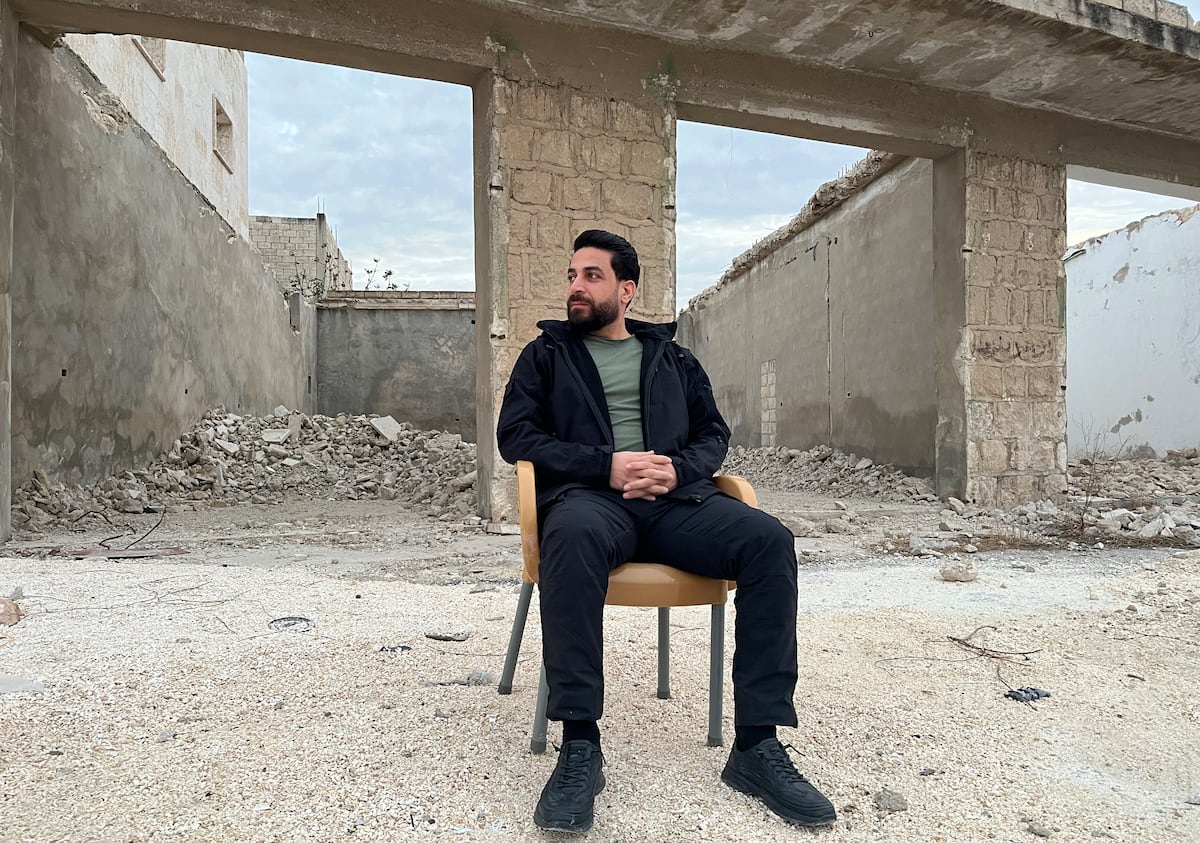
A year later, both sources describe Ghazi, 39, attempting to rebuild his life.
He runs the family carpet shop in Maar Shurin, between Hama and Aleppo, and travels frequently for the family's export business.
He has regained some weight, but his home was destroyed by bombing and he continues to bear physical and psychological scars.
El País emphasizes his lack of a home and the psychological effects of torture.
lnginnorthernbc.ca focuses on practical details about his work and travel for exports.
Coverage Differences
Narrative focus
El País (Western Mainstream) highlights long‑term consequences — psychological scars, destroyed home, and the symbolic nature of his testimony — whereas lnginnorthernbc.ca (Other) gives more concrete, quotidian details about his business activities and regained weight. Both report his travel for exports and regained weight but place different weight on trauma versus economic recovery.
Alleged detention abuses
Both accounts describe graphic methods of torture and neglect in detention.
They list filthy solitary confinement, repeated interrogations, rats and filth (reported explicitly by lnginnorthernbc.ca), and extreme suspension by handcuffs above the ground for 11 days.
These details are presented as part of Ghazi's testimony, and each source attributes them to his account.
Neither article claims independent verification of the described techniques.
Coverage Differences
Detail and specificity
lnginnorthernbc.ca (Other) explicitly lists rats and filth alongside the prolonged solitary confinement and suspension; El País (Western Mainstream) emphasizes the brutality and physical/psychological scars and situates the torture within a narrative about why he was arrested. Both sources report that the interrogations sought information about armed groups and family ties, but El País frames arrest motivation in terms of family wealth and a brother’s ties in Idlib, while lnginnorthernbc.ca points to relatives’ past arrests in Daraa and alleged sympathies.
Arrest motive and context
Both sources report Ghazi’s explanation that his arrest was driven less by his personal political activity and more by family factors and past arrests or ties.
El País attributes the motive to his family’s wealth and his brother’s connections in Idlib.
lnginnorthernbc.ca adds that relatives’ past arrests in Daraa and sympathies with rebels may have been relevant, and that Ghazi had returned to Damascus to obtain passports to emigrate to avoid a $5,000 intermediary fee.
The two reports are consistent on the claim’s content but differ slightly in which family connections and geographic prior arrests they emphasize.
Coverage Differences
Omission and specificity
Both sources quote Ghazi’s claim that family connections and wealth were factors in his arrest. El País (Western Mainstream) focuses on wealth and a brother’s ties in Idlib; lnginnorthernbc.ca (Other) specifically mentions past arrests in Daraa and frames his return to Damascus as an effort to secure passports and avoid paying an intermediary. Neither source independently corroborates these motives; both present them as Ghazi’s account.