Syria08 December, 20252 min read
Syrians Flood Damascus to Celebrate First Anniversary of Toppling Dictator Bashar al‑Assad
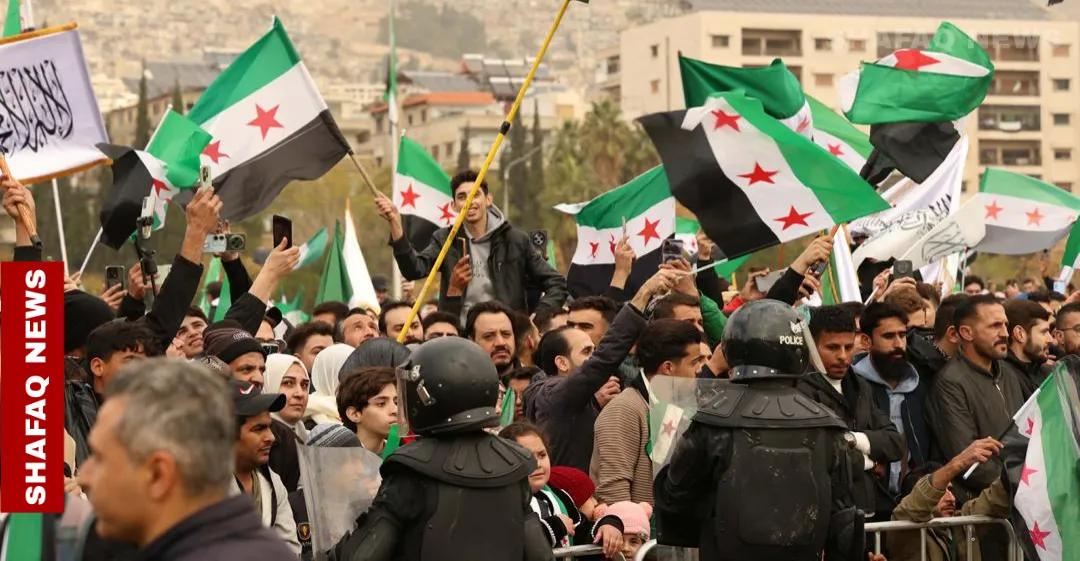
Thousands of Syrians flooded Damascus and major cities with flags, fireworks, and military parades. Bashar al‑Assad fled to Russia and Ahmed al‑Sharaa was installed as interim president.
57 outlets told this the same way.
Outlets did split on France Suspends Police Stun Grenades at High School Protests After 15-Year-Old Loses Hand →
Damascus anniversary celebrations
On December 8, crowds flooded Damascus to mark the first anniversary of the overthrow of President Bashar al-Assad, turning Umayyad Square into a focal point for jubilation, military displays and public prayer. Street scenes ranged from singing and fireworks to organized military marches and flyovers as Transitional President Ahmed al-Sharaa, who again wore the fatigues he sported when forces took the capital, led dawn prayers at the Umayyad Mosque. A new Arabic chorus, "Raise your head up high, you're a free Syrian," became an unofficial anthem heard across markets and the airport as many celebrated what they cast as the end of decades of dynastic rule.
“A new Arabic chorus, ‘Raise your head up high, you’re a free Syrian,’ has become the unofficial anthem in Damascus, heard everywhere from markets to the airport as Syrians celebrate.”
Syria's political transition narrative
The political narrative around the transition has become a dominant theme. Ahmed al-Sharaa, described in multiple outlets as a former religiously affiliated commander, used anniversary events to reiterate promises of reconstruction and a multi-year transition to new institutions and a constitution. Authorities also pushed to restore Syria's international standing and to secure sanctions relief.
Coverage notes Sharaa's international outreach and reports of lifting or easing some Western sanctions. Observers frame these developments as part of a broader reorientation of Syrian foreign policy toward the United States and Gulf states and away from Iran and Russia.

Security and humanitarian concerns
Beneath the celebrations, reporting repeatedly flagged a fragile security and humanitarian picture: international agencies and some outlets emphasize large humanitarian needs and return movements, while others point to continuing sectarian violence, targeted killings and sizable displacement that complicate any rapid recovery. Reuters-cited figures and UN summaries, reported in regional outlets, place returned refugees and internally displaced returnees in the millions, even as the UN estimates roughly 16–16.5 million people will need assistance next year. Human-rights and regional outlets further highlight allegations of massacres, sectarian attacks and abuse that sow fear in minority areas.
“Reuters reported about 1.2 million refugees and 1.9 million internally displaced people have returned since Assad’s removal, though the UN says humanitarian needs remain high, with roughly 16.5 million people expected to need assistance in 2025 (the article’s final sentence was cut off).”
Regional and community divides
The anniversary exposed sharp regional and community divides. Kurdish authorities in the northeast largely banned public gatherings for security reasons. The SDF publicly accused Damascus-affiliated groups of inflammatory behaviour.
Druze and Alawite areas reported strikes and localised clashes. Many minority communities stayed away from the official jubilation, citing fear, distrust and unresolved grievances over detention, disappearances and alleged sectarian attacks.

Global reactions and implications
Internationally, reactions were mixed and geopolitical fault-lines were visible: Turkey formally celebrated the "Liberation Day" and congratulated Syrians. Analysts and regional outlets highlighted the strategic blow to Iran — losing Syria as a reliable corridor to Hezbollah — and reported Iranian efforts to rebuild influence.
“Turkey congratulated the Syrian people on the first anniversary of the fall of Bashar al-Assad, calling December 8 ‘Liberation Day’ and pledging continued support for Syria’s stability, security, reconstruction and political transition.”
Many countries and donors signalled cautious engagement tied to sanctions relief and reconstruction prospects. Rights groups and some reporters warned that justice, accountability and the safety of minorities would be the tests of the new order.
