Pakistan13 March, 20262 min read
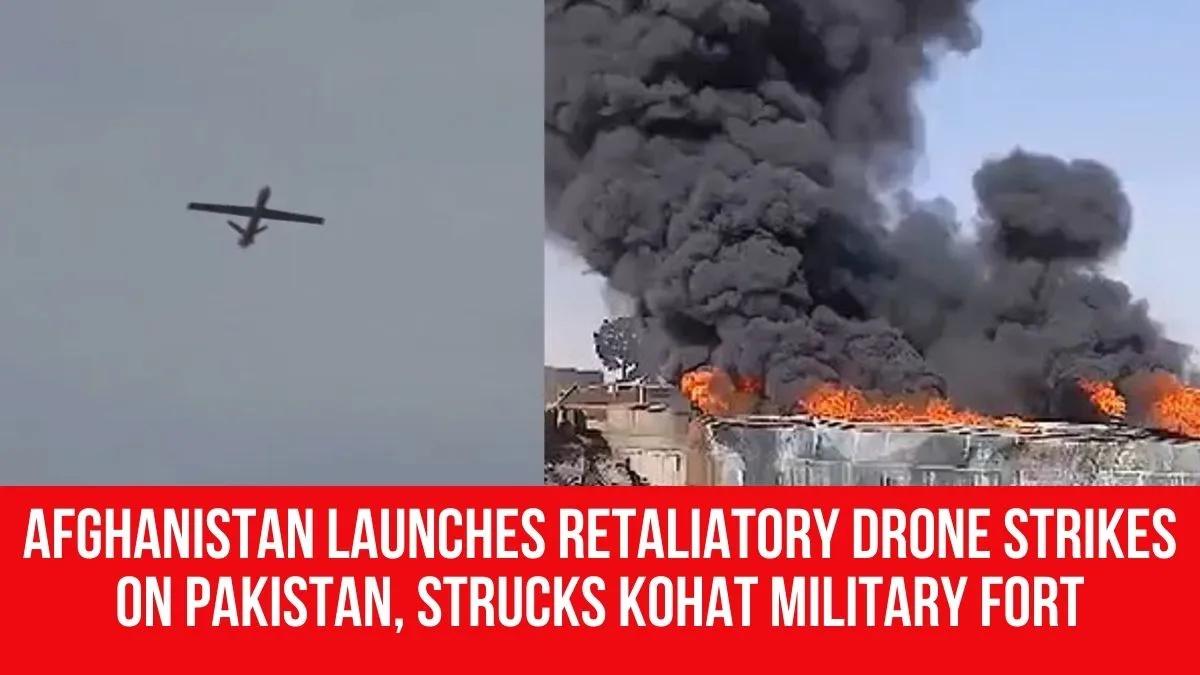
Taliban Hit Pakistan's Kohat Military Fort With Drones in Retaliation for Pakistan Airstrikes
This article is an automated aggregation of coverage from news outlets. Our editorials offer in-depth analysis curated by the NewsCord team.
Afghanistan’s Ministry of Defence claimed drone strikes hit Pakistan’s Kohat military installations Ministry said strikes were retaliation for recent Pakistani airstrikes inside Afghanistan

Retaliatory drone strikes
Afghanistan, through statements attributed to its Ministry of Defence and Taliban sources, launched drone strikes against Pakistan’s Kohat military complex in retaliation for earlier Pakistani air operations inside Afghanistan. Multiple outlets reported that Kabul described the operation as a direct response to Pakistani airstrikes, and identified the target as the Kohat fort or military fortress, a key Pakistani garrison and command hub near the Durand Line. News organisations noted the strikes followed a series of cross-border attacks and described the exchanges as a marked escalation in tensions between the two countries.
“Kabul reported on March 13 that Afghanistan has launched drone strikes aimed at military facilities within Pakistan’s Kohat area, as stated by the Afghan Ministry of Defence.”
Targets and damage claimed
Sources reporting from both sides described the strikes as hitting multiple strategic installations inside the Kohat complex: the fort itself, the war command centre, the office of the fort’s commander, supply and ammunition depots, and residential quarters for soldiers.
Afghan and Taliban statements claimed significant material damage and human losses, while open-source monitoring accounts cited in regional reporting said several attempted strikes targeted specific sites such as Kohat Fort and a Pakistan Air Force officers’ mess within the cantonment.

Pakistan's response and uncertainty
Pakistani authorities publicly disputed the Taliban and Afghan claims, saying air defences intercepted incoming drones and that debris, not direct strikes, caused only minor civilian injuries; several outlets noted that Pakistan had not immediately confirmed the extent of damage or casualties.
“Pakistani authorities have disputed the extent of the attack, saying air defences intercepted the incoming drones before they could reach their targets. Officials added that debris from the intercepted drones caused minor injuries among civilians in nearby areas.”
Multiple reports emphasised that neither Islamabad nor Kabul had issued full, corroborated official accounts at the time of reporting, leaving core details and casualty figures unresolved.
Background airstrikes and civilian harm
The drone strikes came amid a wider episode of cross-border violence: Pakistani air operations into several Afghan provinces, including strikes on sites near Kabul, Kandahar, Paktia and Paktika, were reported by multiple outlets and blamed by Afghan authorities for civilian harm.
UN reporting cited by regional outlets documented civilian deaths and injuries after overnight airstrikes in Kabul’s Pul-e-Charkhi area, and both Taliban spokespeople and Afghan statements accused Pakistan of striking fuel depots and other civilian-linked infrastructure, while Pakistan said it targeted militant hideouts.

Escalation risks and uncertainty
Analysts and reports warned the exchange risks further escalation along the disputed Durand Line and highlighted uncertainty in verified casualty counts and damage assessments.
“The Durand Line dispute and the Taliban’s return to power in 2021 have fuelled tensions between Pakistan and Afghanistan, with frequent clashes reported.”
Regional coverage cited the long-standing Durand Line dispute and the role of militant groups such as the TTP as underlying drivers of the confrontation, while open-source monitors and news outlets reported multiple attempted strikes and conflicting claims from both sides, underscoring that independent verification remained limited.