Full Analysis Summary
Taliban internal defiance
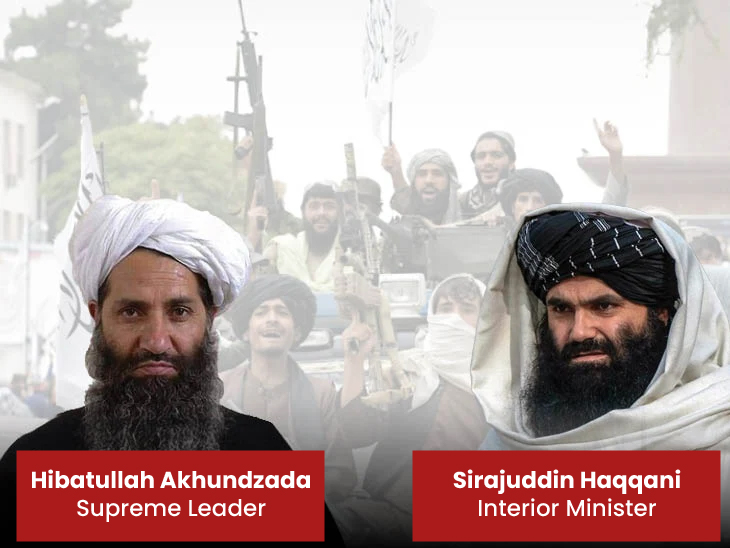
In late September the Taliban’s supreme leader, Hibatullah Akhundzada, ordered a nationwide shutdown of phones and the internet.
Three days later senior figures based in Kabul reportedly defied the order and restored services.
Reporting accounts present the shutdown and rapid restoration as an extraordinary rupture inside a movement built on strict obedience to its Amir.
Insiders described the Kabul group's action as 'an unprecedented rebellion'.
Coverage Differences
Narrative emphasis (alignment)
Both BBC (Western Mainstream) and Bhaskar English (Other) report the same core sequence — an internet and phone shutdown ordered by Akhundzada and restoration after three days by Kabul-based figures. The BBC frames the episode as part of its mapping of 'two rival centers of power' and quotes insiders describing the restoration as 'an unprecedented rebellion'. Bhaskar similarly calls the reversal 'unprecedented internal resistance' but places more emphasis on the immediate governance and business rationale cited by the Kabul figures who argued that 'prolonged cuts would paralyse governance and business.'
Afghan leadership split
The BBC reports a split into two rival centers of power.
One is a Kandahar 'house' loyal to Akhundzada that is pushing an isolationist, religiously led emirate.
The other is a Kabul-based faction of ministers, senior militants and clerics seeking cautious engagement with the outside world and broader education for girls.
Bhaskar English highlights the growing public profile of the Kabul faction, especially Sirajuddin Haqqani, who has moved from militant commander to a visible political figure with strong youth support, though analysts say he is unlikely to directly challenge Akhundzada's supreme authority.
Coverage Differences
Tone and focus
BBC (Western Mainstream) emphasizes institutional mapping and policy differences — 'the Kandahar house versus Kabul' and the Kabul group's desire to rebuild the economy and allow girls' education beyond primary school. Bhaskar English (Other) focuses more on personalities and internal dynamics, spotlighting Sirajuddin Haqqani’s rising profile and noting analysts' views that he 'is unlikely to directly challenge Akhundzada’s supreme authority.'
Leadership split over shutdown
Both sources treat the reversal of the shutdown as significant because it reveals frictions that go beyond occasional policy disagreement.
The BBC's investigation, based on a year of more than 100 interviews and promises of source anonymity, describes the episode in the context of a long-standing leadership division.
Bhaskar frames the Kabul group's defiance as motivated by practical governance concerns and as evidence of widening cracks, citing leaked audio and other recent events.
Coverage Differences
Source methods and evidentiary framing
BBC (Western Mainstream) emphasizes its investigative method — 'a year‑long, 100+ interview investigation' and the decision 'agreeing not to identify sources for their safety' — to support its mapping of leadership rivalries. Bhaskar English (Other) leans on reported events and leaks to argue that the movement's unity is increasingly strained and underscores practical reasons — that prolonged cuts 'would paralyse governance and business' — given by Kabul figures for restoring services.
Dissent and internal intolerance
On the issue of dissent and internal intolerance, the two sources diverge in emphasis.
Bhaskar English records concrete signs of tightening intolerance, reporting that deputy foreign minister Sher Mohammad Abbas Stanikzai fled in February 2025 after criticizing the ban on girls' education.
Bhaskar also cites UN reports documenting arrests of people who questioned Akhundzada in mid-2025.
The BBC report documents the split and names key figures and their historical roles, but the provided excerpt pays less attention to these expulsions or the UN-documented arrests.
Coverage Differences
Missed information / emphasis
Bhaskar English (Other) highlights concrete instances of dissent being punished and officials fleeing — 'Sher Mohammad Abbas Stanikzai fled in February 2025 after criticizing the ban on girls’ education' and 'UN reports record arrests of those questioning Akhundzada in mid‑2025.' The BBC (Western Mainstream) excerpt focuses more on the leadership map and the roles of deputies like Sirajuddin Haqqani and Yaqoob Mujahid during past talks, and in the given snippet does not mention Stanikzai’s flight or the UN arrest reports.
Taliban internal divisions
Both accounts conclude that, although the Taliban projects public unity, the shutdown episode and related reports, leaks, and defections reveal widening internal cracks with an uncertain outcome.
The BBC presents this through a careful, source-protected investigation framing competing leadership projects as 'the Kandahar house versus Kabul'.
Bhaskar emphasizes recent events, figures such as Sirajuddin Haqqani, and explicit dissent and reprisals as evidence that the future balance of power remains unresolved.
Coverage Differences
Tone and severity
BBC (Western Mainstream) uses investigative mapping and cautious sourcing to present a structural leadership split and calls it 'the Kandahar house versus Kabul.' Bhaskar English (Other) adopts a more direct tone about internal strains and dissent, noting 'leaked audio' and 'tightened intolerance of dissent' including specific departures and arrests, giving a somewhat sharper depiction of severity in the movement’s internal repression.