
Tehran endures ‘worst night of strikes’ amid mixed US messages about more to come
Key Takeaways
- Tehran residents reported what they called the city's worst night of aerial bombardment
- US defense secretary Pete Hegseth warned of more strikes to come
- Donald Trump suggested the war could soon be over
Tehran under heavy bombardment
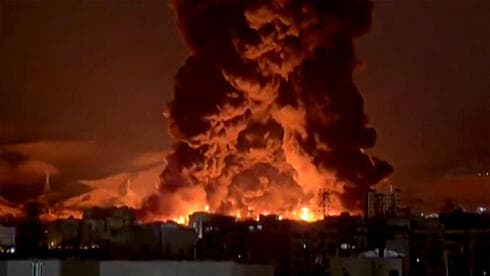
Tehran residents described what they called the worst night of aerial bombardment, reporting back-to-back explosions, low-flying jets and buildings shaking as fires burned after strikes.
“Tehran residents say the Iranian capital has endured what they described as its worst night of aerial bombardment, as the US defense secretary, Pete Hegseth, followed Donald Trump’s suggestion on Monday the war could soon be over with a warning of more strikes to come”
Niloufar, who lives in east Tehran and spoke under a pseudonym for security reasons, said: "We are under heavy bombardment and I can hear back-to-back explosions. The place they hit has caught fire. It's not clear where it exploded, but the buildings are shaking," and added: "They are destroying Iran."
Other residents reported rolling blackouts, much of Iran's communications were down, and people described the city as "the last stop before hell."
Casualties and health warning
Health and environmental dangers followed the strikes on oil facilities, with the World Health Organization urging Iranians to stay inside because "black rain" could cause respiratory problems and WHO spokesperson Christian Lindmeier saying the black and acidic rain was "indeed a danger for the population, respiratory mainly."
Residents said smoke billowed from oil facilities and that "black rain" was falling; many fled Tehran for rural areas while older and less able-bodied residents could not leave.
The US-based Human Rights Activists in Iran group said at least 1,245 civilians have been killed, including 194 children, by the US-Israeli war on Iran; the article also reported at least 486 people have been killed by Israeli bombing in Lebanon, 11 killed in Israel, and seven US troops confirmed dead with 140 injured, eight severely.
US-Israeli campaign and messaging
The article said Israel launched an air campaign against Iran with the US on 28 February and on Tuesday Israel said it had hit a weapons development facility among a wave of strikes.
“Tehran residents say the Iranian capital has endured what they described as its worst night of aerial bombardment, as the US defense secretary, Pete Hegseth, followed Donald Trump’s suggestion on Monday the war could soon be over with a warning of more strikes to come”
US officials gave mixed messages about the war's duration: Donald Trump told CBS News "the war is very complete," while US defense secretary Pete Hegseth warned of more strikes and said the US would not stop until "the enemy is totally and decisively defeated," promising that Tuesday would see the most intense strikes yet; Hegseth added: "It's not for me to posit whether it's the beginning, the middle, or the end, that's [Trump's decision] and he'll continue to communicate that."
Gen Dan Caine, chair of the US joint chiefs of staff, said US forces had hit more than 5,000 sites in Iran in a campaign aimed at destroying Iran's ballistic missile and drone capacity, degrading its navy to reopen the strait of Hormuz, and hitting "deeper into Iran's military and industrial base."
Regional spillover and responses
Iran continued striking Gulf states and Israel as part of what the article described as a strategy to inflict pain on US Gulf allies and the world economy; attacks included an Iranian strike on a residential building in Manama that killed a woman and wounded eight, an Iranian drone strike that caused a blaze near petrochemical plants in the UAE, and Saudi Arabia and Kuwait intercepting drones over their territory.
In the UAE four people, all migrant workers, were killed by falling missile debris, while Dubai residents largely continued daily life and one resident, Nader Farid, 30, said life "just goes on."
Iran's head of the national security council, Ali Larijani, posted on social media that the "nation of Iran does not fear your empty threats," and warned "Be careful not to get eliminated yourself," responding to Trump's threat that Iran could be hit "20 times harder" if it blocked the flow of oil through the strait of Hormuz.
In Lebanon, Israel continued strikes it described as targeting Hezbollah, hitting southern Beirut suburbs and the south of the country as Hezbollah kept targeting Israeli troops and launching rocket salvoes and drone swarms; the Lebanese Red Cross condemned an Israeli strike on one of its ambulances in the Tyre district that injured two emergency workers.
More on Iran
US obliterates military targets on Iran’s Kharg Island, Trump warns
13 sources compared
US Deploys About 2,500 Marines to Middle East After Iran Attacks Gulf Shipping
33 sources compared
FBI Warns of Iranian Drone Plot Based on Unverified Tip; California Says No Credible Threat
10 sources compared

White House Demands ABC Retract Report Claiming Iran Sought To Launch Drone Attacks On California
11 sources compared