Full Analysis Summary
Thailand-Cambodia border crisis
Thailand has declared a coastal curfew as cross-border fighting with Cambodia spread across multiple provinces, prompting significant military and civilian consequences.
Clashes this week swept across seven Thai border provinces and involved Thai cross-border airstrikes, killing at least 12 people and displacing hundreds of thousands.
The Thai military reports its troops suffered injuries from landmines during the fighting.
The instability prompted appeals from international figures, with US President Donald Trump urging both sides to stop fighting on Dec 11.
The coastal curfew was announced amid a wider security escalation and displacement crisis.
Coverage Differences
Tone and focus contrast (detailed conflict reporting vs unrelated site notice)
The Star (Other) provides extensive detail on the geographic spread, casualties, airstrikes and displacement tied to renewed Thailand–Cambodia fighting, framing the curfew as part of a broader security emergency. In contrast, The Hindu (Asian) does not report on the conflict at all and instead focuses on a site’s commenting policy and migration to a new platform, making it off‑topic for the security story.
Border landmine dispute
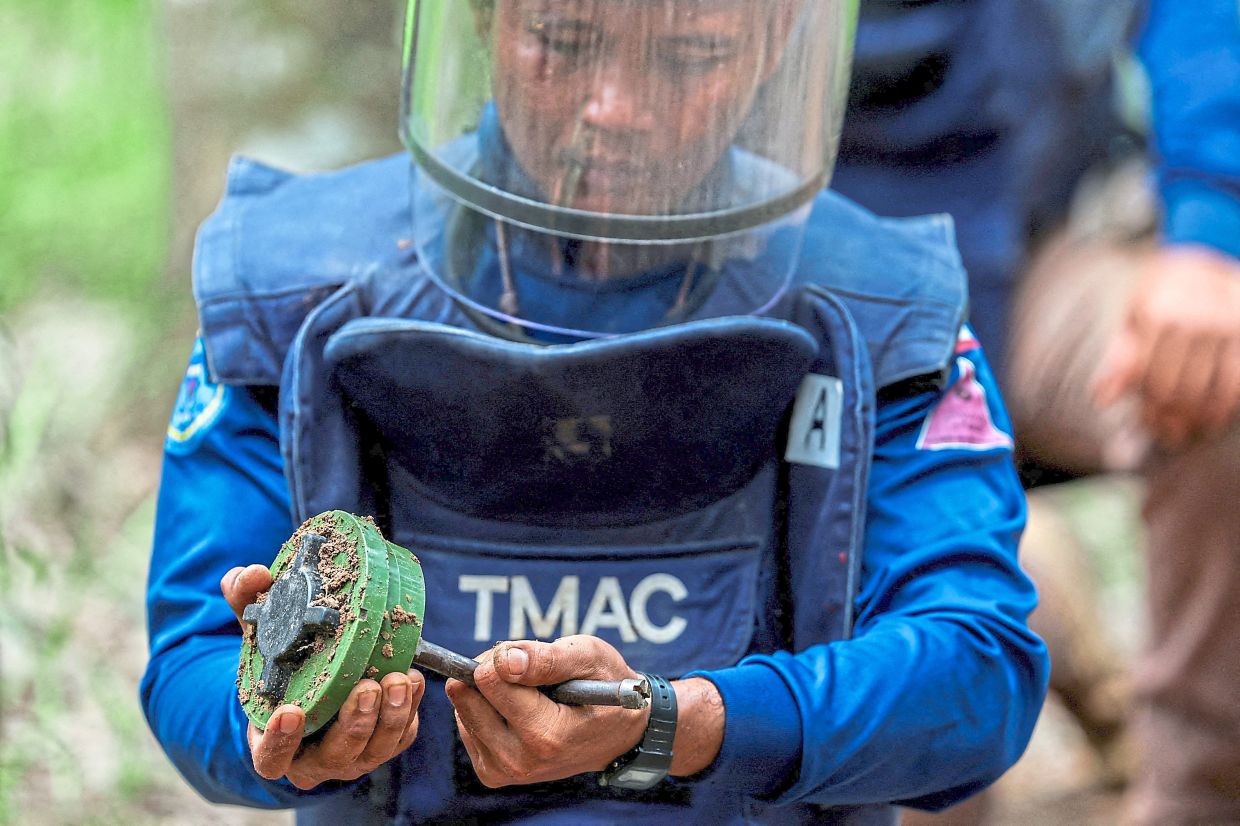
At the heart of the confrontation is a bitter dispute over landmines along a poorly defined frontier.
Thailand alleges that Cambodia has newly planted Soviet-made PMN-type mines, a charge Phnom Penh rejects as old K5 legacy devices from the 1980s.
Investigators from Landmine Monitor who examined recovered mines found Soviet manufacture.
Thailand has presented video and an ASEAN observer report it says indicate recent planting and has appealed to the UN for an independent inquiry.
These competing technical and historical claims underpin both the security incidents and the diplomatic standoff that has stalled peace talks.
Coverage Differences
Contradiction and contested evidence
The Star (Other) reports Thailand’s claim that recovered mines are newly planted Soviet‑made PMN‑type devices and that Landmine Monitor found Soviet manufacture, while also quoting Phnom Penh’s rejection, which frames the devices as remnants of legacy K5 minefields. The sources are reporting rival claims: The Star reports Thailand’s allegations and Phnom Penh’s rebuttal; The Hindu provides no coverage of the mine dispute, remaining unrelated to these contested technical claims.
Thai conflict and measures
Reports emphasize the human cost and recent tactical escalations.
Thai authorities say 18 soldiers were injured by mines in 2025, seven of them suffering amputations.
Earlier July clashes, triggered after a soldier lost a leg, prompted Thai F-16 strikes and five days of fighting that left dozens dead.
The current round has produced both fatalities and mass displacement.
These operational details are used to justify measures such as a coastal curfew and other security steps intended to protect civilians and control movement along affected coastlines and border zones.
Coverage Differences
Emphasis on casualties and operational details
The Star (Other) foregrounds injuries, amputations, F‑16 strikes, and days of intense fighting to stress the immediate human and military toll, supporting the narrative that measures like a coastal curfew are responses to acute insecurity. The Hindu (Asian) contains none of these operational or humanitarian details and is unrelated in focus.
Thailand-Cambodia mine dispute
Thailand broke off peace talks after the Sisaket incident and has appealed to the UN for an independent inquiry into allegations of landmines, while Cambodia dismisses the charge as an attempt to pin responsibility on legacy K5 fields.
Regional diplomatic mechanisms—ASEAN observation, UN appeals and broader international scrutiny—feature in reporting, suggesting the dispute has moved beyond local skirmishes into a wider examination of compliance with mine‑ban obligations and border management.
The coastal curfew can therefore be read both as a public-safety measure and as a signal of a sustained, politically charged confrontation.
Coverage Differences
Narrative emphasis on diplomacy and legal frameworks
The Star (Other) situates the fighting within international legal and diplomatic frameworks—Ottawa Treaty obligations, appeals to the UN, ASEAN observer reports—emphasizing accountability and independent inquiry. The Hindu (Asian) provides no parallel reporting on diplomatic implications, again making it off‑topic for this security and legal narrative.
Disputed device origins
Key uncertainties and competing claims remain.
Investigators found Soviet manufacture on recovered devices, which Thailand points to as evidence of recent planting.
Cambodia insists the devices are remnants of K5 minefields from the 1980s, a historical explanation that would point away from recent planting.
Reporting so far is dominated by The Star's detailed security coverage, while The Hindu's available snippet is off-topic and omits the conflict entirely.
Given the contested technical evidence and rival narratives, the situation remains ambiguous and subject to independent verification.
Coverage Differences
Ambiguity and missed coverage
The Star (Other) presents both technical findings and the opposing official narrative from Phnom Penh, explicitly showing the contradiction and unresolved nature of evidence. The Hindu (Asian) is missing entirely from this security conversation, representing a missed-information or off‑topic gap compared with The Star’s coverage.