Asia11 November, 20252 min read
Thailand Suspends Ceasefire and Blames Cambodia for Landmine Attack on Soldiers
This article is an automated aggregation of coverage from news outlets. Our editorials offer in-depth analysis curated by the NewsCord team.
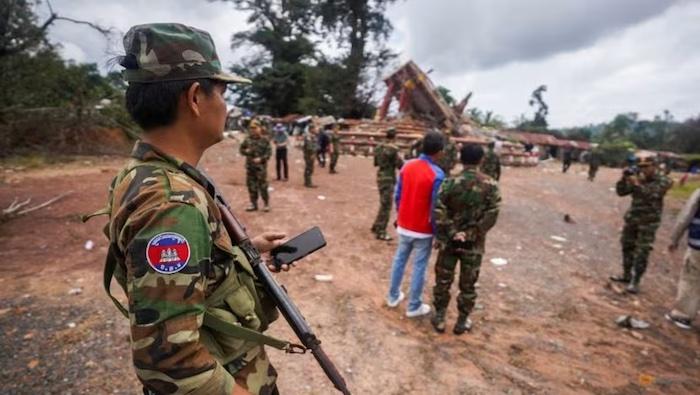
Thailand suspended the US- and Malaysia-brokered peace agreement after a landmine injured Thai soldiers. The landmine explosion occurred near the Thailand-Cambodia border in Sisaket province, injuring two to four soldiers.

22 outlets told this the same way.
Outlets did split on Avalanche Strikes Himlung Himal Base Camp In Nepal, At Least 10 Missing →
Thailand-Cambodia Border Conflict
Thailand has suspended its ceasefire and peace accord with Cambodia after a border landmine blast injured Thai troops. Bangkok accuses Phnom Penh of planting new mines, a claim that Cambodia denies. Asian media report that Thailand has frozen all ceasefire activities, including the planned release of 18 Cambodian soldiers, following the explosion near Sisaket and Preah Vihear.
“Thailand has suspended its ceasefire agreement with Cambodia after a landmine explosion near their border injured two Thai soldiers.”
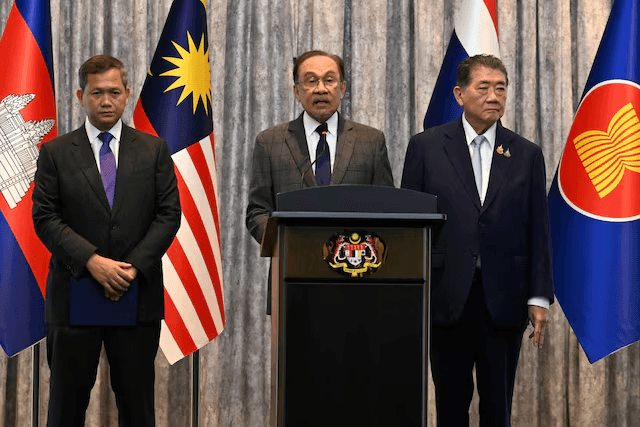
Cambodia rejects the allegations of new mines and calls for caution in areas contaminated by landmines. Western and West Asian sources note that the October accord was linked to a July truce and included mine clearance, withdrawal of heavy weapons, and prisoner releases facilitated by ASEAN, the U.S., and Malaysia.

Reports differ on the number of casualties, with some stating two Thai soldiers were injured and others reporting four. Despite these discrepancies, all agree that the incident has endangered the fragile peace along the border.
Peace Efforts in Preah Vihear Dispute
The suspension follows months of tension after deadly clashes in July and an October joint declaration that built on a late-July truce. The peace framework included clearing landmines, withdrawing heavy weapons, enabling ASEAN monitoring teams, and exchanging prisoners. Thailand pledged to release 18 Cambodian soldiers as part of the agreement.
Sources differ on casualty counts and on who exactly brokered or witnessed the deals. However, they agree that the dispute centers on the long-contested area around the Preah Vihear Temple. Mine clearance and demilitarization were core obligations under the accord.

Thailand-Cambodia Border Tensions
Bangkok’s immediate steps include halting the release of the 18 Cambodian soldiers and freezing accord-linked activities while officials investigate whether the mine was old or newly planted. Thailand also plans to brief the US and Malaysia on its decision.
“In response to the blast, Thailand postponed the planned release of 18 Cambodian soldiers captured during July’s clashes, a key part of the ceasefire agreement signed last month at an ASEAN summit in Malaysia.”
The country cites security threats and alleged Cambodian obstruction of mine clearance as reasons to pause. Some Asian outlets additionally note rising tensions such as cross-border cyber scams, highlighting broader strains beyond the battlefield.
Cambodia-Thailand Border Incident
Phnom Penh’s stance, as reported by West Asian and Asian outlets, is that no new mines were laid. Instead, the blast likely came from old war-era mines. Cambodia expressed regret and urged Thai troops to avoid mine-contaminated areas.
It also said the border remains calm. Other outlets, however, either say Cambodia hasn’t responded to this incident yet or note it previously denied Thai allegations. This reflects uneven reporting on Cambodia’s official communications while consistently noting its stated commitment to peace.
Fragile Peace and Diplomatic Challenges
Across sources, the peace remains fragile. Reports note the truce has largely held since late July even as both sides accuse each other of violations and a permanent settlement remains elusive. ASEAN monitoring access, mine clearance, heavy-weapons withdrawals, and prisoner releases were meant to stabilize the border.
“Although the truce has largely held since July 29, both sides still accuse each other of violations, and a permanent peace agreement addressing the territorial dispute has yet to be reached.”
Analysts and media highlight skepticism about a lasting resolution and renewed regional concern. The dispute’s focal geography and mixed attributions of external mediation underscore ongoing diplomatic complexity. This complexity now faces another severe test after the blast.