Full Analysis Summary
Chef's Knife Guide
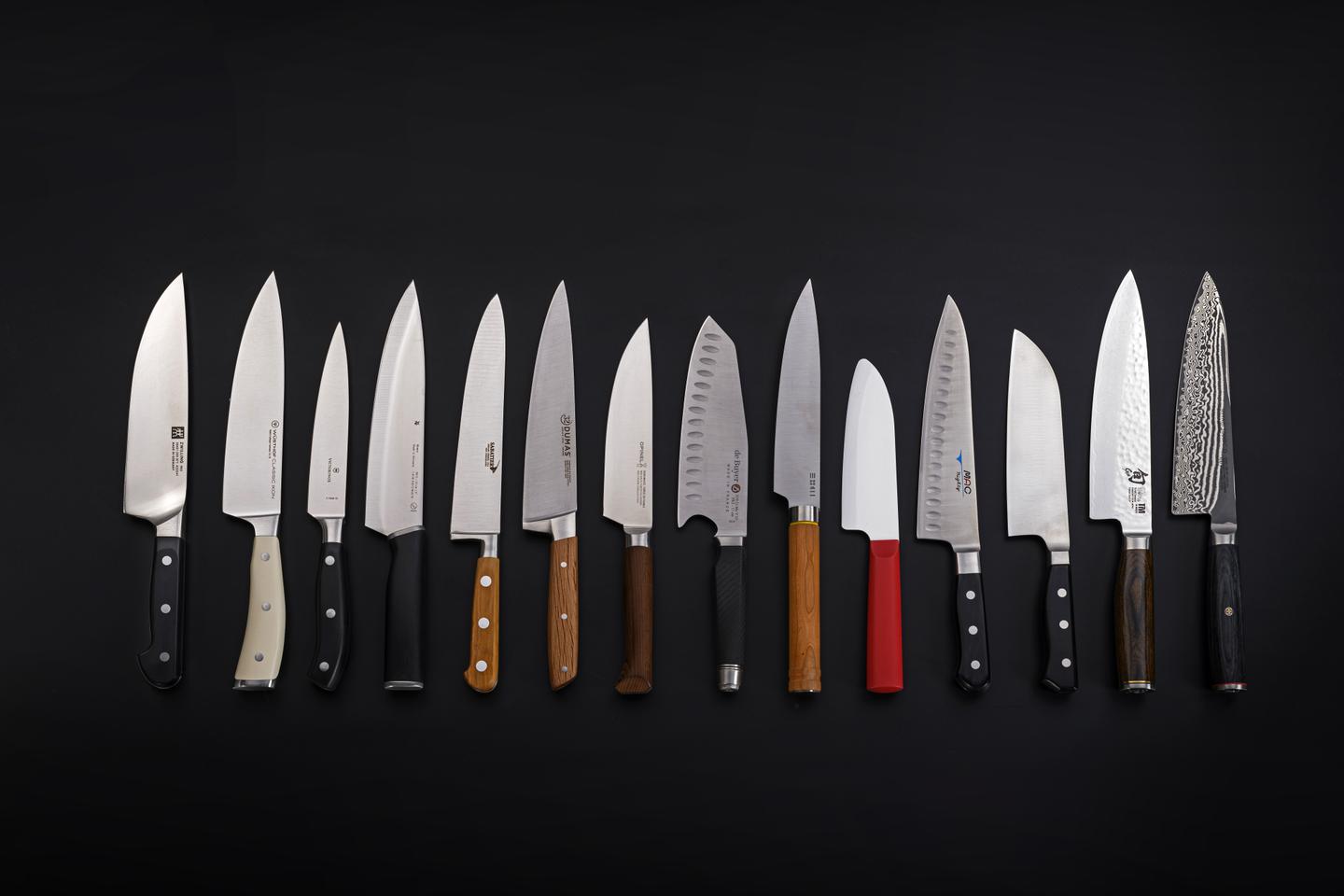
The article presents the chef's knife as an indispensable, versatile kitchen tool used to slice, finely émince or chop many types of food, with blades typically between 15 and 20 cm.
It distinguishes santoku, which have wider blades more suited to fruits and vegetables, from gyuto, which have narrower blades better for meat and fish and not adapted for chopping.
The piece notes national traditions: Japanese knives are renowned for sharpness, precision and refined aesthetics but require regular maintenance.
It adds that German knives are known for robustness and versatility, while French brands enjoy an excellent reputation for quality and know-how.
The guide's author called on four professional cooks, including a former starred chef, to choose winners and emphasizes that the selected knives may seem expensive but can last for years or even decades.
Kitchen knife reviews
The article highlights several specific knife models and summarizes their features and prices.
It describes an unnamed Japanese-style model with an understated design that it says proves "extremely effective, comfortable, precise, fast and above all versatile," and it lists the price as €149.90, while noting the article itself does not give a name for this model.
It profiles the MAC Mighty MTH-80 as "considered one of the best in the world by specialized sites for several years," with a 20 cm gyuto-style blade, a riveted handle and a Western-style grip with corbin, and says chefs unanimously praise it for both thin Japanese-style vertical cuts and for émincé using the blade curvature.
It presents the Déglon Sabatier-Deg Olivier (a Thiers-based family business) as a well-manufactured, classic-shape slicer with an olive-wood handle, three rivets, corrosion- and shock-resistant forged steel and a substantial guard, priced at €79.90.
It describes the Zwilling Myabi 5000 FCD as high-end German cutlery made with Japanese collaborators, featuring a Damascus blade covered with 49 layers, cryogenic treatment and hand-sharpening, available in 16, 20 and 24 cm (with the 20 cm said to "accomplish all tasks"), and priced at €181.98.
Knife selection and steel basics
The author has been a culinary journalist for about twenty years and holds a CAP in bakery.
They tested knives under household conditions with the perspective of a first purchase and submitted the selection to three chefs, including a former starred chef and a pastry chef.
The team used objective criteria (versatility, sharpness, build quality, ease of maintenance) and personal ones (aesthetics, grip, type of cooking).
They eliminated models over €250 and intentionally selected knives around €100 from recognized brands.
The guide details technical points, notably that steel composition matters: chromium increases stainless properties while carbon affects hardness.
It gives approximate carbon levels — about 0.5% in French and German steels and about 1% in Japanese steels — and says higher carbon makes blades harder and sharper but also more brittle and harder to sharpen.
It explains Damascus or pattern-welded steel.
The article mentions ceramic blades are seven times harder than steel but more brittle and difficult to sharpen.
It notes the Rockwell rating (HRC) measures a steel's resistance to deformation by applying force with a diamond or steel ball, with a higher number indicating greater hardness.