
The era of cheap money is over as the Iran war creates a permanent 'inflation floor'
Key Takeaways
- Iran war creates a permanent inflation floor, threatening the era of cheap money.
- Global energy markets show fragility, increasing oil shocks and supply disruption risks.
- Inflation could remain structurally high due to energy supply instability.
Inflation floor and energy fragility
The era of cheap money is over as the Iran war creates a permanent 'inflation floor'.
“The era of cheap money is over as the Iran war creates a permanent 'inflation floor' The Iran war is creating a permanent inflation floor that could end the era of cheap money and expose the fragility of global energy markets”
The Iran war has exposed the fragility of global energy markets, raising the risk that oil shocks and supply disruptions will keep inflation structurally higher for years.
De-globalization and energy security
There's a counter view that scars from the Iran war will persist for long in the form of a structurally elevated global inflation floor. This could impact returns across all asset classes, including stocks, crypto and bonds. The answer to that lies in the biggest takeaway from the Iran war: energy markets are fragile, and major economies are exposed to oil price spikes and energy supply disruptions. For decades, several countries, including major economies, relied on global energy supply chains, price-driven markets, and comparative advantage. That model worked, but it has now crumbled amid the latest disruption in the Strait of Hormuz, which has led to massive energy shortages across the world, including in major economies like India, Japan and South Korea. If the conflict drags on, eventually countries like China, which have sizeable reserves, could suffer too, including the supposedly energy-independent U.S. The result: Going forward, every nation is likely to make energy independence and security central to its national security strategy. According to Energy Market Expert Anas Alhajji, this trend will trigger rapid de-globalisation of energy markets, prioritising control over cost and breeding sticky inflation. "Once that mindset takes hold, global energy markets will never return to the old model of open, price-driven, largely commercial trade. Instead, capitalist economies—historically reliant on market efficiency, global supply chains, and comparative advantage—will increasingly mirror the Chinese approach: heavy state direction, strategic stockpiling, vertical integration, subsidies for domestic champions, and prioritization of self-reliance/control over pure cost minimization," he said in an explainer on X. He added that most nations lack China’s centralized supply chain, industrial base, and decision-making, which could result in slower innovation, fragmented markets, and higher costs. "The result: higher costs, slower innovation in some areas, fragmented markets, and reduced overall efficiency for Western-style economies, all in the name of 'security.' Energy stops being just another commodity; it becomes a geopolitical weapon and a domestic fortress," he noted.
Asset and policy implications
All this means central banks may no longer have the room they once had to turn on the liquidity tap quickly to support the economy and asset prices.
“The era of cheap money is over as the Iran war creates a permanent 'inflation floor' The Iran war is creating a permanent inflation floor that could end the era of cheap money and expose the fragility of global energy markets”
From 2008 to 2021, the global CPI (inflation) averaged under 3% (briefly rising to 8% in 2022, only to fall back to 3% in 2024), according to data source St. Louis Fed.
This allowed central banks, including the Fed, BOJ and others, to pursue ultra-easy monetary policies that set interest rates at or below zero, and pump liquidity via aggressive bond buying or quantitative easing, fueling epic gains across all markets.
Bitcoin, for one, went from a single-digit dollar-denominated price in 2011 to $126,000 in October last year.
But with an expected structurally higher inflation floor, that paradigm shifts.
Central banks can no longer assume they can always cut rates to drive growth.
Liquidity could be more constrained, capping returns across asset classes.
The message is clear: Investors should brace for a world where inflation is sticky, monetary policy is less accommodative, and market volatility is the new normal.
Fed remarks and market reaction
Fed remarks and market reaction.
Fed chair Jerome Powell said rising energy prices 'for sure showed up' in policymakers' higher inflation outlook for this year, lifting their forecast to 2.7% from 2.4%.
He pushed back on comparisons to 1970s-style stagflation, arguing that unemployment is near long-run norms and inflation is only modestly above target.
Markets fell further following the Fed meeting results and Powell press conference, with bitcoin sliding back to $70,900 and the Nasdaq closing at its session low, down 1.5%.
More on Iran

Israel strikes Iran's Pars gas field as Tehran vows revenge
14 sources compared
Trump threatens to blow up South Pars gas field if Iran attacks Qatar again
10 sources compared
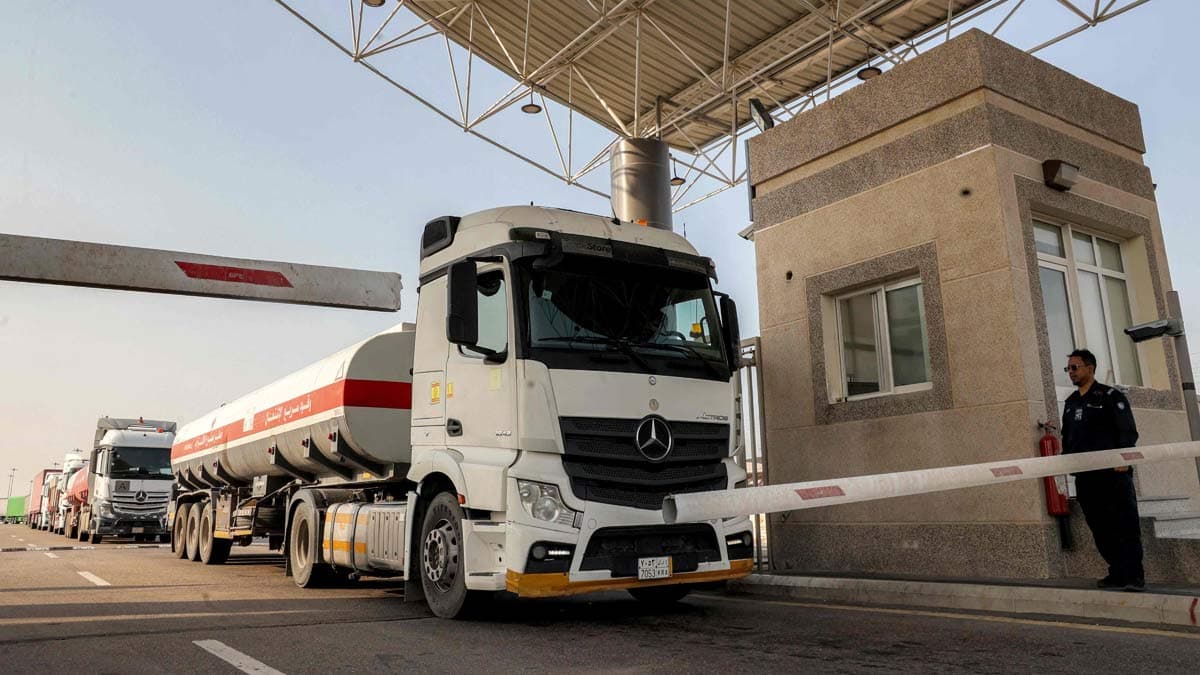
UAE Halts Habshan Gas Facility Operations After Debris From Intercepted Missiles
10 sources compared

Iran Threatens Gulf Energy Facilities After Israel Strikes South Pars Gas Field
11 sources compared