The War in Iran Will Raise Fuel Prices and Costs Throughout the Economy - Center for American Progress
Key Takeaways
- Center for American Progress projects fuel price increases from the war in Iran
- The conflict will raise costs throughout the economy
- Image shows plumes of smoke over oil depot tanks hit overnight
Main thesis and comparisons
The Center for American Progress argues that the war in Iran has driven crude oil and natural gas prices sharply higher and that those fuel price increases will raise costs across the U.S. economy for gasoline, electricity, fertilizer, food, and more.
“_Center for American Progress_ The War in Iran Will Raise Fuel Prices and Costs Throughout the Economy Share Share Facebook Print Facebook Print Media Contact Sam Hananel Senior Director, Media Relations shananel@americanprogress”
The article says trends so far have been more drastic than other recent geopolitical disruptions and compares this conflict’s immediate price movements to past events including the Iranian drone attack on Saudi Arabia on September 14, 2019; the Suez Canal blockage on March 23, 2021; Russia’s invasion of Ukraine on February 24, 2022; Hamas’ attack on Israel on October 7, 2023; the 12-Day War on June 13, 2025; the U.S. attack on Venezuela on January 3, 2026; and Operation Epic Fury on February 28, 2026.
The authors emphasize that the duration of hostilities will be a major determinant of how long elevated prices persist, noting that prices returned toward prior levels after the June 2025 12-Day War but that the current conflict’s severity could keep prices elevated for longer.
Gasoline and policy drivers
The article highlights gasoline price impacts, saying domestic gasoline prices closely follow domestic and international crude oil prices, and notes that fuel prices rose quickly after the conflict escalated.
It states, "In just the first week after President Donald Trump bombed Iran, the average price of gasoline in the United States increased" but the article does not provide the numerical magnitude of that increase in the text presented.
“_Center for American Progress_ The War in Iran Will Raise Fuel Prices and Costs Throughout the Economy Share Share Facebook Print Facebook Print Media Contact Sam Hananel Senior Director, Media Relations shananel@americanprogress”
The authors also criticize the Trump administration for neglecting to refill the nation’s Strategic Petroleum Reserve before the conflict and for policies they say locked in higher fuel costs—specifically citing a "locked in an increase of 37 cents per gallon over the coming decade" by repealing certain fuel economy fines, eliminating vehicle carbon standards, and removing EV consumer rebates.
Natural gas, LNG, fertilizer
The report explains how natural gas and LNG link international markets to domestic electricity and heating costs, saying U.S. exports have increasingly tied domestic prices to global LNG prices since 2016.
“_Center for American Progress_ The War in Iran Will Raise Fuel Prices and Costs Throughout the Economy Share Share Facebook Print Facebook Print Media Contact Sam Hananel Senior Director, Media Relations shananel@americanprogress”
It documents that following the start of Operation Epic Fury, both European and Asian LNG futures "have already skyrocketed" and notes that "as of March 9, they’ve increased by"—a magnitude not provided in the article text presented here.
The authors connect higher natural gas prices to fertilizer production and food costs, saying fossil fuels are a primary feedstock in fertilizer manufacture and that fuel-driven supply disruptions can change planting decisions and raise grocery bills; the article contains an incomplete sentence about fertilizer often accounting "for as much as" a portion of cost, and that numerical detail is not present in the provided text.
Wider economic consequences
The authors outline broader economy-wide effects, arguing that fuel supply shocks will push up inflation and raise costs in sectors such as air travel, air freight, semiconductors, and industries dependent on aluminum imports.
They warn that the longer the war continues, the more gasoline, electricity, food, and overall inflation will increase, and they assert the conflict "may profit the fossil fuel industry at everyone else’s expense."
“_Center for American Progress_ The War in Iran Will Raise Fuel Prices and Costs Throughout the Economy Share Share Facebook Print Facebook Print Media Contact Sam Hananel Senior Director, Media Relations shananel@americanprogress”
The article concludes by noting the war "has already seen billions of dollars spent in military operations; taken the lives of"—a clause whose completion and figures are not provided in the excerpt—and lists the report authors as Trevor Higgins, Senior Vice President, Energy and Environment, and Akshay Thyagarajan, Policy Analyst, Domestic Climate Policy.
More on Iran
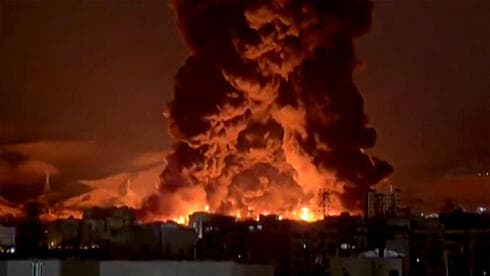
US obliterates military targets on Iran’s Kharg Island, Trump warns
13 sources compared
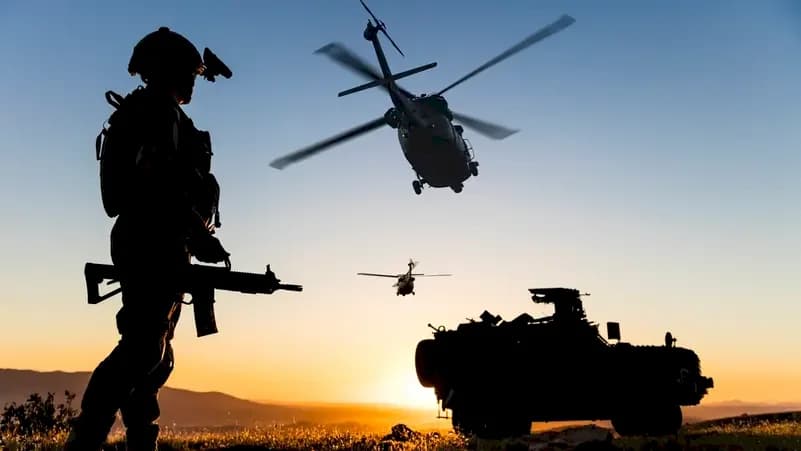
US Deploys About 2,500 Marines to Middle East After Iran Attacks Gulf Shipping
33 sources compared
FBI Warns of Iranian Drone Plot Based on Unverified Tip; California Says No Credible Threat
10 sources compared

White House Demands ABC Retract Report Claiming Iran Sought To Launch Drone Attacks On California
11 sources compared