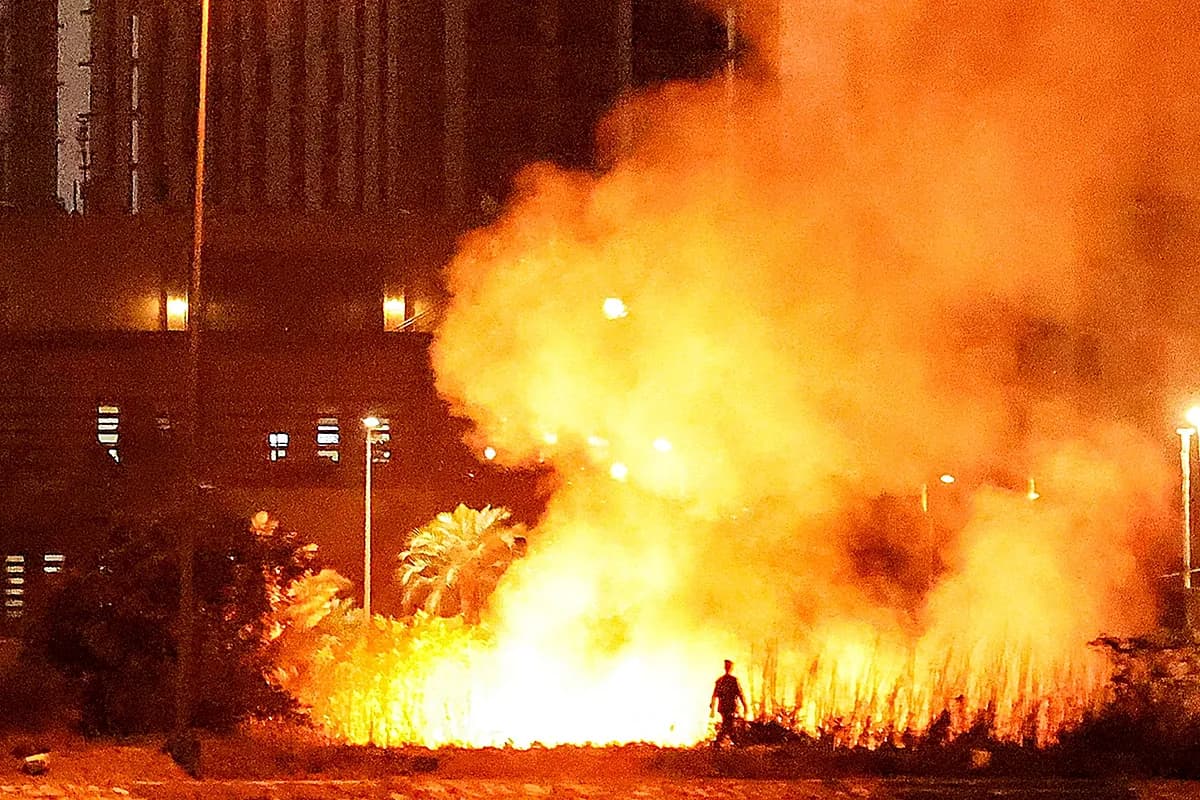
The 'war' of the interceptors: the Achilles' heel in the war against Iran
Key Takeaways
- Strait of Hormuz is the conflict's epicenter.
- Pentagon figures cite US spending at $23,000 per second.
- CSIS estimates total cost reached about 16.5 according to the article.
Costs and interceptor shortage
War in Iran: EL MUNDO travels to the Strait of Hormuz, the epicenter of the military conflict with Iran: 'From this side you can smell and feel the war.'
“War in Iran: EL MUNDO travels to the Strait of Hormuz, the epicenter of the military conflict with Iran: 'From this side you can smell and feel the war”
The United States is spending $23,000 per second, according to conservative figures released in Pentagon reports, in its war against Iran.
The Center for Strategic and International Studies independently estimated that the total had reached $16.5 billion by the twelfth day, with daily costs that have continued to rise and will rise further when the deployment of 5,000 Marines is expected in the coming days.
Why interceptors scarce
What is most worrying now, within this out-of-control spending, is the acute shortage of interceptors.
And what is an interceptor?
An interceptor is a defensive missile designed to detect, reach, and destroy in the air another missile or drone before it hits its target.
Essentially, it is the core of anti-missile systems: a projectile that neutralizes another projectile in midflight to protect infrastructure and cities.
Why have these missiles become the most prized and scarce weapons in arsenals worldwide?
The underlying problem is less the ability to launch missiles than the ability to stop them for weeks or months.
Cost dynamics and exhaustion
In other words, the attacker can saturate another country's defenses at a very affordable cost, but the defender goes broke trying to protect their territory.
“War in Iran: EL MUNDO travels to the Strait of Hormuz, the epicenter of the military conflict with Iran: 'From this side you can smell and feel the war”
This is what the Ukrainians learned through bombardments.
To eliminate the cheap projectile you must use cheap interceptors and save your best missiles to stop the enemy's ballistic missiles.
There are already countries showing signs of exhaustion.
Semafor published, citing U.S. officials, that Israel has warned that its interceptors are about to run out.
Some analyses point to a usage rate that far exceeds replenishment capacity.
Its reserves are under real and constant pressure, and could become a critical factor if the war continues.
Escalation and contested claims
Although Israel denies it, all countries attacked by Iran with missiles and drones can face the same problem: exposed and without ammunition to waves of old and cheap missiles, but equally damaging.
Why are they so scarce and expensive?
What makes these missiles so scarce and expensive?
The MIM-104 Patriot is not ammunition in the classic sense, but a piece of engineering of extremely high precision, difficult to manufacture, with long and inflexible supply chains due to its technological complexity.
A Patriot interceptor—especially in its PAC-3 version—does not carry a large explosive payload, but rather directly impacts the target (hit-to-kill).
In other words, you fire an arrow to take down another arrow.
That requires miniaturized high-precision sensors and radars, extremely sophisticated guidance systems, and advanced electronic components able to operate in milliseconds.
Despite all this, they sometimes fail.
Although produced in series, these missiles do not come off a massive automated line.
Production is concentrated in a few companies—primarily Lockheed Martin and Raytheon Technologies—and each unit requires long processes, strict quality controls, and specialized assembly.
To top it off, Ukraine, Israel, Gulf countries, and the United States compete to access the production line ahead of the rest.
The Patriot is not scarce because money is lacking, but because its manufacture depends on a narrow and highly specialized industrial chain that cannot be expanded at the pace at which interceptors are consumed due to the salvo warfare imposed by Russia and now by Iran, two countries with gigantic Cold War missile arsenals.
Concern about Western arsenals relates to a simple yet troubling idea: the West has built extremely advanced military systems, but is not prepared to sustain a high-intensity war for a long time.
The CEO of Rheinmetall, Armin Papperger, has probably spoken most directly about the real state of Western arsenals in this crisis: 'I think the warehouses are empty or almost empty everywhere: in Europe, in America, and in the Middle East.'
In this context, the Iran war continues to escalate.
In a message in his usual defiant tone, yesterday President Donald Trump warned that the United States 'will annihilate' power plants in Iran if the Islamic Republic does not fully open the strategic Strait of Hormuz within 48 hours.
And he went further, saying he would 'destroy' several power plants 'starting with the largest.'
The blond president had no trouble publicly threatening something that is, in essence, a war crime because it targets civilian infrastructure.
The clock has been ticking since then.
For its part, the regime of the ayatollahs replied to Trump: 'All energy infrastructures, information technology and desalination facilities belonging to the United States in the region will become targets.'
Subsequently, Iran's representative to the International Maritime Organization (IMO) asserted that the Strait of Hormuz remains open to international navigation, except for Israel and the United States.
This claim is not true, as almost no oil tanker is currently leaving the waters of the Persian Gulf for the Arabian Sea.
More on Iran

President Trump Says Iran Deal Within Reach Amid Talks With Senior Iranian Official
10 sources compared

Trump Approves Iran Operation After Netanyahu Presses for Joint Strike on Khamenei
12 sources compared

President Donald Trump orders ICE officers deployed to airports amid DHS shutdown.
227 sources compared
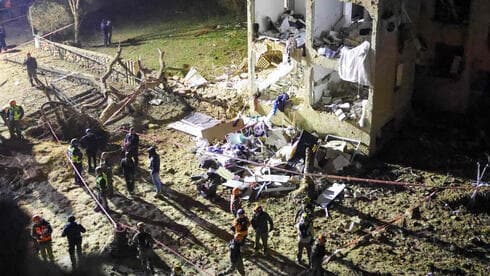
Iranian Missiles Strike Israel; Officials Report 180 Injured Amid Conflicting Casualty Figures.
12 sources compared