
Thomas Friedman: Trump has no idea how to end the war with Iran.
Key Takeaways
- Friedman said Trump has no idea how to end the war with Iran.
- Friedman argued bombing Iran would not ensure regime change or improve the country's future.
- Friedman warned bombing Iran could cause widespread chaos and render the country uninhabitable.
Friedman on Iran
American writer Thomas Friedman said in a New York Times column that bombing Iran and attempting to destroy it would not necessarily bring regime change and could instead produce widespread chaos and make the country uninhabitable.
“American writer Thomas Friedman said that bombing Iran and destroying it would not necessarily lead to regime change or improve the country's future; rather, it could lead to widespread chaos and make the country uninhabitable”
He begins by recalling a 1996 visit to Tehran when he saw the slogan 'Death to America' on a hotel wall, which he took as evidence of how deeply anti-American rhetoric is embedded in the regime.
Friedman says he once hoped young Iranians' aspirations for economic openness might overcome the leadership, but the regime proved far more entrenched - woven into municipalities, schools, the military, the banking sector and local militias - and now governs a country of roughly 90 million people.
Trump and Netanyahu on Iran
Friedman argues the recent war involving the United States and Israel with Iran began without a clear conception of its end.
He criticizes what he sees as the absence of a coherent strategy by U.S. President Donald Trump and Israeli Prime Minister Benjamin Netanyahu.
He lists what he describes as contradictory statements by U.S. President Donald Trump, including calls for regime change, saying he does not care about Iran's future, claims he would help choose its next leader, openings to negotiation, and later demands for "unconditional surrender."
Friedman suggests Israeli Prime Minister Benjamin Netanyahu has political incentives to keep the conflict open and might be pleased to turn Iran into another large Gaza and "mow the grass."
He describes Israel as a modern Sparta that requires continual military friction.
Consequences of strikes on Iran
Friedman concedes that strikes may have weakened Iran's nuclear and military capabilities and could reduce its regional threat.
“American writer Thomas Friedman said that bombing Iran and destroying it would not necessarily lead to regime change or improve the country's future; rather, it could lead to widespread chaos and make the country uninhabitable”
He warns that continued bombing risks destroying civilian and environmental infrastructure, including water and energy facilities, and could make Iran uninhabitable.
He notes that Iran replaced Supreme Leader Ali Khamenei, who was killed at the start of the war, with his son, Mojtaba Khamenei, whom he says is also a hardliner.
He argues that genuine regime change is likelier to come from internal splits within the ruling elite after the fighting stops than from persistent external bombardment.
He urges stopping military operations after primary objectives are met and pursuing a 'day-after-the-day-after' policy to manage the internal debates that will follow.
He says the best outcome is nudging Iran toward a less hostile course, while the worst is a collapsed, chaotic state with catastrophic regional consequences.
More on Iran
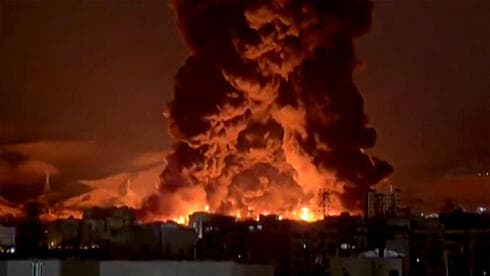
US obliterates military targets on Iran’s Kharg Island, Trump warns
13 sources compared
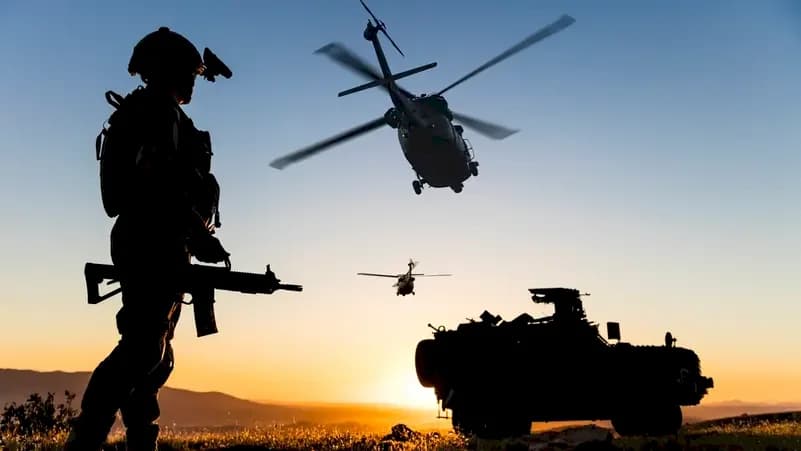
US Deploys About 2,500 Marines to Middle East After Iran Attacks Gulf Shipping
33 sources compared
FBI Warns of Iranian Drone Plot Based on Unverified Tip; California Says No Credible Threat
10 sources compared

White House Demands ABC Retract Report Claiming Iran Sought To Launch Drone Attacks On California
11 sources compared