South America04 June, 20263 min read
Thousands Protest in Buenos Aires After 14-Year-Old Agostina Vega Killed in Córdoba
This article is an automated aggregation of coverage from news outlets. Our editorials offer in-depth analysis curated by the NewsCord team.
Thousands nationwide marched in Ni Una Menos protests after Agostina Vega's killing. Protests demanded stronger government action on femicides and gender violence.
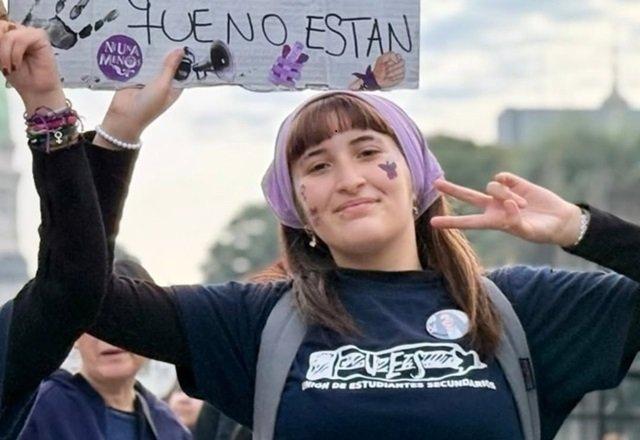
Agostina Vega sparks protests
Argentina’s streets filled on Wednesday, June 3, as thousands of protesters gathered for the annual Ni Una Menos demonstration in downtown Buenos Aires, with the killing of 14-year-old Agostina Vega in Córdoba described as the spark that brought renewed energy and purpose. France 24 said Agostina’s case “triggered a groundswell of outrage and growing demands for government action against gender-based violence,” after she was killed this month in the central city of Cordoba. The Australian Broadcasting Corporation reported that Agostina, who left her grandfather’s empanada factory and hailed a nearby taxi, was found dead after being sexually assaulted, hanged and dismembered, with her remains discovered on Saturday.
AP said her remains were found in a drainage ditch Saturday, a week after her disappearance, as vigils in her home province erupted into clashes with police. Left Voice said the immediate spark was Agostina Vega’s “brutal femicide,” adding that she went missing on May 23 and was found murdered a week later, sexually assaulted, hanged, and dismembered.
Milei, police, and legal fights
Protesters directed anger not only at gender violence but also at the way authorities handled the case, with EFE describing demands for justice after the recent femicide of 14-year-old Agostina Vega and crowds gathering near the National Congress in Buenos Aires. EFE quoted economist and feminist leader Luci Cavallero saying, “We are facing a national government that is rolling back many of the achievements made by the feminist movement in recent years,” linking the protests to dismantling gender violence programs. The Australian Broadcasting Corporation reported that Mr Barrelier, the main suspect charged with Agostina’s murder, remains in police custody and denies killing Agostina, after investigators said CCTV showed she entered a home with a man and stayed there until her alleged murder.
AP said Security Minister Alejandra Monteoliva has refused to classify the killing as femicide, quoting her: “A homicide, whatever its nature, is not solely defined by what happens during one hour, two hours, or three hours, where the act itself occurs.” Left Voice said the day of Agostina’s murder, Security Minister Alejandra Monteoliva refused to call it a femicide, describing it instead as a generic “homicide,” and argued that without naming the specific form of violence, the state cannot prosecute it effectively or build prevention policies.
What’s at stake next
The demonstrations unfolded against a broader policy dispute over gender violence, with EFE saying feminist organizations reported that since Milei took office in December 2023, budget allocations for preventing and eradicating gender-based violence have been slashed and departments responsible for public policies have been dismantled or closed. EFE also reported that a woman was murdered for gender-related reasons every 44 hours during 2025, according to the National Registry of Femicides, and that the data released by National Security Minister Alejandra Monteoliva showed 200 victims compared to 228 the previous year. AP said lawyers at the Center for Legal and Social Studies have counted 63 legally registered femicides, while others compiled a list of more than 100 names of women killed this year arguing many aren’t properly labeled.
Left Voice said the movement’s document was read at the central rally by singer Cazzu and actress Thelma Fardín, and it quoted Cazzu telling the crowd, “June 3 is our cry,” as protesters confronted Milei’s government. The same Left Voice account said the stakes include whether femicide is treated as a crime, quoting congresswoman Myriam Bregman that “It’s terrible to deny that femicide is a crime,” and warning that acting quickly and acting effectively are not the same thing as mobilization continues.