
Three questions about Iran: a country not so religious and with a long history of feminist struggle
Key Takeaways
- Global interest in Iran surged due to the Israel-US confrontation and its implications.
- The conflict raises human costs for Iranians and disrupts energy prices globally.
- Iran's religiosity is debated; article highlights a long history of feminist struggle.
Global interest and core questions
There is enormous interest in the war of Israel and the United States against the Islamic Republic.
“There is enormous interest in the war of Israel and the United States against the Islamic Republic”
The human cost for Iranians is added to the cost of the counteroffensive against neighboring countries and the domino effect that it has immediately had on energy prices worldwide.
Suddenly, the whole world wants to know more about Iran.
Are they as religious as state television shows, or as secular as the diaspora claims?
Will military intervention achieve the end of the regime that protests did not topple?
Will a democracy emerge?
Will women be able to remove the veil?
Attempting to answer these and other questions, the answers often obscure more than they clarify.
Here are three issues that tend to mislead.
Religion’s weight and power dynamics
Without going to the extreme of those who see a war of religions in every conflict that erupts in the Middle East, there are many commentators who seek in the arcana of Islam an explanation for the actions of Iranian leaders (though they do not do the same to decipher the messianic behavior of Israeli or American leaders).
They get bogged down in the differences between Shiism and Sunnism, the two main branches of Islam, or resort to exegesis of legends and myths on which they base themselves in search of the keys to decisions that remain political.
The Muslims of Iran are, according to concordant studies, among the least observant in the region.
The imposition of an institutional faith since the proclamation of the Islamic Republic in 1979 has become significant secularization and a growing distancing from the official interpretation of Islam.
Even many devout people are bothered by the political use of religion.
A military regime is coming.
Strategists and respected analysts say these days that, after the war, the “Ayatollahs’ regime” will transform into a military regime.
As if it were not already.
For a long time the venerable ulemas of Qom, the seat of Iran's clerical seminaries, have lost their prescriptive weight in relation to the interests and ambitions of the Revolutionary Guard, the ideological army charged with protecting the Islamic Republic.
The Guard handles security, nuclear and missile programs, and relations with allied militias, something that has shaped Iran's foreign policy.
But in addition, it has also gained control of between 40% and 60% of the economy through a vast network of companies, conglomerates and foundations that range from strategic sectors such as hydrocarbons, telecommunications or infrastructure to pharmaceuticals.
Moreover, although the Constitution prohibits active-duty members of the Armed Forces from joining parties or directly intervening in politics, since the beginning of the century its reserve officers have held a growing number of positions.
Even without that presence, their influence over the main state institutions has for at least a decade made them the power behind the scenes.
Feminism and 2022 turning point
Iran became feminist in 2022.
“There is enormous interest in the war of Israel and the United States against the Islamic Republic”
The death in police custody of Yina Mahsa Aminí was the spark of the protests Women, Life and Freedom.
Many observers suddenly discovered Iranian feminism.
But by then Iranian women had already spent many years fighting against the compulsory veil and, above all, against the legal discrimination they face.
“The first time we went out to the street to celebrate 8-M was in 2002, under reformist Jatamí’s presidency,” recalls activist Sussan Tahmasebi.
Four years later, with the ultra-conservative Ahmadineyad as president, the police beat to disperse about two hundred Iranians, supported by a handful of men, who were returning to march on International Women's Day.
In the meantime, thousands of volunteers under the aegis of Nobel Shirin Ebadí had launched across the country the Million Signatures Campaign to demand equality before the law.
Her offices were closed shortly after.
Numerous women participated in the 2009 protests against what a large portion of the population considered a rigged election.
Thus, in 2022 the novelty was not that Iranian women went out into the street; the novelty was that they were supported by men, especially the young.
Soon the movement demanded the end of theocracy, freedom of expression and human rights, which are also women's rights.
More on Iran

President Trump Says Iran Deal Within Reach Amid Talks With Senior Iranian Official
10 sources compared

Trump Approves Iran Operation After Netanyahu Presses for Joint Strike on Khamenei
12 sources compared

President Donald Trump orders ICE officers deployed to airports amid DHS shutdown.
227 sources compared
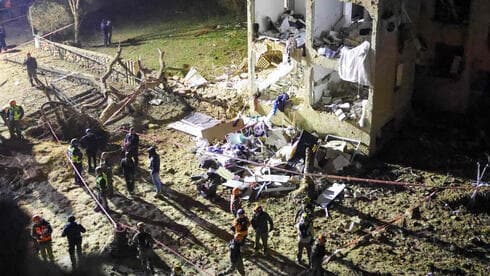
Iranian Missiles Strike Israel; Officials Report 180 Injured Amid Conflicting Casualty Figures.
12 sources compared