Full Analysis Summary
Early 2026 oil outlook
Traders opened 2026 with oil prices largely steady as markets weighed ahead of an OPEC+ video conference set for Jan. 4, with West Texas Intermediate trading above $57 a barrel and Brent below $61 after late-week declines.
Market participants remained cautious because oil suffered its biggest annual drop since 2020 — about a 20% fall in 2025 — driven by concerns over a global glut from prior OPEC+ supply increases and rising rival output; the IEA has forecast a record surplus of roughly 3.8 million barrels per day this year.
The near-term tone is one of watchfulness, with prices hovering as traders wait to see whether key OPEC+ members led by Saudi Arabia and Russia will uphold their November decision to halt further supply hikes.
Coverage Differences
Emphasis/tone
Moneycontrol (Asian) emphasizes market price levels, the drop in 2025 and the IEA surplus forecast, presenting a market-focused view of supply and demand fundamentals and the upcoming OPEC+ meeting. South China Morning Post (Asian) does not report price specifics here but emphasizes geopolitical actions — expanded US sanctions on entities linked to Venezuela — framing supply concerns through policy moves rather than market statistics.
OPEC+ meeting impact on prices
Traders are focused on the OPEC+ Jan. 4 meeting, where Saudi Arabia and Russia are expected to maintain a November decision to pause further supply hikes.
Markets see that pause as critical to supporting prices after 2025’s rout, and Moneycontrol reports traders expect the November decision to be upheld, underpinning cautious stability around current price levels.
Coverage Differences
Narrative/missed information
Moneycontrol (Asian) reports the expected OPEC+ stance and frames it as the central near-term market driver. South China Morning Post (Asian) provides less on the OPEC+ meeting specifics in its snippet and instead concentrates on US sanctions actions against Venezuela; thus SCMP misses the market-focused explanation of OPEC+ expectations that Moneycontrol supplies.
Sanctions and supply risk
Geopolitics — particularly US sanctions targeting Venezuela-linked companies and vessels — is a significant near-term risk to supply that market participants are parsing alongside OPEC+ signals.
Moneycontrol notes the US administration tightened pressure by sanctioning Hong Kong- and China-based companies and vessels accused of evading curbs.
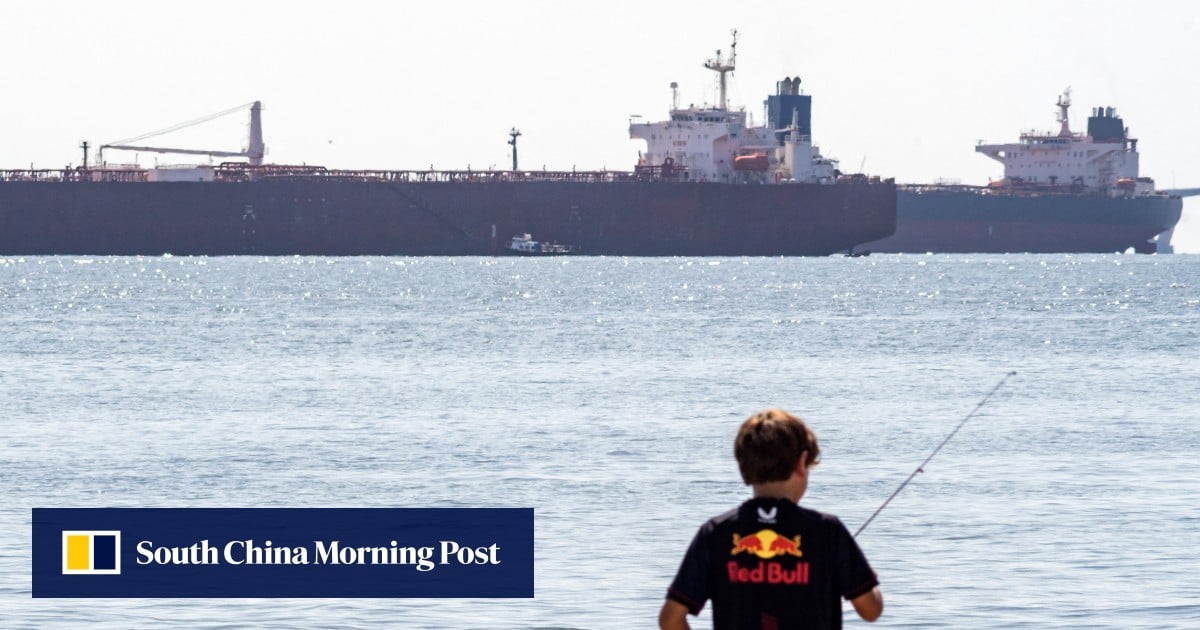
The South China Morning Post lists the newly blacklisted firms — Corniola, Aries Global Investment, Krape Myrtle Co and Winky International — and four vessels: Della, Nord Star, Rosalind and Valiant.
These actions could constrain some flows or at least inject volatility by complicating shipping and trading routes.
Coverage Differences
Detail/coverage
Both sources report US pressure on Venezuela, but Moneycontrol (Asian) frames it succinctly as a tightening of pressure on exports and names the jurisdictions of the sanctioned firms (Hong Kong and China). South China Morning Post (Asian) provides granular detail on the specific companies and vessels blacklisted and explicitly frames the move as part of a potential signal to Beijing. Moneycontrol reports the sanctions; SCMP reports company and vessel names and suggests geopolitical signaling.
Oil market downside risks
Fundamentals still point to downside risk unless demand improves or producers curb supply further.
Moneycontrol reports crude's large 2025 decline and the IEA forecasts a multi-million-barrel-a-day surplus, underlining the structural glut that pressured prices.
Traders therefore view the Jan. 4 meeting and sanctions developments as potential short-term catalysts but not guaranteed solutions.
Market participants remain wary that the surplus and rival output could keep prices depressed unless policy or demand shifts materially.
Coverage Differences
Narrative/interpretation
Moneycontrol (Asian) emphasizes the IEA surplus and the structural glut as primary reasons for last year’s price fall and for continued downside risk. South China Morning Post (Asian) is used mainly to illustrate how sanctions could be an additional supply-side complicating factor; SCMP’s framing is more geopolitical and policy-oriented, less focused on the IEA’s demand-supply numbers. Thus Moneycontrol offers the fundamentals narrative while SCMP offers geopolitical context.
Oil market outlook
Uncertainty dominates the outlook.
OPEC+'s likely decision to hold back further supply increases provides a floor that helped steady prices near $57.
The market faces offsetting pressures, including a sizable IEA-forecast surplus and geopolitical sanctions that could either restrict some Venezuelan flows or push more crude into shadowy trading channels, with unclear net impact.
Sources differ in emphasis, with Moneycontrol focusing on market metrics and OPEC+ mechanics while South China Morning Post highlights the sanctions' names and the possible diplomatic signal to Beijing.
Together, these perspectives show a market balancing technical, policy and geopolitical risks but leave the overall trajectory ambiguous.
Coverage Differences
Tone/priority
Moneycontrol (Asian) adopts a market-technical tone, focusing on prices, the IEA surplus and OPEC+’s expected stance. South China Morning Post (Asian) prioritizes detailed reporting of sanctions — naming firms and vessels — and interprets sanctions as part of a diplomatic signal to Beijing. The two sources therefore complement each other but emphasize different drivers and risks.