South America19 October, 20253 min read
Trump Accuses Colombian President of Drug Trafficking and Ends US Aid to Colombia
This article is an automated aggregation of coverage from news outlets. Our editorials offer in-depth analysis curated by the NewsCord team.
Donald Trump accused Colombian President Gustavo Petro of enabling large-scale drug production. The U.S. announced it will halt all financial aid and subsidies to Colombia over drug trafficking concerns.

52 outlets told this the same way.
Outlets did split on Alexandre de Moraes Orders Eduardo Bolsonaro Arrest, Cancels Passport, Enforces Four-Year Sentence →
Trump's Accusations and Aid Suspension
Former U.S. President Donald Trump publicly accused Colombian President Gustavo Petro of promoting large-scale drug production.
“Trump accused Petro of encouraging cocaine production despite significant US aid—$740 million in 2023... and announced... that US payments and subsidies to Colombia would cease.”
He labeled Petro an "illegal drug leader/dealer" and announced an immediate halt to all U.S. payments, subsidies, and aid to Colombia.
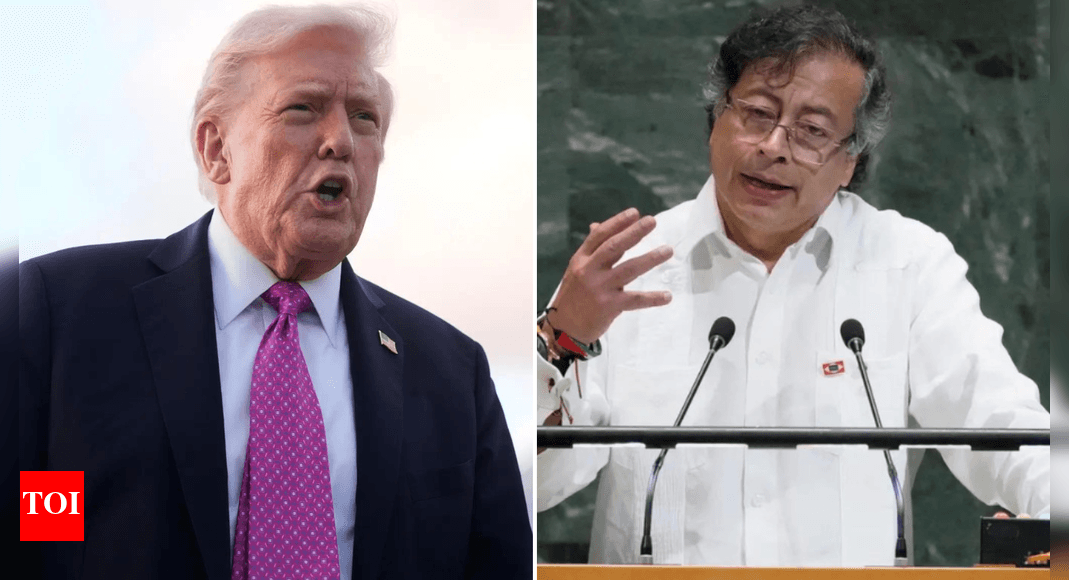
Trump also warned of possible direct U.S. intervention if drug operations are not shut down.
Coverage differs on wording and scale: Western mainstream outlets note Trump’s vow to end aid and highlight context like prior U.S. assistance.
Several Asian and local outlets echo or correct the exact insult used by Trump.
France 24 underscores Trump’s social-media misspelling of "Colombia" and cites $740 million in U.S. aid in 2023.
Other reports cite different aid baselines or lifetime totals, reflecting varied frames for the magnitude of the rupture.
U.S. Military Actions and Aid Cutoff
The aid cutoff accompanies a sharp escalation in U.S. military strikes on suspected drug-smuggling vessels in the Caribbean. Multiple outlets report at least six strikes since early September, with at least 29 people killed. U.S. officials have highlighted a recent strike on a semi-submersible allegedly carrying fentanyl and other narcotics, with two survivors to be repatriated.
However, sources differ on the legality, location, and transparency of these actions. Some note that U.S. claims state the strikes occurred in international waters and targeted designated groups. Others emphasize Colombia’s allegations of wrongful killings and the absence of publicly presented evidence that the deceased were traffickers.
Colombia-US Diplomatic Dispute
Colombian officials, led by Petro, condemn the strikes as murder and violations of sovereignty. They cite the death of fisherman Alejandro Carranza as a key example. Colombian authorities say they will pursue international legal avenues in response.
“Petro... condemned a US military strike on September 16 that killed Alejandro Carranza... accused the US of murder and violating Colombia’s sovereignty... the US revoking Colombian President Gustavo Petro’s visa...”
The U.S. rejects these claims made by the Colombian government. Reports indicate that the U.S. has revoked Petro’s visa amid his calls for U.S. soldiers to disobey Trump. These events coincide with pro-Palestinian protests in New York.
Meanwhile, two survivors from recent operations are being repatriated to Colombia for prosecution. This situation highlights a legal and diplomatic clash over jurisdiction and due process.
Regional Security and Diplomacy Impact
Analysts warn the diplomatic rupture could undercut regional counternarcotics cooperation and broader security. This concern arises at a time when the U.S. has expanded its military footprint in the southern Caribbean. Alternative and regional outlets emphasize sovereignty risks and the role of diplomacy in the situation.
Other sources focus on operational surges and Colombia’s shifts in drug policy. Reports highlight the deployment of thousands of U.S. troops, warships, and advanced aircraft in the region. There are concerns about maintaining regional balance amid these developments.

Colombia’s rising coca cultivation is noted under Petro’s social-policy approach. Some U.S. restrictions on aid had already been applied before the announcement made by the previous administration.
Media Coverage of Trump Disputes
Messaging battles amplify the rift between different media outlets. Some outlets highlight Trump’s rhetoric, misspellings, and cultural barbs. Others focus on legal framings of the campaign or correct the record on the insult’s wording.
“Trump also repeatedly misspelled ‘Colombia’ as ‘Columbia’ and labeled Petro an ‘illegal drug leader.’”
France 24 notes that Trump repeatedly wrote “Columbia.” The Miami Herald reports that Petro called Trump “ignorant” and told him to read García Márquez. Several outlets dispute whether the correct term was “leader” or “dealer.”
Other sources frame the operations as a “non-international armed conflict.” Some warn that such “summary killings are illegal.” These differing perspectives underscore competing narratives about law, respect, and credibility.