
Trump Accuses Iran of Ceasefire Violation as Strait of Hormuz Stays Closed
Key Takeaways
- Trump accuses Iran of violating ceasefire by firing on ships in Hormuz
- Strait of Hormuz remains closed; Iran imposes restrictions and ships come under fire
- US and Iran negotiators head to Pakistan to resume talks on ceasefire
Ceasefire Clash at Hormuz
Iran and the United States traded accusations of violating a ceasefire as shipping through the Strait of Hormuz remained paralyzed.
“Breaking Update: Ships Stranded as US-Iran Clash Over Hormuz Deepens Amid Global Crisis Tensions are escalating rapidly in the Strait of Hormuz as a large number of commercial vessels remain stranded due to overlapping restrictions imposed by the United States and Iran”
In a televised address on Saturday (the 18th), Mohammad Bagher Ghalibaf said that Washington had failed to pressure Iran through ultimatums or obtain international support for the war.
Donald Trump said Iran “decided to fire bullets yesterday in the Strait of Hormuz — a total violation of our ceasefire agreement,” and he repeated threats to attack Iranian energy infrastructure unless it accepts a deal to end the war.
Trump also said the U.S. naval blockade had already shut the waterway and warned that if negotiations collapse, the U.S. would “knock out every single power plant, and every single bridge, in Iran,” declaring, “No more Mr. Nice Guy.”
Multiple outlets tied the standoff to the ceasefire’s timeline, with one report saying the fragile truce agreement expires on Wednesday (the 22nd) and another saying the current two-week ceasefire set to end on Wednesday.
Reuters reported that after two ships reported attacks when attempting to cross the route on Saturday, “navigation data indicated that traffic was halted on Sunday morning,” and MarineTraffic data was cited as showing “no vessel entered or left the gulf after midnight (9 p.m. Saturday Brasília time).”
Negotiations in Islamabad
As the Hormuz standoff deepened, the Trump administration and Iranian officials pointed to a new round of talks in Islamabad, Pakistan, while disagreeing over whether diplomacy could proceed amid the blockade dispute.
The U.S. President, Donald Trump, said that representatives from the two countries would meet for another round of negotiations in Pakistan on Monday (the 20th), and he also said his vice J. D. Vance would not participate in the new round of negotiations in Pakistan for security reasons, according to an interview with ABC News.
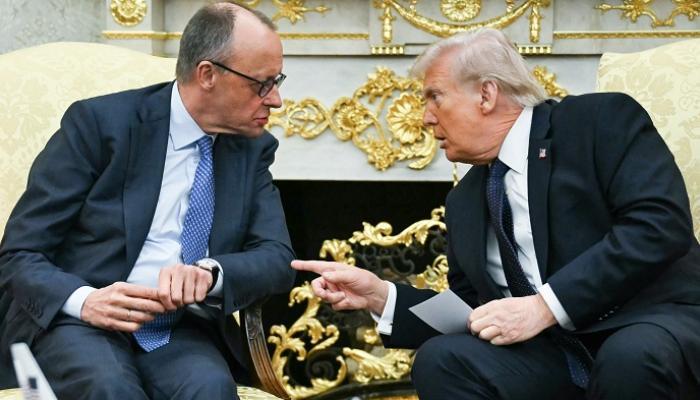
Other reports said Vance would travel to Islamabad anyway, with a White House official and outlets including NewsNation and The Hill describing a delegation that included Vice President JD Vance, U.S. envoy Steve Witkoff, and Jared Kushner.
Reuters and NBC News both described the talks as following direct negotiations in Islamabad last weekend, with the current two-week ceasefire set to end on Wednesday.
Iran’s semiofficial Tasnim news agency was cited as reporting that Iran had not yet decided whether to send officials to the talks, and another report said Iran would not send a negotiating delegation “as long as there is a naval blockade.”
Iran’s Parliament Speaker Mohammad Bagher Ghalibaf linked the strait’s closure to U.S. lifting of its blockade, saying “It is impossible for others to pass through the Strait of Hormuz while we cannot,” and he warned that the ceasefire was on the verge of collapse when the U.S. attempted to mine-clear the strait.
Iran’s Case Against the Blockade
Iran’s position, as presented by multiple outlets, was that the U.S. blockade of Iranian ports and coastline violated the ceasefire mediated by Pakistan and amounted to unlawful collective punishment.
NewsNation reported that Iran’s foreign ministry said the U.S. blockade of Iranian ports violates a ceasefire mediated by Pakistan and constitutes an act of aggression under international law, and it quoted spokesperson Esmaeil Baqaei saying the blockade breaches the U.N. Charter and amounts to collective punishment of the Iranian population, calling it unlawful and criminal.
The Times of Israel similarly quoted Baqaei on X, saying “The United Statesâ so-called âblockadeâ of Iranâs ports or coastline is not only a violation of Pakistani-mediated ceasefire but also both unlawful and criminal,” and it added that “Moreover, by deliberately inflicting collective punishment on the Iranian population, it amounts to [a] war crime and crime against humanity.”
DW also described Iran’s foreign ministry spokesman Ismaeil Baqaei arguing that the blockade was “not only a violation of Pakistani-mediated ceasefire but also both unlawful and criminal,” and it cited his claim that it amounts to a war crime and crimes against humanity.
The Hill reported that Iranian Foreign Minister Abbas Araghchi said Friday that the waterway was “completely open for the remaining period of ceasefire” for all commercial ships, but a day later an IRGC spokesperson said the regime was resuming “strict” control over the strait due to the ongoing U.S. naval blockade.
Against the U.S. accusation of ceasefire violations, Iran’s President Masoud Pezeshkian said Trump had no justification to deprive Iran of its nuclear rights, asking “Who is he to deprive a nation of its rights?” and adding “They attacked us, and we defended.”
Stakes for Shipping and Energy
The dispute over Hormuz was portrayed as immediately constraining global energy flows, with reports citing both the scale of transit through the strait and the operational effects of the closure.
NewsNation said “Roughly one-fifth of the world’s oil passes through the strait,” and it warned that further limits would squeeze the already constrained supply and drive prices higher.

Reuters described the operational impact more granularly, saying that after attacks were reported on Saturday, “navigation data indicated that traffic was halted on Sunday morning,” and it cited MarineTraffic showing “no vessel entered or left the gulf after midnight (9 p.m. Saturday Brasília time).”
DW added that two cruise ships, the Mein Schiff 4 and Mein Schiff 5, passed through the Strait of Hormuz on Sunday, while MarineTraffic data showed only one other cruise ship, the Celestial Discovery, formerly known as the Aida aura, had been able to pass since the start of the Iran war on February 28.
The same DW report said Tui Cruises obtained approvals from relevant authorities to cross “under careful consideration of the security situation,” and it said the ships would continue on to the Mediterranean Sea.
Even as diplomacy was set to resume, Fox 9 Minneapolis-St. Paul quoted Trump telling Trey Yingst that the upcoming talks in Pakistan were Iran’s “last chance” and that “the whole country is getting blown up” if Iran does not sign a peace deal.
Different Frames, Same Crisis
Across outlets, the same core events—Hormuz gunfire accusations, the blockade dispute, and the push for talks in Islamabad—were framed with different emphases, even when quoting the same figures.
In one report, Trump’s threats were presented alongside a claim that U.S. representatives would meet in Pakistan on Monday and that the ceasefire expires on Wednesday, while it also described Iran’s reversal after announcing ships could pass and then closing the strait again, accusing Washington of violating the truce by maintaining its own blockade of Iranian ports.
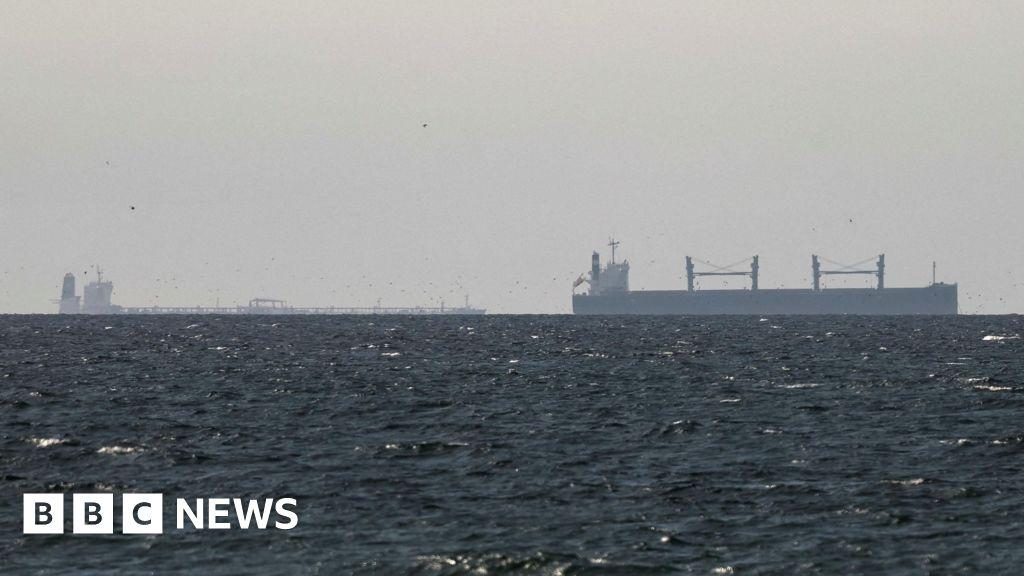
Another outlet foregrounded Trump’s claim that “Iran decided to fire bullets yesterday in the Strait of Hormuz — a total violation of our ceasefire agreement,” and it added that the gunfire was directed at foreign vessels in the strait, including ships linked to France and the United Kingdom.
NBC News similarly centered Trump’s post on Truth Social and said he repeated threats to attack Iranian energy infrastructure unless it accepts a deal to end the war, while it also described Iranian state media confirming shots were fired near two Indian ships to force them to turn back.
DW, by contrast, emphasized the negotiation logistics and the travel plans, stating that JD Vance would return to Islamabad and that Steve Witkoff and Jared Kushner would also be part of the delegation, while it simultaneously reported that Tasnim said Iran was not sending a negotiating delegation “as long as there is a naval blockade.”
Meanwhile, the Times of Israel and DW both highlighted Iran’s legal framing of the blockade as “unlawful and criminal” and as collective punishment amounting to war crimes and crimes against humanity, even as U.S. officials like Mike Waltz argued on “Meet the Press” that the Iranians could choose to be “a responsible member of the international community.”
More on Iran

Donald Trump Threatens Iran Infrastructure Strike Over Strait Of Hormuz Ceasefire Violations
23 sources compared

Trump Threatens Strikes as Iran Fires on Ships in Strait of Hormuz
11 sources compared
Donald Trump Sends U.S. Delegation to Pakistan for Iran Talks, Threatens Power Plants and Bridges
47 sources compared

Iran Rejects Trump Claims It Will Transfer Enriched Uranium to the United States
21 sources compared