Africa23 November, 20253 min read
Trump Administration Boycotts G-20 Summit in Johannesburg, Snubs Presidential Handover
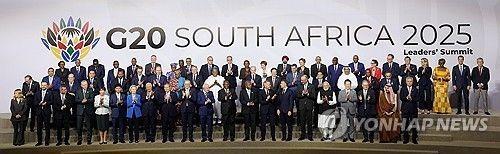
Trump administration boycotted the two‑day Johannesburg G20 leaders' summit. G20 leaders adopted a 122‑point summit declaration at the opening, despite U.S. objections.
29 outlets told this the same way.
G20 Johannesburg Boycott
The Trump administration boycotted the G20 leaders' summit in Johannesburg, producing a highly visible diplomatic snub. President Donald Trump did not attend, and the United States declined to send senior representation to receive the customary gavel. South Africa refused a late White House offer to send a junior embassy official, leaving no accredited U.S. delegation at the closing handover.
“The G20 summit in Johannesburg — the first held in Africa ... was overshadowed by diplomatic tensions after U.S. President Donald Trump boycotted the meeting.”
Media and official accounts described the absence as conspicuous and disruptive to traditional protocol. South Africa proceeded to close the summit and indicated the gavel would transfer to the United States at a later date.

The back-and-forth underscored the summit's unusual optics as the first G20 hosted in Africa. It also highlighted tensions between Pretoria and Washington over the U.S. president's charges about the treatment of Afrikaners in South Africa.
Johannesburg G20 declaration dispute
Despite the U.S. absence, Johannesburg's leaders' declaration was adopted on the opening day. Organizers said they secured unanimous approval of the text, a process several outlets said occurred without U.S. input.
U.S. officials pushed back, with a senior White House official reportedly calling the drafting process 'shameful' and the White House accusing South Africa of 'weaponizing' the G20 presidency. South Africa and other participants defended the outcome and declined to reopen or renegotiate the text, stressing that the forum should not be paralysed by a single country's absence.
Johannesburg summit summary
The Johannesburg declaration emphasized climate action and called for scaling climate finance and debt relief for poorer countries. It also called for new frameworks for critical minerals and for sustainable value chains, priorities repeatedly highlighted by hosts and many developing-country partners. The text reaffirmed commitments in line with the Paris Agreement, while some reports stopped short of explicitly attributing all warming to human activity.
“The text stops short of explicitly calling warming man‑made but reaffirms commitments to cut emissions in line with the 2015 Paris Agreement.”
The declaration included calls for peace and multilateral efforts in conflict zones. Several outlets noted that Ukraine received only brief or limited mention compared with the summit's sustained focus on Global South priorities.
Summit reactions and positions
Reactions were polarized. President Trump framed his boycott around accusations about the treatment of white South Africans. Washington described South Africa’s handling of the handover as problematic.
Pretoria called the U.S. offer to send a lower-ranked official an insult and stood firm. South African President Cyril Ramaphosa used the summit to press his priorities and, when pushed by outside pressure, famously said the country 'will not be bullied.'
Some Western leaders and analysts expressed disappointment at the missed engagement. Supporters and many Global South outlets portrayed Johannesburg’s declaration as an important statement of priorities for developing countries.
G20 summit media perspectives
Media interpretations of the summit's significance diverged sharply across outlet types. Some Asian and Global South outlets framed Johannesburg's rapid, near-consensus adoption of a text as evidence the G20 can serve Global South priorities and that multilateralism is becoming less unipolar. Many Western mainstream analyses treated the declaration as symbolically important but limited in practical effect on major crises.
Civil-society and regionally focused outlets pushed a harder line on climate finance and debt justice, calling for grant-based approaches rather than more loans. These divergent narratives reflect differing editorial priorities - geopolitical framing versus development-policy emphasis - and each outlet's choice of which quotes and facts to foreground.
