
Trump Administration Deployed More Than Two Thousand Agents In Minneapolis And St. Paul
Key Takeaways
- Nearly 3,000 federal immigration agents deployed in Minnesota, the largest U.S. operation.
- 700 federal immigration agents were withdrawn from Minnesota.
- Withdrawal described as de-escalation due to local authorities' cooperation.
Minnesota ICE crackdown
In Minnesota, the Trump administration’s anti-immigration operation has been centered on Minneapolis and St. Paul since “early December,” when the government deployed “more than two thousand federal agents” in Minneapolis in an operation the Department of Homeland Security described as “the largest operation to date.”
“Why did Trump turn Minnesota into the stage for the largest immigration operation in U”
BBC Mundo’s Santiago Vangas frames the question as why Trump “turn[ed] Minnesota into the stage for the largest immigration operation in U.S. history,” describing the state as having a “relatively small population of undocumented immigrants.”
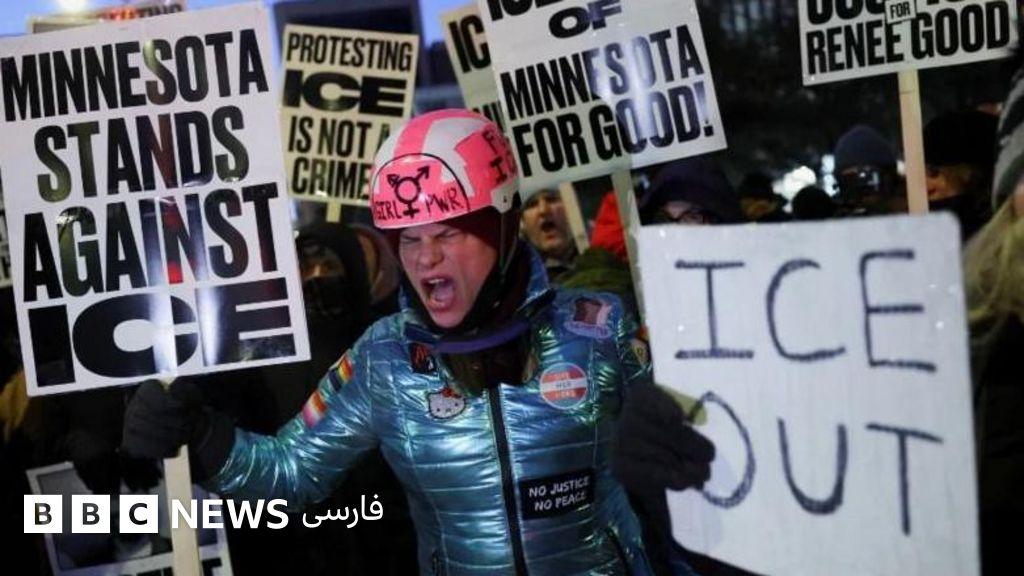
The BBC reports that the operation aimed to deport people the administration described as “illegally present in the country,” and it notes that Donald Trump calls them “the worst of the worst.”
The BBC also links the crackdown to the presence of ICE and Border Patrol in the city, saying it sparked “a wave of discontent.”
The escalation is tied to two killings of American citizens, with the BBC stating that federal agents killed “Renie Good on January 7 and Alex Perti on January 24.”
In response, the Trump administration claimed the agents acted in self-defense, and Kristi Noem, the Secretary of Homeland Security, described the dead as “terrorists.”
The BBC adds that the operation intensified on “January 6,” when the government deployed “more than two thousand federal agents” in Minneapolis, and it describes the administration’s focus as shifting amid the crackdown.
700 agents withdrawn
On Wednesday, the border czar Tom Homan announced the immediate withdrawal of 700 federal immigration agents from Minnesota, describing the move as the result of increased cooperation from local authorities.
EL PAÍS reports that the Trump administration will withdraw “about 700 federal agents from the nearly 3,000 deployed in Minnesota,” and it says Homan announced the withdrawal at a Wednesday press conference.

EL PAÍS quotes Homan saying the withdrawal would happen “as of today,” and it frames the decision as dependent on continued cooperation by city and state authorities, while operations against migrants would continue in Minneapolis.
The Spanish outlet Izquierda diario.es also cites Homan’s announcement, saying he stated the “retirada inmediata de 700 agentes federales de inmigración del estado de Minnesota,” while it characterizes the reduction as a “desescalada obligada.”
Izquierda diario.es adds that “más de dos mil agentes federales siguen en las calles de Minneapolis,” and it says raids, patrols, and deportations continue “a diario.”
EL PAÍS says Homan instructed a shift toward “more targeted enforcement operations,” prioritizing “the arrest of criminals who pose a threat to public safety.”
It also reports that Homan took command after the deaths of Alex Pretti and Renne Good “sparked a wave of protests nationwide,” and it says the president replaced Gregory Bovino with Homan to carry out de-escalation.
Deaths, protests, and arrests
The withdrawal announcement sits against a backdrop of deadly encounters and sustained public opposition, with multiple outlets tying the operational changes to the killings of Renie Good and Alex Pretti.
“El zar de las fronteras de Trump, Tom Homan, anunció este miércoles en una conferencia de prensa en Minneapolis la retirada inmediata de 700 agentes federales de inmigración del estado de Minnesota”
BBC Mundo says the Trump administration claimed in both cases that “the agents acted in self-defense,” and it reports that Kristi Noem described the dead as “terrorists.”
EL PAÍS adds that the senior official took command after the deaths of “the American citizens Alex Pretti Renne Good, shot by agents,” and it says the deaths “sparked a wave of protests nationwide.”
EL PAÍS also describes how President Donald Trump initially supported the Homeland Security Department’s version that blamed the victims, and it says he was “forced to change strategy to calm the mood.”
Izquierda diario.es directly links the reduction to the “rebelión desatada en Minneapolis tras los asesinatos de Renee Good y Alex Pretti,” and it says the move is an attempt “por calmar la presión” amid “creciente indignación.”
In EL PAÍS’s account, videos recorded by witnesses were crucial to counter the official stance, stating that “videos recorded by witnesses have been crucial to countering the official stance that the agents shot in self-defense.”
EL PAÍS also reports that Homan said “158 people had been arrested during the protests in the city,” and it says he warned that if “hate rhetoric did not stop, there would be bloodshed.”
Walz and Frey respond
Reactions from Minnesota’s Democratic governor and Minneapolis’s Democratic mayor are described as sharply critical of the Trump administration’s approach, even as they respond to the announced reduction of federal agents.
BBC Mundo reports that Tim Walz, Minnesota’s Democratic governor, said: “The only thing that harms this state is Donald Trump himself.”
It also reports that Jacob Frey, the Democratic mayor of Minneapolis, said: “To our Somali community: we love you and we are with you.”
EL PAÍS says Walz posted on X that the announcement was “a step in the right direction,” but it adds that Walz insisted that “a faster and more significant troop reduction, state-led investigations into the killings of Alex Pretti and Renee Good, and an end to this campaign of retaliation are needed.”
EL PAÍS also states that Walz and Frey “have clashed with the Trump administration over the two killings and the excessive use of force that the agents have employed against protesters.”
Izquierda diario.es portrays Walz as praising the announcement, saying Walz called the withdrawal of “una fracción de las fuerzas federales” a “paso en la dirección correcta,” while demanding “una reducción más rápida y amplia de las fuerzas, investigaciones estatales sobre los asesinatos de Alex Pretti y Renee Good, y el fin de esta campaña de represalias.”
The BBC’s account adds a separate layer to the political conflict by describing how Trump’s rhetoric about Minnesota’s Somali community has been met with direct pushback from Walz and Frey.
Corruption claims and legal fights
Beyond the immediate troop reduction, the BBC ties the Minnesota focus to a “major financial scandal involving the state’s Somali community,” describing how the issue resurfaced late last year with Trump’s attacks on Minnesota’s Somali community.
“The border czar, Tom Homan, states that local authorities are cooperating in operations against migrants”
The BBC says Trump called that community “garbage” and said they had stolen “billions of dollars from public resources,” and it quotes Trump at the World Economic Forum in Davos saying: “They stole more than $19 billion. Do you believe it? It turned out they were smarter than we thought.”
The BBC also reports that the operation’s connection to corruption is contested, quoting Michael Menta, a political science professor at the University of Minnesota, saying: “Minnesota has also begun taking steps to tackle corruption, so it’s unclear why the Donald Trump administration is now talking about corruption.”
It adds that about 80,000 people of Somali descent live in Minnesota and that about 60 have been convicted in the corruption scandal over social benefits.
In parallel, EL PAÍS describes a legal challenge aimed at keeping immigration agents away from schools, reporting that Kristi Noem has been the subject of a lawsuit filed “this Wednesday” by “a coalition of Minnesota school districts and teachers” against the Trump administration to keep immigration agents away from the state’s schools.
EL PAÍS says the plaintiffs request that schools be reclassified as “sensitive places where agents cannot access,” and it adds that the Trump administration removed that protection, which “also included places of worship and hospitals,” to permit detentions in those locations.
Meanwhile, EL PAÍS describes Homan’s operational approach as shifting away from street raids, saying he instructed local jails to notify ICE of which inmates could be deported.
More on USA

Trump Says U.S.-Iran Memorandum Will Be Signed Sunday, Strait of Hormuz Reopens
10 sources compared

Donald Trump Says U.S.-Iran Deal Will Sign Sunday, Reopen Strait of Hormuz Immediately
23 sources compared
Judge Angel Kelley Orders Trump Administration To Restore National Park Signs By July 3
24 sources compared

Trump Says US Killed Tren de Aragua Leader Niño Guerrero in Joint Strike With Venezuela
34 sources compared