USA04 February, 20262 min read
Trump Administration Orders ICE To Scale Back Immigration Arrests in Minnesota
This article is an automated aggregation of coverage from news outlets. Our editorials offer in-depth analysis curated by the NewsCord team.
DOJ attorney Julie Le removed from Minnesota detail after telling judge "this job sucks" Le's remark reflected frustration with ICE's noncompliance with court orders and crushing caseload

5 outlets told this the same way.
Minnesota ICE court scrutiny
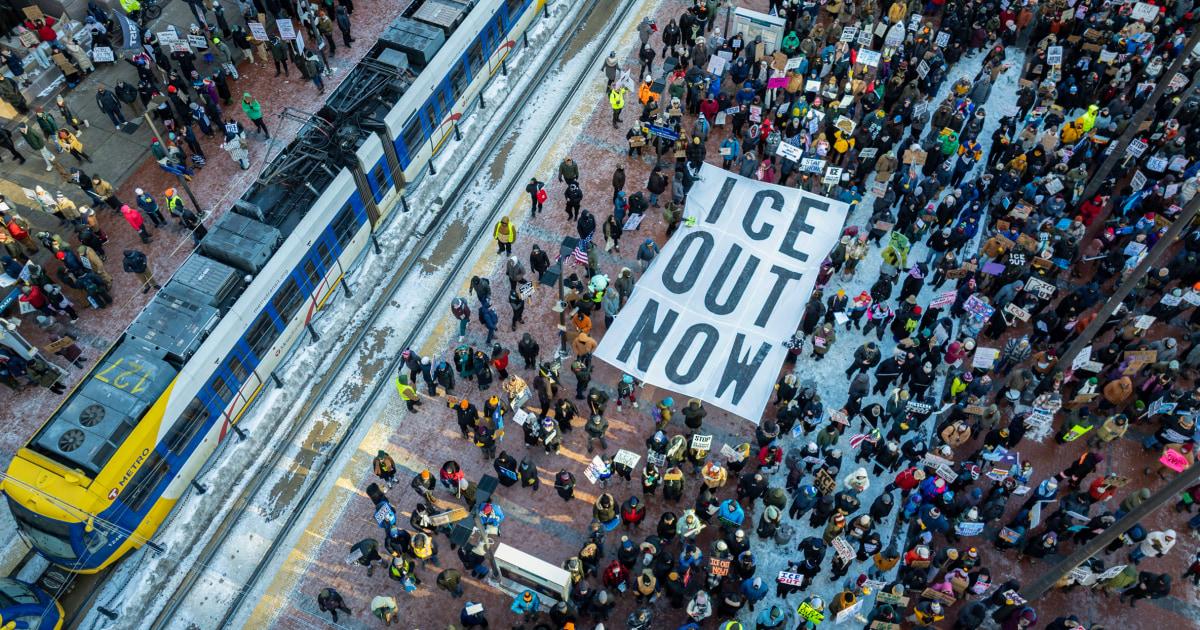
Federal judges in Minnesota have sharply scrutinized Immigration and Customs Enforcement (ICE) and federal immigration lawyers after a recent enforcement surge tied to the Trump administration’s Operation Metro Surge. Judges said ICE likely violated an unusually large number of court orders and repeatedly held people who should have been released. Court filings and hearing coverage describe nearly 100 alleged violations in January 2026.
“The federal chief judge in Minnesota said ICE likely violated an unusually large number of court orders in January 2026—nearly 100—many requiring the immediate release of detainees judges found were being held unlawfully.”
Judges warned that resource constraints do not excuse ongoing unlawful detention. The dispute prompted Judge Blackwell to summon government attorneys to explain compliance failures. The wider legal and media ecosystem tracked the fallout.
DOJ volunteer attorney plea
At the center of the hearing was Department of Justice volunteer attorney Julie Le.
Several outlets reported she was overwhelmed by a caseload tied to the enforcement actions, and she told the court or reporters in blunt terms that she needed relief.

Sources recorded Le's plea in slightly different wording.
The Independent quoted her saying "the system sucks" and asking to be held in contempt to get rest.
The ABA Journal reproduced a longer quote: "This job sucks. I wish you could hold me in contempt so that I could get 24 hours of sleep."
CNN framed her comments alongside descriptions of case-management problems, noting that correcting release conditions often requires repeated escalation.
Arrest surge procedural failures
Judges and reporters described procedural failures tied to the surge. Reported failures included imposing release conditions without court approval and transporting detainees across state lines after Twin Cities arrests. Observers also documented a pattern of noncompliance that required repeated judicial intervention.
“Blackwell expressed frustration after learning that many people without criminal records remain in federal custody despite orders for immediate release, saying ICE is detaining too many people for the system to keep up.”
CNN reported the details in a legal tone and named Justice Department attorney Ana Voss alongside Le. The Independent highlighted the judge’s frustration that many people without criminal records remained in custody despite immediate-release orders. ABA Journal attributed the more colorful on-the-record characterizations to local reporting.
Minnesota enforcement scrutiny
The broader context in all accounts is a wave of litigation and scrutiny over mass arrests, detention conditions, and Homeland Security practices following a crackdown in Minneapolis. None of the supplied sources presents an explicit, contemporaneous presidential or executive order directing ICE to scale back arrests in Minnesota.
Coverage centers instead on judicial oversight, agency noncompliance, an overwhelmed volunteer DOJ attorney, and calls for agency accountability. Some outlets tie the problems to the Trump administration's Operation Metro Surge, while others use more neutral phrasing like "recent enforcement crackdown."