USA29 December, 20252 min read
Trump Administration Pledges $2 Billion to U.N. Humanitarian Aid, Orders U.N. to 'Adapt or Die'
United States pledged $2 billion for United Nations humanitarian assistance Pledge represents a steep cut from prior US contributions, down from up to $17 billion
21 outlets told this the same way.
Outlets did split on Trump Interrupted by Protesters at San Antonio Rally for Ken Paxton →
U.S. UN humanitarian pledge
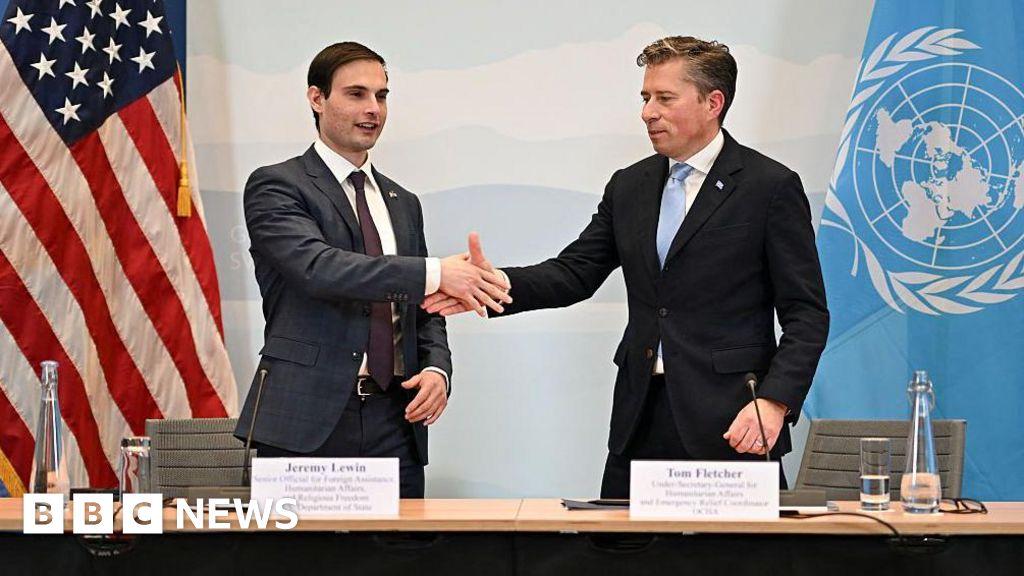
The Trump administration announced a $2 billion pledge to U.N. humanitarian programs that will be held in an umbrella fund and routed through the U.N. Office for the Coordination of Humanitarian Affairs (OCHA).
“The new pledge — routed into an umbrella fund to be allocated to agencies and priorities — reflects a more demanding model that will force cuts, remove duplication and impose stricter accountability.”
U.S. officials warned U.N. agencies to "adapt, shrink or die."
U.S. officials described the move as a more demanding, consolidated model of aid intended to cut duplication and impose stricter accountability.
OCHA head Tom Fletcher was involved in negotiations and publicly welcomed the deal.
The announcement was framed by the administration as preserving U.S. leadership in humanitarian giving even as overall U.S. foreign assistance has been sharply reduced.
U.S. humanitarian funding context
Observers placed the $2 billion pledge in the context of historically larger U.S. contributions, noting that U.S.-linked humanitarian funding has reached as much as $17 billion annually in recent years with roughly $8–10 billion typically in voluntary aid, and many characterize $2 billion as a small fraction of that prior support.
Some sources provide sharper data on the scale of cuts in 2024–2025, which critics say have forced program reductions across UN agencies and worsened humanitarian needs.
U.S. aid prioritization
Officials said the $2 billion would prioritize assistance to a narrower list of crises, with reports saying 17 countries will be prioritized. Some major crises, notably Afghanistan and the Palestinian territories, were excluded from this pooled U.S.-backed funding pending separate arrangements. U.S. officials justified the exclusions in security terms in some reports, citing evidence of diversion to extremist groups in at least one case, while the administration framed the prioritization as an efficiency measure.
“Afghanistan and Yemen were excluded — Lewin said Washington has evidence UN funds were being diverted to the Taliban and insisted no US money go to terrorist groups.”
Humanitarian funding cuts impact
Humanitarian agencies and workers reacted with alarm, reporting program cuts, job losses, and reduced services at UNHCR, the World Food Programme, and the International Organization for Migration. They warn that cuts, alongside growing global needs including famine in parts of Sudan and Gaza and climate-linked disasters, risk worsening hunger, displacement, and disease. Some outlets say the shift erodes U.S. soft power and damages long-term humanitarian capacity.
U.S. humanitarian reset plan
U.S. officials and supporters call the plan a "humanitarian reset" intended to deliver more focused, results-driven aid with fewer dollars and "more consolidated leadership authority," language echoed by some outlets quoting State Department officials. Critics counter that the approach centralizes U.S. influence over allocation, risks excluding pressing needs, and may weaken the U.N.'s ability to respond to non-prioritized crises. Tom Fletcher is reported to have engaged with U.S. officials and to have welcomed the deal even as humanitarian workers remain wary.
“US officials and Ambassador Michael Waltz framed the pledge as a 'humanitarian reset' to deliver more focused, results-driven aid with fewer dollars; OCHA head Tom Fletcher welcomed the deal.”