Full Analysis Summary
Venezuelan tanker pursuit
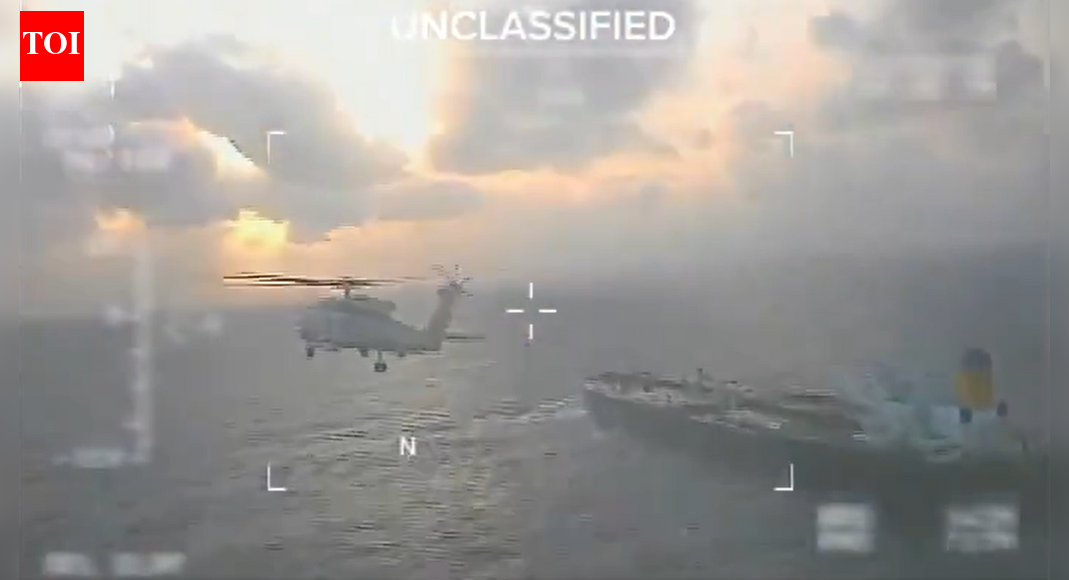
U.S. forces pursued a Venezuelan tanker over the weekend in what reports describe as a third interception attempt in under two weeks.
The move is linked to Washington’s efforts to tighten enforcement around Venezuelan oil shipments and alleged sanctions evasion.
Colombo Gazette reported that U.S. WTI crude rose amid the news.
It cited U.S. officials telling Reuters that the Coast Guard was in "active pursuit" of another vessel described as a "sanctioned dark fleet" ship flying a false flag and subject to a judicial seizure order.
The Times of India framed the action as part of a stepped-up naval or maritime blockade, describing an "active pursuit of [a] dark fleet" and characterizing the move as an attempt to halt covert shipments and sanctions evasion.
Al Jazeera's provided snippet did not contain an article text and noted instead that the article or link "didn't come through," offering no reporting or regional framing in the material supplied here.
Coverage Differences
Narrative and information coverage
Colombo Gazette (Local Western) gives granular operational and market details (price moves, Coast Guard pursuit, legal seizure order and attribution to Reuters and TankerTrackers), The Times of India (Asian) emphasizes a broader maritime blockade narrative and frames the action as part of stopping clandestine shipments, while Al Jazeera (West Asian) provided no substantive article in the supplied material and explicitly requested the article or link, meaning it contributes no competing narrative here.
Maritime interception reports
Market and enforcement details in the available reports underscore immediate economic and legal consequences.
The Colombo Gazette links the interceptions to a bump in oil prices, quotes U.S. assertions that it is stepping up enforcement against ships accused of helping Venezuela evade sanctions, and notes Washington's allegation that Caracas uses oil revenue to finance drug-related crime, while adding that Venezuela denounced the interceptions as 'theft and kidnapping'.
The Times of India likewise presents the operation as part of a tightened maritime campaign to stop covert shipments.
Al Jazeera's missing article meant no Arab or broader West Asian framing or local reporting was available in the supplied content to confirm or contest these claims.
Coverage Differences
Tone and attributed claims
Colombo Gazette relays both U.S. allegations (sanctions enforcement, financing of drug-related crime) and Caracas’s denunciation (quotes), presenting a contested legal and moral framing; The Times of India emphasizes the blockade/enforcement angle without publishing the Venezuelan government's quoted response in the supplied snippet; Al Jazeera is absent from the supplied material and therefore does not contribute either supportive or critical framing here.
Maritime enforcement reports
Reporting highlights claims about the mechanics of enforcement.
The Colombo Gazette cites U.S. officials and Reuters saying the Coast Guard pursued a vessel tied to a 'sanctioned dark fleet' and references TankerTrackers.com data showing more than 30 of roughly 80 vessels operating in or approaching Venezuelan waters were under U.S. sanctions as of last week.
These details portray a targeted, intelligence-driven maritime effort.
The Times of India's summary frames the episode as a maritime blockade but does not include the TankerTrackers data in the supplied snippet, and Al Jazeera's supplied lines also contain no reporting to corroborate or elaborate on these operational details.
Coverage Differences
Data and sourcing
Colombo Gazette includes specific sourcing (Reuters, TankerTrackers.com) and numeric detail about sanctioned vessels that suggest an evidence-based portrayal of enforcement; The Times of India gives a general blockade narrative in its summary without those specific data points in the supplied text; Al Jazeera’s missing article provides no operational sourcing in the supplied content.
Media framing of interceptions
The Venezuelan government's reaction - quoted in Colombo Gazette as denouncing the interceptions as 'theft and kidnapping' - appears in local Western reporting but is missing from The Times of India's brief summary, an omission that alters the balance of perspectives and matters for assessing claims about legality and motive.
Al Jazeera's supplied content again contains no reporting to show whether regional outlets would echo Caracas's framing or offer third-party analysis.
This variation demonstrates how coverage choices (what to quote, what data to include) shape whether the story reads as enforcement of sanctions, an act of U.S. coercion, or an ambiguous, contested maritime security episode.
Coverage Differences
Omission and tone
Colombo Gazette presents both U.S. accusations and Venezuela’s quoted denunciation, giving readers a sense of contestation; The Times of India’s snippet omits the Venezuelan government’s quoted response and instead frames the action mainly as a blockade/enforcement measure; Al Jazeera is not present in the supplied content to provide regional reaction or analysis.
Tanker interdiction reporting
The supplied reporting points to an intensifying U.S. campaign to interdict Venezuelan-linked tankers described as part of a "dark fleet," with market volatility as oil prices moved higher and contested legal and political claims between U.S. enforcement and Venezuelan denunciation.
However, several important gaps remain: there is no official confirmation from U.S. authorities in the quoted Colombo Gazette lines, The Times of India provides only a brief summary without full operational or reactionary detail, and Al Jazeera’s snippet lacked an article to offer additional regional perspective.
Readers should therefore note ambiguity where it exists and expect that fuller accounts — including official U.S. statements, Venezuelan government communications beyond a denunciation, and independent tracking data — will be needed to resolve outstanding details.
Coverage Differences
Ambiguity and completeness
Colombo Gazette includes market data, quoted legal/operational claims, and notes that “U.S. authorities have not officially confirmed details,” The Times of India provides a concise blockade-focused summary, and Al Jazeera’s submission contains no article text, highlighting a lack of available West Asian reporting in the supplied material; collectively this creates ambiguity that the current sources cannot fully resolve.