USA28 October, 20253 min read
Trump Administration Suspends SNAP Benefits, Threatening Food Security for 40 Million Americans Amid Government Shutdown
USDA will run out of funding to pay SNAP benefits starting November 1 amid shutdown 25 states and DC filed a lawsuit against Trump administration over SNAP benefit suspension
16 outlets told this the same way.
Outlets did split on Trump Interrupted by Protesters at San Antonio Rally for Ken Paxton →
Impact of Government Shutdown on Food Aid
A federal government shutdown that began October 1 has affected the nation’s primary anti-hunger program. The Trump administration has moved to suspend November SNAP benefits. The USDA has stated it lacks the $8 billion needed for next month and will not use about $6 billion in contingency funds.
“The US Department of Agriculture (USDA) has stated it lacks the funds to pay the $8 billion needed for Supplemental Nutrition Assistance Program (SNAP) benefits next month and refuses to use its $6 billion contingency fund...”
Coverage estimates the potential impact at roughly 42 million people. Agencies and officials are divided over whether reserve funds can be accessed during the funding lapse. Fox News reports the administration’s legal position and warnings regarding the situation.
CNN and Букви highlight the scale of need and the USDA’s refusal to use reserve funds. The Boston Globe notes the USDA’s warning to states and the blame directed at Senate Democrats as the shutdown continues.

Legal Battle Over Food Benefits
The fight has moved into court as a coalition of 25 states and Washington, D.C., sued to force the USDA to use contingency funds for November benefits. The coalition argues that the suspension is unlawful and deviates from past practice. CBS News and The Boston Globe report the lawsuit and note prior guidance during the 2019 shutdown that allowed limited use of contingency funds.
Fox News highlights House Speaker Mike Johnson’s support for the USDA’s legal interpretation. Tabloid outlet news.meaww emphasizes the plaintiffs’ claim that cutting off food stamps violates federal law. However, news.meaww cites a $5 billion reserve figure that differs from several outlets’ $6 billion figure.

Responses to Food Aid Suspension
States and communities are scrambling to blunt the fallout. California officials condemned the suspension and are fast-tracking $80 million for food banks while mobilizing the California National Guard and California Volunteers—moves echoed by community responses elsewhere. The Boston Globe details nonprofits expanding pantries, mobile distributions, and even DoorDash efforts to deliver free meals.
“Governor Gavin Newsom’s administration is fast-tracking $80 million in state funds to support food banks... Additionally, the California National Guard and California Volunteers have been mobilized...”
ABC7 San Francisco reports local fears and food bank ramp-ups as nearly every state warns of potential loss of aid. CNN underscores the real-world tradeoffs families could face if benefits stop, from skipped meals to foregoing rent or prescriptions.
Government Shutdown and SNAP Funding
Politics around the shutdown and SNAP are hardening.
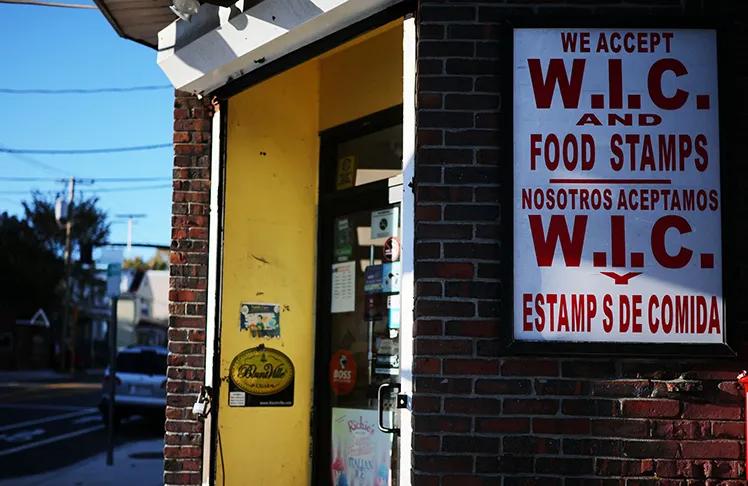
WPEC reports the Senate is on day 27 with the House out of session as SNAP funding halts November 1, even as WIC continues.
The report shows Trump blaming Democrats while abroad.
The Seattle Medium adds that Democrats refuse to reopen government without health-care concessions and accuse the White House of 'weaponizing hunger.'
It also notes some Republicans like Sen. Josh Hawley have proposed stopgap SNAP funding.
NewsBreak relays California’s warning that CalFresh payments may be delayed in November if the shutdown persists, illustrating state-level alarm beyond the Beltway.
State Aid Program Updates
Amid the uncertainty, impacts and timelines vary by state. Букви notes some recipients could miss payments as early as November 1 and that the exact number affected isn’t specified but is expected to be in the millions. ABC7 San Francisco reports that nearly every state is warning of potential loss of aid and shows food banks bracing for demand.
“The timing of missed payments will vary by state, with some recipients potentially not receiving benefits as early as November 1. The exact number of people affected has not been specified, but it is expected to be in the millions.”
The Boston Globe details New England states’ emergency measures and litigation. WPEC underscores that while SNAP is set to halt November 1, WIC will continue—an important but easily overlooked distinction for families relying on multiple programs.