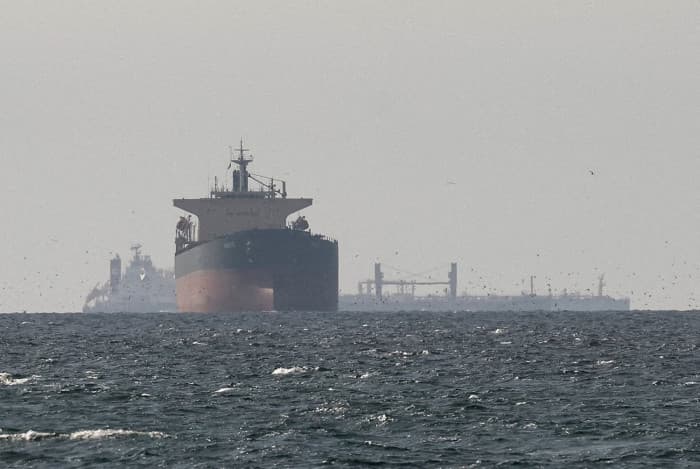
Trump administration lifts sanctions on Iranian oil stranded at sea
Key Takeaways
- 30-day sanctions waiver allows sale of Iranian oil already at sea.
- Only oil already loaded or in transit qualifies; no new purchases or production.
- Move aims to ease energy supply pressures and curb rising prices amid the U.S.-Iran war.
Sanctions Waiver Announcement
The Trump administration announced a temporary 30-day sanctions waiver on Friday, March 20, 2026.
““The easing of sanctions raises concerns about the rapid depletion of Washington’s economic toolkit,” to dampen oil prices, Erickson said”
The waiver allows the sale of approximately 140 million barrels of Iranian crude oil already loaded onto vessels at sea.
Treasury Secretary Scott Bessent framed the move as a strategic countermeasure during 'Operation Epic Fury.'
Bessent stated 'In essence, we will be using the Iranian barrels against Tehran to keep the price down as we continue Operation Epic Fury.'
The narrowly tailored authorization affects only oil already in transit before March 20.
The waiver excludes deliveries to Cuba, North Korea, and Russian-occupied areas of Ukraine.
Bessent claimed the sanctioned oil was being 'hoarded by China on the cheap.'
He said temporarily unlocking this supply would quickly bring 140 million barrels to global markets.
Political Backlash
The administration's decision has sparked intense controversy and condemnation from political figures and national security experts.
Former Representative Adam Kinzinger expressed disbelief, writing 'YOU HAVE GOT TO BE JOKING'.

Governor Gavin Newsom labeled it 'blood oil,' accusing Trump and Bessent of 'betraying the American people and our soldiers.'
Former Department of Justice spokesperson Matthew Miller argued the move 'is putting money directly in the hands of the regime currently shooting at American soldiers.'
Democratic strategist Mike Nellis declared that easing sanctions on a country 'we're actively at war with makes zero f-----g sense.'
The Atlantic Council's Victoria Taylor condemned what she called 'unfathomable' policy that contradicts bipartisan efforts to prevent Iranian oil sales.
Market Context
The sanctions waiver comes amid a dramatic surge in global oil prices driven by the escalating conflict.
“The Trump administration on Friday issued a 30-day sanctions waiver for the purchase of Iranian oil at sea to ease energy supply pressures since the start of the U”
Brent crude has jumped about 50% since the US and Israel launched attacks on February 28.
Before hostilities, Brent crude traded at roughly $72 per barrel and reached as high as $119.50 this week.
While prices fell slightly after the waiver announcement, they remained elevated.
Brent crude settled at $112.19 and West Texas Intermediate rose to $98.32.
The Trump administration has implemented multiple measures to address the energy crunch.
These include similar sanctions waivers on Russian oil stuck at sea and releases from the Strategic Petroleum Reserve.
Energy Secretary Chris Wright expressed optimism that gasoline prices could drop below $3 by summer.
Current prices have risen from $3 per gallon before the war to $3.99 on Saturday.
Regional Security
Iran's effective closure of the Strait of Hormuz has been a primary driver of the energy crisis.
The strait carries 20% of the world's oil and liquefied natural gas.

Tehran has responded to US and Israeli strikes with attacks on Israel and Gulf states hosting US bases.
This included a missile attack on Diego Garcia, a joint US-UK military base in the Indian Ocean.
While the missiles did not strike the base, the attack underscored regional tensions.
Iran's oil ministry spokesperson Saman Ghoddoosi rejected the US characterization of 'unlocking' surplus oil.
Ghoddoosi stated that Tehran has 'no surplus crude oil left on the water or for supply in other international markets.'
The administration has floated the possibility of offering military escorts to tankers in the Strait of Hormuz.
President Trump indicated he wants other countries involved in any potential escort operation.
Strategic Defense
The Trump administration defends the sanctions waiver as a necessary economic measure despite political controversy.
“Despite the reprieve, oil and gas prices remain high”
Treasury Secretary Bessent dismissed concerns that the move would benefit Iran's war effort.
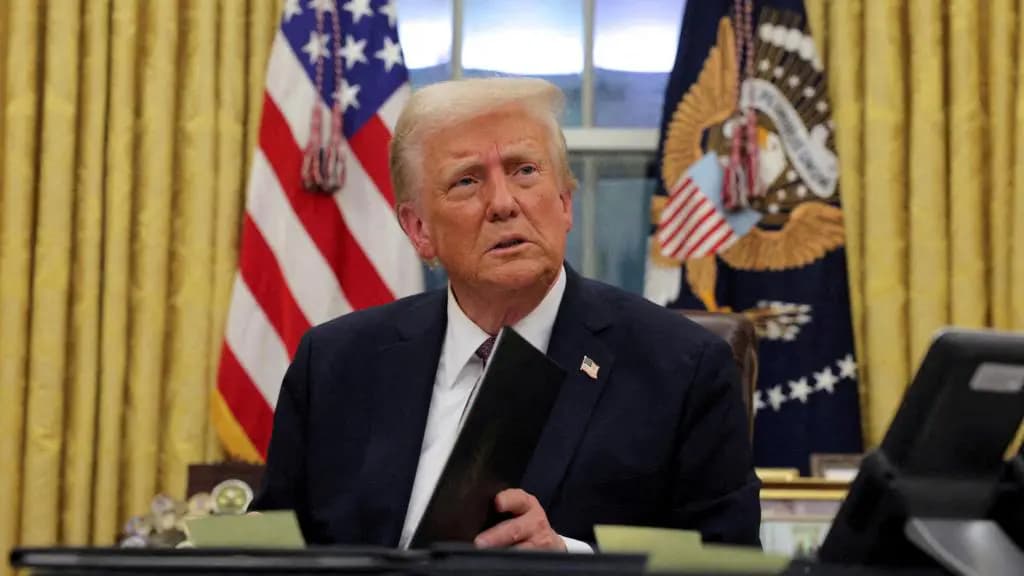
Bessent insisted that 'Iran will have difficulty accessing any revenue generated and the United States will continue to maintain maximum pressure on Iran.'
Energy industry analysts remain skeptical about the impact of these measures.
Brett Erickson of Obsidian Risk Advisors suggested the administration's efforts won't be meaningful until the Strait of Hormuz is reopened.
The waiver marks the third sanctions relaxation in roughly two weeks.
Similar moves have been made on Russian oil and domestic production incentives.
While presented as temporary, the policy represents a significant departure from 'maximum pressure' strategy against Iran.
This has been bipartisan policy since President Trump's first term.
More on USA

Honolulu Officials Order Evacuations as 120-year-old Wahiawa Dam Nears Failure
24 sources compared

US prosecutors probe Colombia's president Petro over possible drug trafficking ties
11 sources compared
Senior Judge Paul Friedman Strikes Down Pentagon Press Limits, Protecting Independent Reporters
39 sources compared

Surveillance Video Shows Gracey Falling Into the Sea; Investigators Say It Was an Accident
12 sources compared