Senior Judge Paul Friedman Strikes Down Pentagon Press Limits, Protecting Independent Reporters
Key Takeaways
- Federal judge Paul Friedman ruled Pentagon press access policy unconstitutional and enjoined key provisions.
- Policy barred reporting on information not cleared for release, even if unclassified.
- The decision followed The New York Times lawsuit accusing the policy of suppressing unfavorable coverage.
Landmark Press Freedom Ruling
Senior Judge Paul L. Friedman delivered a landmark ruling on March 20, 2026, striking down the Trump administration's restrictive Pentagon press access policy as unconstitutional.
“The Times argued that the Pentagon has applied its own rules inconsistently”
The ruling marks a significant victory for press freedom at a time when the U.S. military is engaged in multiple conflicts.

The judge forcefully defended the constitutional right of journalists to report independently and without government control.
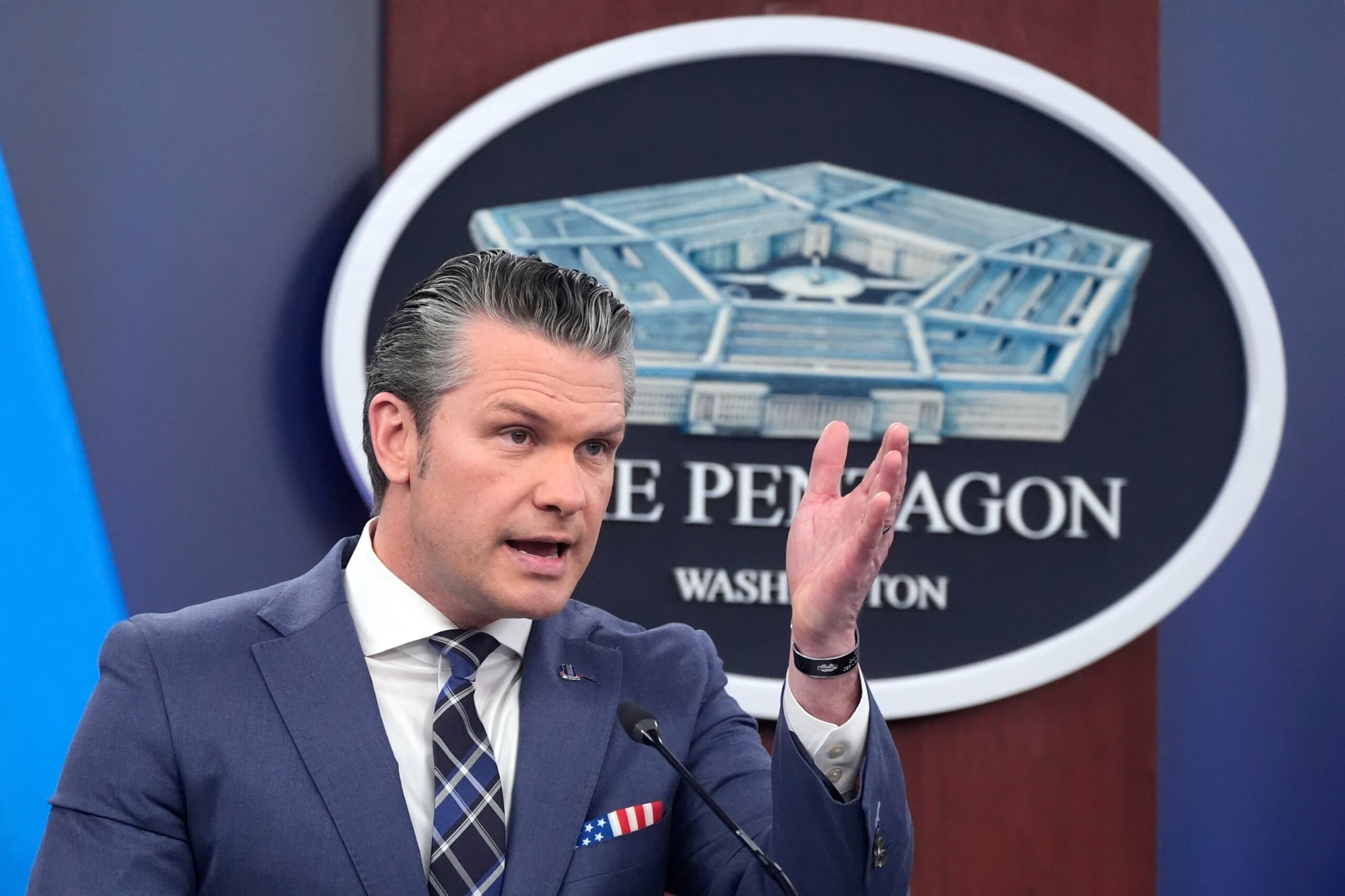
Friedman declared that the policy imposed by Defense Secretary Pete Hegseth violated fundamental First Amendment protections.
The judge emphasized that the First Amendment 'enables the press to publish what it will and the public to read what they choose, free of any official proscription.'
Friedman warned that abandoning this principle would endanger national security after nearly 250 years of protection.
The ruling represents a major blow to the administration's efforts to exert greater control over military coverage.
The decision comes amid heightened Pentagon reporting due to the ongoing war in Iran and recent Venezuelan incursion.
Policy Discrimination Analysis
The policy struck down by Friedman required Pentagon reporters to sign agreements not to solicit information that the Trump administration had not approved for release.
This effectively conditioned press access on editorial compliance with government preferences.

In his 40-page ruling, the judge dissected how the policy amounted to illegal viewpoint discrimination.
Friedman found the policy was designed to 'weed out disfavored journalists' and replace them with those who were 'on board and willing to serve' the government.
The judge ruled that the policy violated both the First Amendment by discriminating based on editorial viewpoint.
It also violated the Fifth Amendment for being vague and granting arbitrary power to officials.
Friedman noted that the Pentagon's approach 'makes any newsgathering and reporting not blessed by the Department a potential basis for the denial, suspension, or revocation of a journalist's credentials.'
The policy provided no clear guidance on how journalists could perform their jobs without losing access.
Press Corps Transformation
The implementation of Hegseth's policy in October 2025 resulted in a dramatic transformation of the Pentagon press corps.
“It must not be abandoned now,” the judge wrote”
Virtually all mainstream news outlets refused to sign the restrictive agreements and surrendered their credentials.
This exodus created a vacuum filled by Trump loyalists and political commentators.
The new press corps included Laura Loomer, Matt Gaetz, James O'Keefe, and Mike Lindell, who were unabashed political boosters of the administration.
The Associated Press continued reporting on the military despite not having Pentagon credentials.
This demonstrated that independent journalism persisted even under the restrictive regime.
Friedman specifically ordered the Pentagon to reinstate the press credentials of seven New York Times journalists.
He stated that his decision applied to 'all regulated parties,' suggesting the ruling would benefit journalists beyond just those named in the lawsuit.
Divergent Reactions
Reactions to Friedman's ruling were sharply divided along ideological and professional lines.
Press freedom advocates celebrated the decision as a crucial defense of democratic values.
The Trump administration vowed immediate appeal of the ruling.
The New York Times hailed the ruling as 'a powerful rejection of the Pentagon's effort to impede freedom of the press and the reporting of vital information to the American people during a time of war.'
Times spokesperson Charlie Stadtlander emphasized that 'Americans deserve visibility into how their government is being run, and the actions the military is taking in their name and with their tax dollars.'
First Amendment attorney Theodore Boutrous celebrated the decision as protecting 'the founding principle that the nation's security depends upon a free press.'
Pentagon spokesperson Sean Parnell posted on X that 'We disagree with the decision and are pursuing an immediate appeal.'
The Pentagon Press Association called the ruling 'a great day for freedom of the press in the United States' and urged immediate reinstatement of all credentials.
Wartime Press Freedom
Friedman's ruling carries profound implications for press freedom during wartime.
“"The goal of that process is to prevent those who pose a security risk from having broad access to American military headquarters," government attorneys wrote”
The decision comes at a particularly sensitive moment when the U.S. is simultaneously engaged in the Iran war and has recently conducted an incursion into Venezuela.

The judge specifically emphasized that 'especially in light of the country's recent incursion into Venezuela and its ongoing war with Iran, it is more important than ever that the public have access to information from a variety of perspectives about what its government is doing.'
This context underscores the ruling's significance as a defense of democratic accountability during military conflicts.
Press freedom advocates noted that the decision reverses a troubling trend of government attempts to control information flow during wartime.
Common Dreams criticized the Pentagon policy as coming 'especially now that we are spending money and blood on yet another war based on constantly shifting pretexts.'
The ruling establishes an important precedent that press protections remain robust even when national security concerns are heightened.
The judge's reasoning suggests that informed public debate is essential even during wartime operations.
More on USA
U.S. Waives Iranian Oil Sanctions for 30 Days
15 sources compared

U.S. Deploys 2,500 Marines, 3 Warships to the Middle East as Iran Escalates
13 sources compared
Trump administration lifts sanctions on Iranian oil stranded at sea
15 sources compared
US Deploys Thousands of Marines, Warships to the Middle East
119 sources compared