
The United States Deploys 2,500 Marines and 3 Warships as Iran-US-Israel War Escalates
Key Takeaways
- U.S. deploys about 2,500 more Marines and three ships to the Middle East.
- Deployment follows sustained Iran-Israel clashes and ongoing Hormuz Strait disruption.
- Trump criticized NATO allies as cowards for not aiding Hormuz operation.
Military Buildup
The United States has significantly escalated its military presence in the Middle East by deploying 2,500 Marines and three warships to the region amid intensifying tensions in the Iran-US-Israel war.
According to multiple sources, the USS Boxer amphibious assault ship, along with the 11th Marine Expeditionary Unit, departed from San Diego ahead of schedule to bolster American forces in the Persian Gulf.
This deployment comes as the conflict enters its third week following US and Israeli airstrikes that began on February 28, with Iran responding by effectively closing the Strait of Hormuz and launching missile attacks across the region.
The Marines, described as a 'Swiss Army knife' of military capabilities, bring rapid-response forces equipped for amphibious operations, maritime security, and potential ground contingencies.
The US already has approximately 50,000 troops deployed across the region.
Strategic Objectives
The deployment appears to be preparing for potential strategic operations targeting Iranian oil infrastructure and the critical Strait of Hormuz.
Defense experts and officials have discussed multiple scenarios including securing control over Kharg Island, which handles approximately 90% of Iran's oil exports.

Pentagon officials have reportedly made detailed preparations for deploying ground forces into Iran, including planning for the detention of Iranian soldiers and paramilitary operatives during potential ground offensives.
While President Trump has publicly stated he is 'not sending troops anywhere,' military officials emphasize that these preparations provide the Commander-in-Chief with maximum operational flexibility.
Sources note that the Marines could be used to 'secure commercial shipping routes' or participate in operations targeting key Iranian locations.
Global Energy Crisis
The escalating conflict has triggered a severe global energy crisis with profound economic consequences.
“The UAE and India do not have a mutual defence-style agreement in place, however”
Iran's effective closure of the Strait of Hormuz, through which approximately 20% of the world's oil and liquefied natural gas supplies transit, has caused crude prices to surge about 50% since the war began.
International Energy Agency Executive Director Fatih Birol warned that the war is creating 'the largest supply disruption in the history of the global oil market' and that restoring normal oil and gas flows could take as long as six months.
The disruption has led to attacks on energy facilities across the region, including fires at Qatar's Ras Laffan Industrial City and Kuwait's Mina Al-Ahmadi refinery.
The World Food Programme warns of 'record levels of hunger' as an additional 45 million people could fall into acute hunger due to the conflict's impact on food systems and fertilizer supplies.
NATO Relations
President Trump has intensified diplomatic tensions by sharply criticizing NATO allies for their reluctance to provide military assistance in securing the Strait of Hormuz.
In a series of social media posts on Truth Social, Trump branded NATO allies 'cowards' and declared that 'without the U.S.A., NATO IS A PAPER TIGER!'

He accused European nations of complaining about high oil prices while refusing to help reopen the vital shipping route, which he described as 'a simple military maneuver.'
The criticism comes after several European countries, including Germany, France, and Italy, pledged to join 'appropriate efforts' to ensure safe passage through the strait but specified that any intervention could only occur once hostilities ceased.
UK Prime Minister Keir Starmer initially rejected a US request to use British bases for strikes on Iran, though Britain later agreed to allow American forces to use British bases for 'defensive operations to degrade the missile sites and capabilities being used to attack ships in the Strait of Hormuz.'
Iranian Response
Despite the US military buildup and intensive airstrikes, Iran has maintained its defiant posture and retained significant military capabilities.
“President Donald Trump, on Friday, launched a sharp attack on NATO leaders, describing them as "cowards" and insisting that the United States "will not forget" their positions”
Iranian officials have continued missile production and launched multiple attacks on Israeli and regional targets, including missile strikes that triggered air raid sirens across Israel and attacks on energy facilities in Kuwait, Qatar, and other Gulf states.

Iran's armed forces spokesperson warned that 'even recreational and tourist locations around the world will not be safe' for American and Israeli officials.
The conflict has also created uncertainty about Iran's leadership, with questions raised about the condition and visibility of new Supreme Leader Mojtaba Khamenei, who has not been seen in public since the Israeli attack that killed his father on the war's first day.
Military analysts estimate that Iran still possesses more than 150 active ballistic missile launchers out of a maximum of 440 before the war, and retains significant asymmetric advantages including its geography around the Strait of Hormuz, an arsenal of missiles and drones, and regional partnerships.
More on USA

U.S. Waives Iranian Oil Sanctions for 30 Days
15 sources compared

Heavy Rains Flood Oahu as Wahiawa Dam May Fail; Thousands Evacuate
30 sources compared
U.S. Deploys 2,500 Marines, 3 Warships to the Middle East as Iran Escalates
13 sources compared
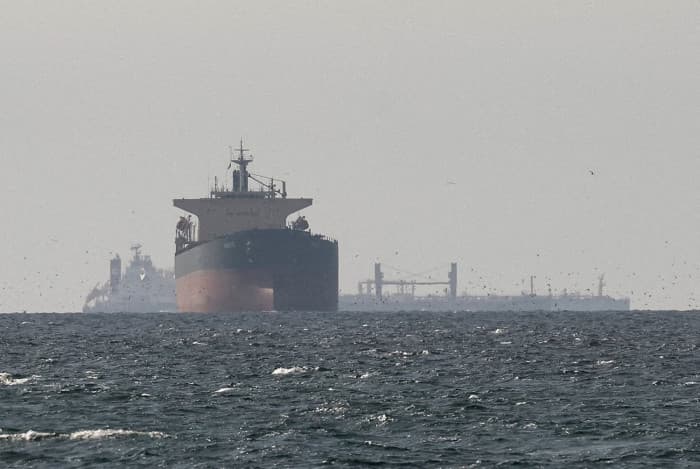
Trump administration lifts sanctions on Iranian oil stranded at sea
15 sources compared