USA08 December, 20252 min read
Trump Announces $12 Billion Bailout for Farmers Hurt by His Trade War
Trump announced a $12 billion farm aid package for farmers harmed by his trade war $11 billion will be one-time payments to crop farmers under the Farmer Bridge Assistance program

19 outlets told this the same way.
Outlets did split on Trump Interrupted by Protesters at San Antonio Rally for Ken Paxton →
Trump $12B farm aid
President Trump on Dec. 8 unveiled a $12 billion farm-aid package centered on a new Farmer Bridge Assistance (FBA) program that will deliver up to $11 billion in one-time payments to row-crop farmers, with roughly $1 billion allocated to crops not covered by FBA.
“President Donald Trump will unveil a $12 billion farm aid package intended to help farmers hurt by low crop prices and the administration’s trade disputes. About $11 billion will be paid as one‑time payments to row‑crop farmers through the USDA’s Farmer Bridge Assistance program, with roughly $1 billion set aside for crops not covered by that program. The White House frames the aid as relief from ‘years of unjustified trade actions’ and accumulated inflation; the agriculture sector has been disrupted by trade tensions, particularly with China, despite broad farmer support for Trump. The plan is scheduled to be announced at the White House at 2:00 p.m. ET.”
The administration said the funds will be announced at a White House roundtable attended by Treasury Secretary Scott Bessent, Agriculture Secretary Brooke Rollins, lawmakers, and growers of corn, cotton, sorghum, soybeans, rice, cattle, wheat, and potatoes.

The payments are authorized under the Commodity Credit Corporation Charter Act and will be administered by the Farm Service Agency.
Farm aid amid trade dispute
The aid is explicitly framed as relief for producers hit by low crop prices and trade disruptions, notably the tariff-driven dispute with China that sharply reduced U.S. soybean sales. Multiple outlets report that Chinese purchases stalled earlier in the year and only began to pick up after a late-October Trump–Xi agreement.
Coverage notes record U.S. harvests alongside billions in lost soybean sales as Beijing shifted purchases to South American suppliers during stalled talks. Soybeans and sorghum are frequently cited as especially hard-hit commodities.
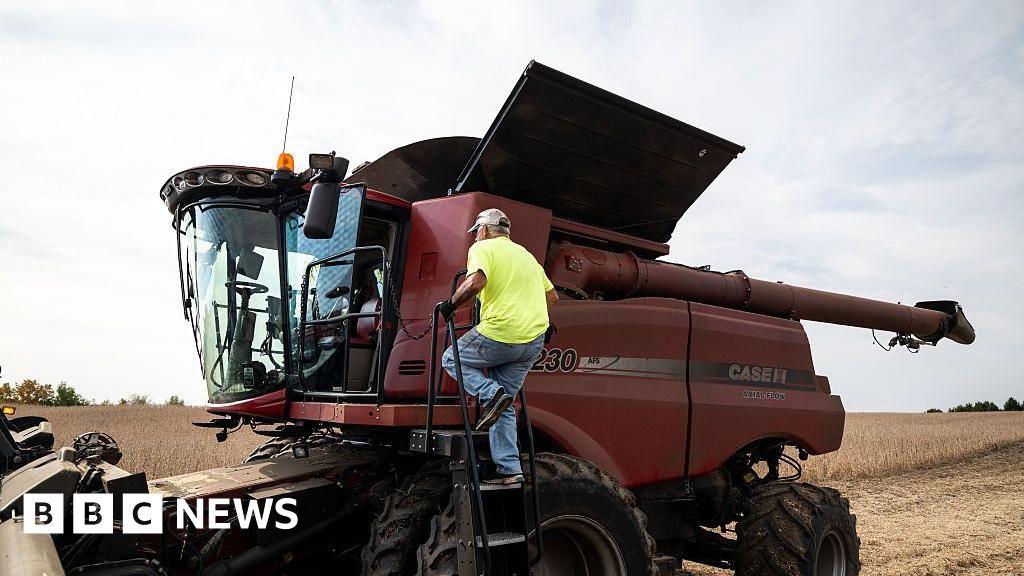
Election-era farm aid context
The package is portrayed as aimed at shoring up support among a core Republican and rural constituency ahead of upcoming elections. Several outlets link the move to GOP pressure and to concerns from farming communities about low prices and rising input costs. Reports also emphasize the announcement's delay by a government shutdown and compare the package to prior Trump-era aid, though the historical figures cited vary across reports.
“The White House plans to unveil a US$12 billion farm-aid package on Dec. 8 aimed at farmers hit by low crop prices and the fallout from President Trump’s tariff policies. Up to US$11 billion will be paid as one‑time payments to crop growers through a new Farmer Bridge Assistance (FBA) program, with the remainder allocated to crops not covered by FBA. ... The move echoes the administration’s previous 2018–19 relief (about US$28 billion) and responds to mounting GOP and rural frustration ahead of the 2026 midterms.”
Implementation and reactions
Coverage shows that implementation details and immediate reactions vary. Some outlets give administrative specifics and timelines, with Moneycontrol and the BBC noting the use of Commodity Credit Corporation authority and administration by the Farm Service Agency.
Meyka provides more granular reporting, saying eligibility is tied to acreage or herd size, documentation will be required, distribution will occur through USDA networks and state agricultural departments, and payments are expected to begin in about 60 days. Reactions range from relief and hope to skepticism that $12 billion will fix farming's long-term structural problems.
