Full Analysis Summary
Trump announces military payments
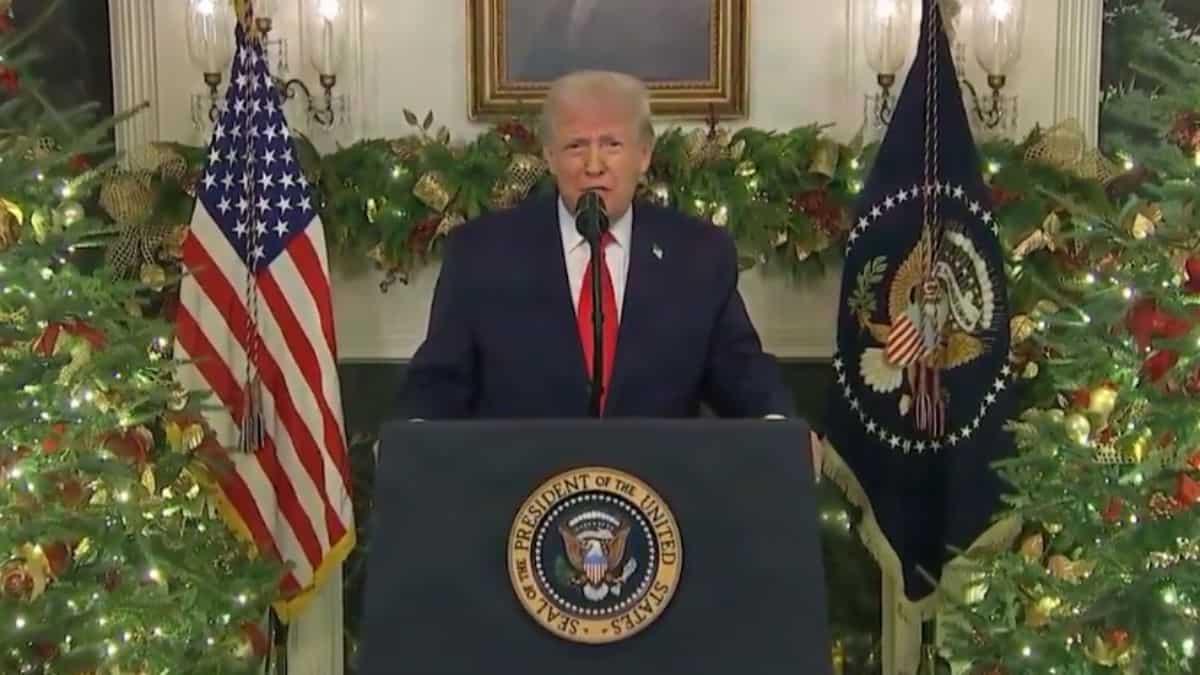
President Donald Trump used a rare prime-time White House address to announce a one-time "Warrior Dividend" of $1,776 for roughly 1.45 million U.S. service members.
He said the payments were already on the way and would arrive before Christmas, and he framed the sum as a tribute to 1776 tied to tariff revenue and recent legislation.
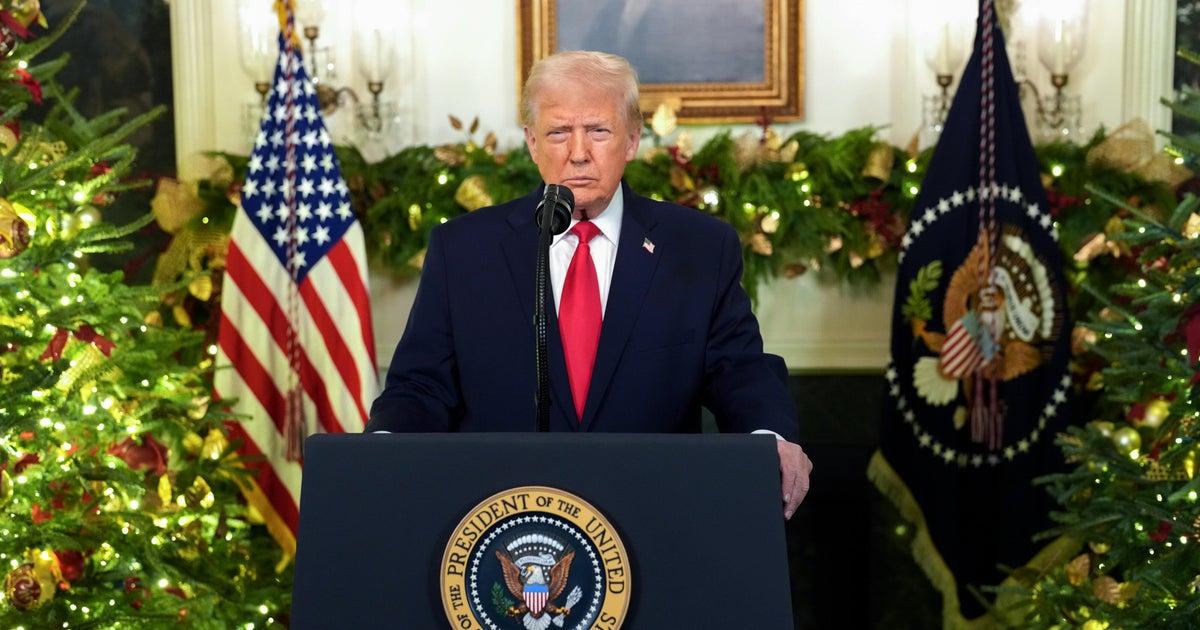
The announcement was delivered from the Diplomatic Reception Room and presented as both a reward for service and evidence of his administration's economic gains.
Coverage Differences
Funding explanation discrepancy
Different outlets repeat the administration’s claim that tariff receipts fund the payout while other reports say the financing is tied to recent legislation or appropriations. For example, Newsmax (Western Alternative) reports Trump "attributing funding to higher-than-expected tariff revenues and recent legislation," SSBCrack News (Other) says the White House "said the funds come from economic gains tied to tariff policies and related tax legislation," while CBS News (Western Mainstream) says officials describe the payments as financed by "a $2.9 billion appropriation to the military’s Basic Allowance for Housing included in the One Big Beautiful Bill Act." These variations show sources differ on whether the administration’s statement is accepted at face value or contextualized by appropriation details.
Tone and emphasis
Sources diverge on tone: some outlets (e.g., Newsmax, NTD News — Western Alternative) emphasize patriotic reward messaging and administration achievements, while others (e.g., The Independent — Western Mainstream) highlight the combative, campaign‑style tone of the speech. This difference affects whether coverage frames the payment as a sincere personnel benefit or as a political gambit.
Military payment eligibility
Reports differ on exact eligibility rules and headcounts.
Most outlets repeat the White House description that active-duty members in pay grades O-6 and below and reservists on active orders of 31 days or more as of Nov. 30 would qualify.
That criteria produces a total often cited at about 1.45 million recipients.
Some outlets give a detailed breakdown: CBS News cites roughly 1.28 million active-component members plus 174,000 reservists.
Other outlets include slightly different thresholds or dual figures for the payment amount.
Coverage Differences
Numerical/detail discrepancy
Some outlets report a single rounded total (~1.45 million) while others provide a split between active and reserve components. CBS News (Western Mainstream) gives "about 1.28 million active‑component members and 174,000 reservists," whereas many reports present the combined "about 1.45 million" figure without a breakdown (Newsmax, seMissourian — both Western Alternative/Other). This leads to different impressions of scope and cost.
Minor amount inconsistency
A small number of outlets note inconsistent reporting on the payment sum itself; Hindustan Times, for instance, records two slightly different figures ($1,776 and $1,750) in its coverage. This highlights occasional editorial inconsistencies across aggregations.
Speech framing and reactions
The speech was apprenticed to a broader political narrative: Trump framed the payment as evidence his policies produced economic gains.
He attacked President Biden and previewed a 2026 agenda.
Critics and fact-checkers pushed back on the speech's accuracy and motive.
Outlets differed on tone and emphasis.
The Independent and HuffPost stressed combative rhetoric and misleading claims flagged by fact-checkers.
Western Alternative outlets emphasized the patriotic framing and administration accomplishments.
Coverage Differences
Tone and framing
Western Mainstream outlets such as The Independent (Western Mainstream) and HuffPost (Western Alternative) emphasize critical appraisal and fact‑checking: The Independent describes a "combative primetime address" and notes fact‑checkers found "false or misleading claims," while HuffPost highlights repeated attacks and policy claims. In contrast, outlets like Newsmax and NTD News (Western Alternative) foreground the reward to troops and administration achievements, giving the speech a more favorable framing. These divergent emphases reflect editorial leanings and audience targeting.
Political motive vs. personnel benefit narrative
Some outlets treat the payout as a political maneuver to shore up support (GV Wire and South Florida Reporter note the timing amid sagging approval and midterm concerns), while others foreground the direct benefit to service members. This shapes whether the payment is reported as a policy action or a campaign tactic.
Legal questions about payouts
News coverage focuses on legal and procedural questions, including whether the White House can unilaterally authorize the payments and whether tariff revenue can be repurposed without explicit congressional appropriation.
The New York Post and BNO News highlight doubts about authority and appropriation, while CBS and Axios reporting links the payout to legislative language or appropriations but emphasizes remaining ambiguity about the mechanism.
Coverage Differences
Legality and authority concerns
Mainstream outlets and some analyses explicitly question whether the president has legal authority to make the payments without Congress. New York Post (Western Mainstream) writes that "it’s unclear he has the legal authority to make the payments" and BNO News notes "it’s unclear how funds would be appropriated without prior congressional approval." In contrast, some pro‑administration outlets repeat the administration’s funding claims without probing legal limits (Newsmax, NTD News).
Appropriation vs. tariff revenue framing
Some outlets (e.g., CBS News) point to a specific appropriation — "a $2.9 billion appropriation to the military’s Basic Allowance for Housing" — while others emphasize tariff collections as the source. This produces different narratives about whether a legislative fund was repurposed or whether executive action is being used to deploy tariff receipts.
Responses to presidential payout
Reactions to the announcement were mixed.
Critics said the address felt out of touch with everyday cost pressures and recycled talking points without offering new plans.
Supporters and sympathetic outlets celebrated the symbolic pre-Christmas payout.
Polling cited in some coverage shows weak economic approval for the president.
Commentators questioned whether the bonus will meaningfully ease household affordability concerns.
Coverage Differences
Public reaction and critical framing
Several sources echo critics who say the speech lacked new solutions and seemed tone‑deaf to rising costs; SSBCrack News (Other) reports critics saying the remarks "felt out of touch with everyday economic pressures," while The Independent notes "widespread ridicule" and bipartisan criticism. Conversely, alternative outlets (Newsmax, NTD News) highlight praise and patriotic context, focusing on the benefit to troops rather than domestic affordability debates. These divergent frames shape perceived political impact.
Polling/approval context
Coverage cites low economic-approval polling to contextualize the announcement’s timing: SSBCrack News cites polling putting approval at 36% (NPR/PBS News/Marist), and GV Wire references a Reuters/Ipsos economic approval figure of 33%, suggesting the payout was delivered amid sagging support. Other outlets emphasize political motives or troop benefits.