USA02 December, 20252 min read
Trump Announces Plan to Pardon Convicted Drug Trafficker, Ex‑Honduran President Juan Orlando Hernández
President Donald Trump granted a full pardon freeing Juan Orlando Hernández from U.S. prison Hernández was convicted in U.S. of a large cocaine‑trafficking conspiracy and sentenced to 45 years

54 outlets told this the same way.
Outlets did split on Trump Interrupted by Protesters at San Antonio Rally for Ken Paxton →
Hernández pardon and release
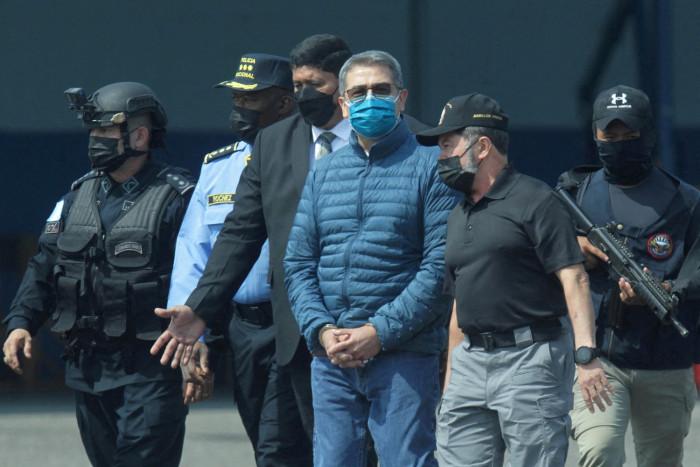
President Donald Trump granted a full pardon to former Honduran president Juan Orlando Hernández. Hernández was released from U.S. federal custody, reports say. The Bureau of Prisons confirmed the release from USP Hazelton in West Virginia, and Hernández's wife announced his freedom on social media.
“President Donald Trump has formally pardoned former Honduran president Juan Orlando Hernández, White House and Hernández’s attorney Renato Stabile said.”
The White House and Hernández's attorney Renato Stabile also confirmed the pardon. Trump publicly called the case a political setup and said Hernández had been treated unfairly.
Hernández conviction and sentence
Hernández was convicted in New York in 2024 on charges that prosecutors say show he helped facilitate massive cocaine shipments to the United States. Prosecutors allege he accepted millions in drug money and used state power to shield trafficking. He was sentenced to 45 years and, in some accounts, ordered to pay an $8 million fine.
Multiple outlets summarize prosecutors' description that hundreds of tons — often framed as roughly 400 tonnes — moved through Honduras toward the U.S. Judges at sentencing rejected Hernández's portrayal of himself as an anti-drug actor.

Honduran pardon and election
The pardon’s timing — announced and executed days around a tightly contested Honduran presidential election — has drawn intense scrutiny. Several outlets report that Trump had publicly backed conservative National Party candidate Nasry Asfura, and the clemency was seen by opponents and some analysts as potential U.S. interference in Honduras’s vote or as politically consequential. Honduran authorities said domestic legal avenues remain open and that Hernández’s return home is not guaranteed because local prosecutions or investigations could proceed.
“A day before Honduras’ presidential vote, U.S. President Donald Trump unexpectedly announced plans to pardon former Honduran president Juan Orlando Hernández and publicly endorsed National Party candidate Nasry ‘Tito’ Asfura.”
U.S. domestic reaction
U.S. domestic reaction ranged from criticism that the pardon undermines American anti‑drug credibility to White House defenses that prosecutors overreached. Multiple U.S. outlets reported bipartisan condemnation from members of Congress, who called the move hypocritical given aggressive anti‑drug rhetoric and operations.
White House spokespeople framed the action as a response to prosecutorial overreach. Observers also flagged the potential diplomatic and policy costs for U.S. counter‑narcotics efforts in the region.
Pardon lobbying and policy
Several outlets examine Hernández's ties to U.S. political actors and lobbying that preceded the pardon. Reporting notes influential figures and allies, including Roger Stone and other Trump-era contacts, lobbied for clemency.
“The article argues U.S. policy toward Honduras has been driven more by ideology and lobbying than rule of law.”
Commentators say U.S. policy toward Honduras has at times balanced strategic cooperation against rule-of-law concerns. Alternative outlets and investigative pieces frame the pardon as evidence of lobbying, political ties, and the broader complexities of U.S. policy in Central America.