South America07 January, 20263 min read
Trump Announces Plan to Seize 30–50 Million Barrels of Venezuelan Oil and Control Proceeds
This article is an automated aggregation of coverage from news outlets. Our editorials offer in-depth analysis curated by the NewsCord team.
Trump said Venezuela will sell 30–50 million barrels to the U.S. at market price Trump said he will control proceeds to ensure benefits for Venezuela and the U.S.

9 outlets told this the same way.
Outlets did split on Brazil Police Kill Suspect After 13 Kindergarteners Held Hostage In Curitiba →
Trump Venezuela oil plan
Former President Donald Trump announced on Truth Social that "Interim Authorities" in Venezuela would sell 30-50 million barrels of "high quality" oil to the U.S. He said the oil would be shipped to U.S. unloading docks and that he had asked Energy Secretary Chris Wright to "execute this plan, immediately," adding that the proceeds would be controlled by him as president and used to benefit Americans and Venezuelans. The announcement was reported as a direct claim by Trump and framed as a concrete operational plan in several outlets, with explicit numbers (30-50 million barrels) and instructions to the Energy Secretary.
“President Trump posted on Truth Social that ‘Interim Authorities’ in Venezuela will sell 30–50 million barrels of ‘high quality’ oil to the U.S. at market price and that he has asked Energy Secretary Chris Wright to ‘execute this plan, immediately.’”
U.S.-Venezuela Incident Context
The announcement came amid reports of U.S. force action and Venezuelan political turmoil. Some coverage noted a recent raid that left Venezuelan security officials dead and wounded U.S. service members.
Venezuelan state media and the military responded with symbolic displays and an Instagram tribute vowing to seek 'justice and strength' and to 'rescue our legitimate President.' Coverage tied Trump's remarks to that wider context, including references to Maduro's U.S. indictment and rewards related to drug-trafficking charges that Trump cited to justify or defend the operation.

Venezuela oil feasibility
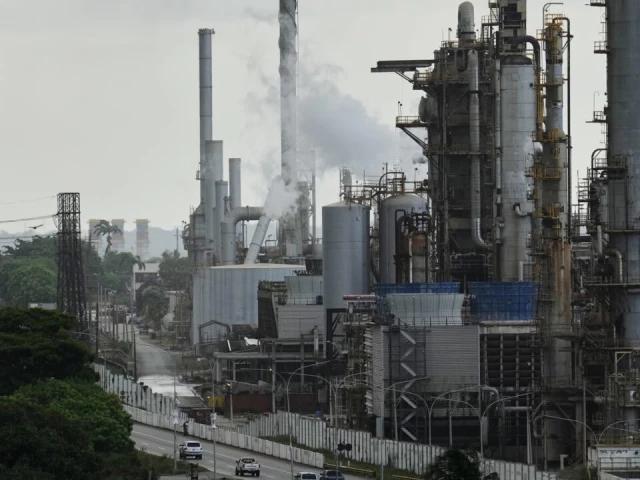
Analysts and outlets raised immediate questions about feasibility. The Guardian notes that Venezuela's oil output has collapsed from historical highs of about 1.3 million barrels per day by 2018. It warns that raising production faces damaged infrastructure, security risks and the need for tens of billions in repairs and investment, and Energy Aspects estimates a 500,000-barrels-per-day increase would cost roughly $10 billion and take about two years.
“Venezuela’s oil output has collapsed from historical highs—about 1.3 million barrels a day by 2018, roughly half the 2013 level—because of long-term mismanagement and US sanctions.”
India Today and other outlets underscore that Venezuela holds enormous reserves but currently produces only around 1% of global oil. India Today calculates that selling 50 million barrels at about $55 per barrel would yield roughly $2.75 billion, a modest sum relative to U.S. debt.
Reactions to oil release plan
Beyond physical production limits, outlets flagged legal, logistical, and political complications. India Today reported that critics called the plan unrealistic and noted the modest financial return from releasing 50 million barrels.
Fortune reported that the White House had scheduled an Oval Office meeting with oil executives from Exxon, Chevron, and ConocoPhillips, indicating administration outreach to industry. The Guardian warned that any large-scale expansion would be costly, slow, and, experts warned, environmentally damaging and bad for the climate, highlighting contested tradeoffs between political aims and economic and environmental realities.

Media coverage differences
Coverage also differed in tone and emphasis across source types. Western mainstream outlets such as Fortune and The Guardian reported Trump’s assertions and the practical constraints respectively, with Fortune relaying Trump’s logistical claims and meetings with industry and The Guardian stressing infrastructure, cost and climate obstacles. Asian outlets like India Today and The New Indian Express foregrounded the political and legal context (Maduro’s indictment, the raid and state responses) and highlighted Trump’s defense of the operation.
“President Trump posted on Truth Social that ‘Interim Authorities’ in Venezuela will sell 30–50 million barrels of ‘high quality’ oil to the U.S. at market price and that he has asked Energy Secretary Chris Wright to ‘execute this plan, immediately.’”
Western alternative coverage (WION) emphasized political contestation on the ground, quoting Delcy Rodríguez’s strong denial that Venezuela is being run from Washington. These differences reflect distinct editorial priorities: operational reporting of claims (Fortune), skeptical technical analysis (The Guardian), regional political context and imagery (The New Indian Express, India Today), and direct political counter-claims (WION).