Full Analysis Summary
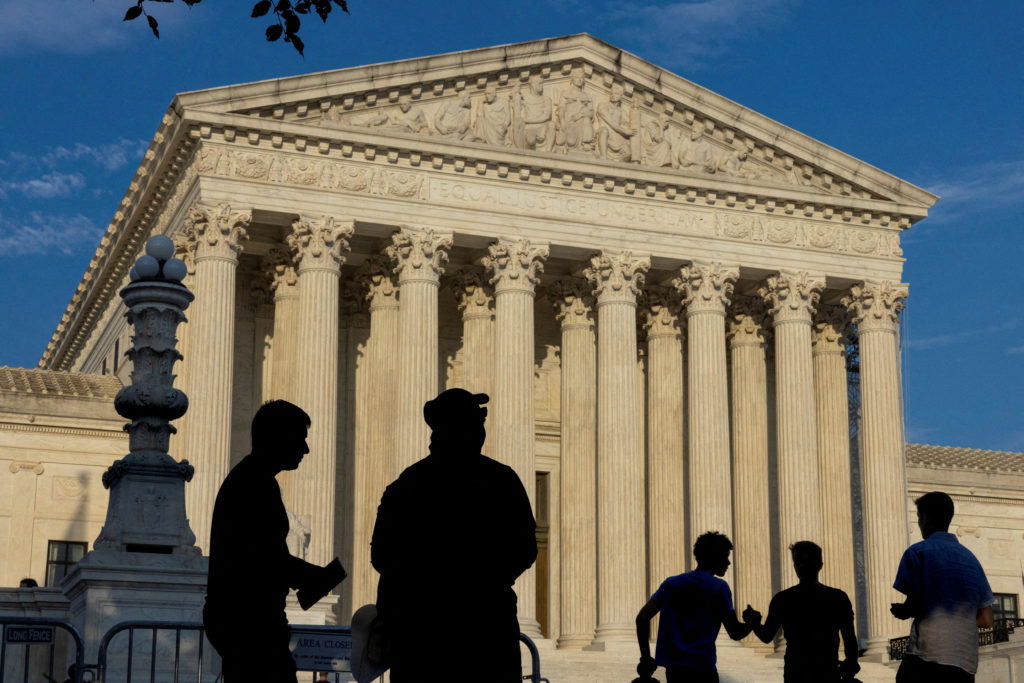
Supreme Court removal case
The legal fight over whether the president can remove a commissioner of a multimember independent agency has reached the Supreme Court after litigation over the firing of an FTC commissioner referred to in sources as Slaughter.
A federal district court had found her firing unlawful and ordered reinstatement.
That decision was reversed and reinstated multiple times by appeals courts before the Supreme Court allowed her removal temporarily while agreeing to hear the case.
At issue is whether statutory "for cause" removal protections for members of agencies like the FTC are consistent with the Constitution's separation of powers.
The outcome could reshape presidential control over independent regulators.
The CBS News account notes the Court will decide how to characterize the FTC's powers and whether the Humphrey's Executor precedent survives.
Coverage Differences
Missed information / limited sourcing
Only CBS News provides substantive reporting in the provided materials; PBS News did not supply article text. Because of that, cross-source differences in narrative, tone, or emphasis (for example between Western Mainstream and other source types) cannot be fully identified or contrasted. The CBS News piece focuses on the procedural history and the constitutional stakes; without additional sources we cannot compare alternative framings or emphasis from other outlets.
Executive control over agencies
The Trump administration's argument, as reported by CBS News, frames the issue around executive control, with the Solicitor General telling the Court that the modern Federal Trade Commission exercises significant executive authority through rulemaking, enforcement, civil monetary suits, and final adjudications.
He also argued that removal protections frustrate the president's constitutional duty to ensure the faithful execution of the laws.
If the Court accepts that characterization and invalidates removal protections, a wide range of other independent agencies that currently have 'for cause' removal language could be affected.
That change could potentially give future presidents broader authority to dismiss commissioners at will.
Coverage Differences
Tone / emphasis (unable to fully compare)
CBS News emphasizes the Solicitor General's position that the FTC wields executive power and that removal protections impede presidential control. Without other substantive source articles in the dataset, it's not possible to contrast how outlets of different types might frame the government's argument (for example, as a restoration of constitutional order versus a power grab). PBS News did not provide content to offer an alternative tone or emphasis.
Arguments for removal protections
Opponents of overturning the Humphrey's Executor precedent, as summarized by CBS News, argue that eliminating statutory removal protections would destabilize long-standing independent multimember agencies that Congress designed to be insulated from partisan swings.
Slaughter's lawyers and outside experts warn that these structures preserve minority-party representation, reduce unilateral presidential control, and guard agencies against sabotage, citing a recent firing of an MSPB member as a cautionary example.
They also note that presidents retain many levers of influence — including nominations, chair selections, and budgets — even when removal protections remain in place.
Coverage Differences
Narrative focus (limited comparison)
CBS News highlights the institutional rationale for removal protections and cites warnings from Slaughter's lawyers and experts about destabilization risks. Because the dataset lacks further outlets' reporting, we cannot compare whether other source types might emphasize, for example, the democratic accountability concerns raised by the government or broader policy consequences across regulatory domains.
FTC removal case stakes
The crux of the Supreme Court's decision is whether the FTC's functions are quasi‑legislative or quasi‑judicial.
If classified as quasi‑legislative or quasi‑judicial, they would fall within the Humphrey's Executor exception; if classified as executive functions, they could justify at‑will presidential removal.
CBS News emphasizes that a ruling for the government would expand presidential control and could roll back statutory protections across many agencies.
By contrast, a ruling for Slaughter would preserve the longstanding institutional design established by Congress.
CBS notes the case could therefore have profound implications for separation of powers and administrative law.
Coverage Differences
Tone/severity (limited by source pool)
CBS frames both potential outcomes and their systemic implications; absent other provided articles, we cannot show how different source types might use stronger or weaker language (e.g., 'dangerous erosion of checks' vs. 'correction of constitutional imbalance'). PBS News did not supply content to provide that contrast.