USA03 December, 20252 min read
Trump-Backed Republican Matt Van Epps Wins Tennessee Special Election, Defeats Democrat Aftyn Behn
Trump‑endorsed Matt Van Epps defeated Democrat Aftyn Behn in the 7th District special election Van Epps won by roughly a nine‑point margin, about 54% to 45%

41 outlets told this the same way.
Outlets did split on Trump Interrupted by Protesters at San Antonio Rally for Ken Paxton →
Tennessee 7th District Results
Republican Matt Van Epps won the nationally watched special election for Tennessee's 7th Congressional District, defeating Democrat state Rep. Aftyn Behn and keeping the seat in GOP hands.
“Republican Matt Van Epps won Tennessee’s 7th Congressional District special election, beating Democrat Aftyn Behn by about nine points and keeping the GOP’s hold on the conservative, 14-county seat.”
Multiple outlets reported the margin as a single-digit victory, with AP summarizing Van Epps as beating Behn by about nine points.
ABC and PBS put the result around 53.9% to 45% with precincts nearly complete.
Other reports gave slightly different figures but all noted a clear Republican win called by major outlets.
The result preserves the GOP hold on the 14-county district left vacant by Rep. Mark Green's retirement or resignation earlier this year.
Nationalized campaign spending
The campaign was heavily nationalized. Van Epps ran as a pro-Trump candidate and credited the former president for help. Behn drew national Democratic surrogates and funding.
Multiple outlets highlighted Trump's role, noting his endorsement, a virtual appearance, and a Truth Social congratulation. They reported major outside spending, including roughly $1.7 million from MAGA Inc. supporting Van Epps and about $1 million for Behn from House Majority PAC. Coverage consistently noted millions in outside spending overall, though some outlets, including CBS, gave larger total estimates for combined spending.

District result and reactions
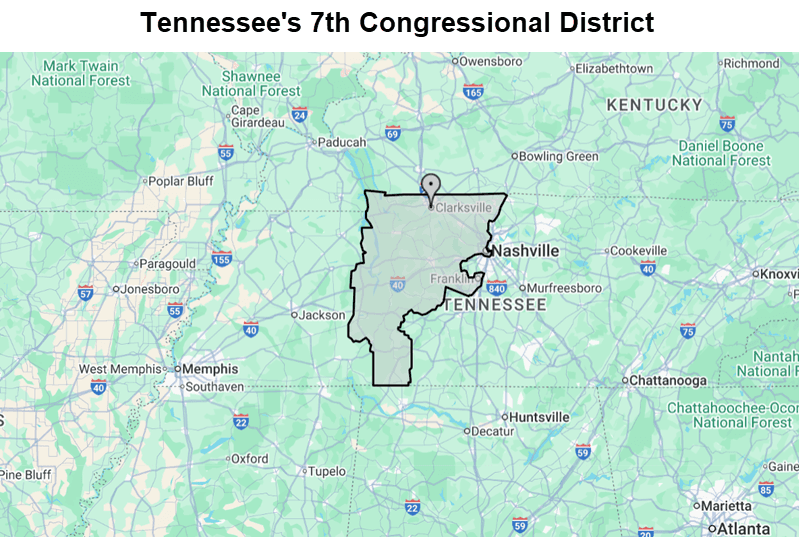
The district's makeup and redistricting history frame why the result mattered politically. The seat covers 14 counties and was redrawn in 2022 to reduce Nashville's influence. Outlets repeatedly characterize it as 'deep-red' - Trump carried it by roughly 22 points in 2024 - so Van Epps' win was expected but the narrower margin drew attention.
“The victory preserves GOP control of the conservative, 14-county district but was far narrower than past Republican margins (about 21–22 points in previous races), giving Democrats hope ahead of next year’s midterms.”
Some sources (The Guardian, NPR, The Independent) read the tighter result as a warning sign for Republicans and evidence of Democratic momentum. Pro-GOP outlets (Fox, WPEC) described the outcome as a validation of Republican strategy and Trump's influence.
Candidates' backgrounds and reactions
Van Epps is a military veteran and former state general services commissioner who ran as a strong Trump ally promising to prioritize affordability and veterans' issues. Behn, a progressive state representative and former organizer, campaigned on lowering grocery, housing, and health-care costs and emphasized grassroots organizing. Coverage noted Behn won Davidson County (Nashville) but lost the surrounding deep-red counties.
After the result, Behn conceded and framed the campaign as the start of a broader movement. Van Epps thanked Trump and pledged to be 'all-in' with him in Congress.

Reactions to Behn's result
Observers and party officials drew divergent lessons. Democrats and allied outlets highlighted Behn's stronger-than-expected showing as evidence of growing Democratic energy; DNC chair Ken Martin called her performance 'historic,' and NPR and CNN placed the result in a trend of narrowed margins in special elections.
“The result also fits a broader pattern in which Democrats have narrowed 2024 margins in nearly 60 recent special elections by an average of about 13%.”
Republican leaders and conservative outlets framed the outcome as a successful defense that validated Trump-style campaigning and helped preserve a slim House majority. Some outlets, including the Independent, cautioned against overreading a single special election and listed unanswered questions about turnout patterns and whether the result signals a durable national trend.
